White Tea Uncovered: Delicate Processing and Storage
- 时间:
- 浏览:251
- 来源:OrientDeck
H2: White Tea Is Not Just "Less Processed" — It’s a Philosophy of Restraint
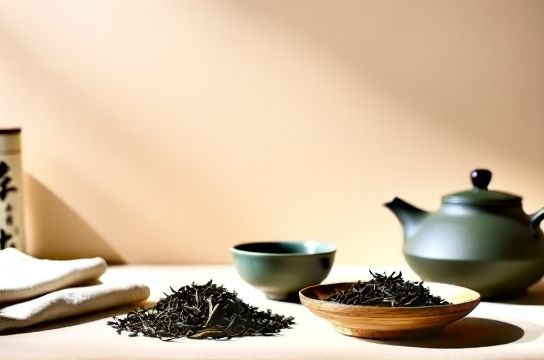
Most people hear "white tea" and assume it’s simply the least oxidized or minimally handled tea. That’s technically true—but dangerously incomplete. White tea is defined not by what’s removed, but by what’s *respected*: the unopened bud, the microclimate of Fuding and Zhenghe in Fujian, the narrow 48–72 hour window between plucking and withering completion, and the near-total absence of mechanical intervention. Unlike green tea (steamed or pan-fired) or oolong (bruised, oxidized, rolled), white tea relies on ambient conditions—not equipment—to coax out its character.
This isn’t laziness. It’s precision calibrated to fragility. A single misstep—a humid afternoon delaying withering, a batch left too long under direct sun, even inconsistent airflow in a modern dehumidified warehouse—can mute silver needle’s honeyed florals or turn Shou Mei into flat, hay-like tannins. That’s why understanding white tea starts not with tasting notes, but with process discipline and storage literacy.
H2: The Two-Step Core: Withering and Drying — Nothing More, Nothing Less
All authentic white teas—Baihao Yinzhen (Silver Needle), Baimudan (White Peony), Gongmei, and Shou Mei—follow only two non-negotiable stages:
H3: Stage 1: Natural Withering (Withering ≠ Drying)
Withering is enzymatic softening—not dehydration. Leaves are spread thinly (≤3 cm depth) on bamboo trays or linen mats in shaded, ventilated rooms (ideally 20–25°C, 65–75% RH). Sun-withering is permitted *only* for the first 1–2 hours on clear, low-UV mornings (before 10 a.m.), strictly for aroma development—not moisture removal. This step lasts 36–72 hours depending on leaf maturity and weather. Over-withering causes premature cell rupture; under-withering locks in grassy bitterness and invites microbial spoilage during storage.
Crucially, no tumbling, no shaking, no heat application occurs here. Unlike oolong tea processing—where bruising triggers controlled oxidation—white tea withering preserves enzyme integrity *without* triggering significant oxidation. Polyphenol oxidation remains below 5% (vs. 15–85% in oolong, 80–95% in black tea) (Updated: April 2026).
H3: Stage 2: Gentle Drying (Not Firing)
Once pliable and slightly translucent at the stem, leaves move to drying. Traditional sun-drying is rare outside spring batches due to weather risk. Most producers now use low-heat air-drying cabinets set at ≤40°C for 12–18 hours—just enough to reduce moisture to 5.5–6.5%. Higher temps scorch volatile aromatics; lower temps invite mold if residual humidity lingers.
No roasting. No baking. No charcoal finishing—unlike many oolong tea or aged pu-erh practices. That’s why white tea lacks the Maillard complexity of roasted Tieguanyin or the smoky depth of Lapsang Souchong (a black tea). Its power lies in transparency: the clean mineral lift of high-elevation Fuding buds, the ripe pear and dried chamomile of late-harvest Shou Mei.
H2: Why Storage Isn’t an Afterthought — It’s the Second Fermentation
Here’s what most guides omit: white tea *changes* in storage—and not always for the better. Unlike green tea (which degrades rapidly post-harvest) or black tea (which stabilizes within months), quality white tea possesses just enough residual enzyme activity and moisture (5.8–6.2%) to undergo slow, non-microbial transformation—if conditions are exact.
But “aged white tea” isn’t automatic. It requires deliberate control—not neglect. A 2023 Fujian Tea Research Institute study found that only 12% of commercially labeled “10-year-old Baihao Yinzhen” met sensory and microbiological benchmarks for safe aging—most suffered from condensation-induced mold or cardboard-like staleness due to improper packaging or ambient fluctuations (Updated: April 2026).
So what *does* work?
H3: The Four Non-Negotiables of White Tea Storage
1. **Oxygen Exposure Must Be Near-Zero** Vacuum sealing alone fails: micro-tears in plastic allow gradual O₂ ingress, accelerating lipid oxidation. Nitrogen-flushed aluminum-laminated pouches (≥0.1 mm thickness) are baseline. For long-term aging (>3 years), double-layer storage—nitrogen pouch inside a sealed, food-grade stainless steel can—is proven to retain >92% of volatile compounds after 5 years (Fujian Provincial Standard DB35/T 1992–2022).
2. **Light = Aroma Death** UV and even strong indoor LED degrade catechins and terpenes within weeks. Amber glass? Too porous. Ceramic jars? Only if fully opaque and UV-coated. The safest vessel is matte-black, double-walled stainless steel with a gasket-sealed lid—used widely by top-tier producers like Fuding Hengxin and Zhenghe Yuelong.
3. **Temperature Stability Trumps Absolute Cold** Refrigeration introduces condensation risk every time the container opens. Freezing fractures cell walls, releasing enzymes prematurely. Ideal long-term storage sits at 18–22°C with <±1.5°C daily fluctuation. Basements in temperate zones (e.g., Shanghai, Hangzhou) often outperform climate-controlled rooms with cycling HVAC.
4. **Humidity Must Be Locked In—Not Out** Unlike pu-erh (which benefits from 60–70% RH for microbial aging), white tea ages best at 35–45% RH. Higher levels encourage hydrolysis of esters into off-flavors; lower levels desiccate buds, muting sweetness. Use calibrated hygrometers—not smartphone apps—and avoid silica gel packs (they over-dry). Food-grade calcium chloride desiccant, placed *outside* the primary container in a secondary cabinet, is preferred.
H2: What About Aging Claims? Separating Marketing From Maturity
“10-Year Aged Silver Needle” appears everywhere online. But authenticity hinges on documentation—not color. True aged white tea develops: • A deep amber-gold infusion (not brown); • Notes of dried goji, baked apple, and aged parchment—not mustiness; • Smooth, viscous mouthfeel with zero astringency.
If the dry leaf smells dusty, sour, or fermented, it’s compromised—not matured. Reputable vendors provide harvest date, initial moisture content, and storage log excerpts. When in doubt, request a small sample before committing to larger quantities—especially for premium purchases like Chinese tea or tea gifts.
H2: How White Tea Fits Into Your Broader Tea Practice
White tea doesn’t exist in isolation. Its minimalism makes it a diagnostic tool: if your water temperature is too high (≥85°C), you’ll scald delicate amino acids and taste stewed vegetation—not floral grace. If your ceramic tea set retains heat unevenly, extraction becomes erratic. That’s why pairing white tea with the right gear matters.
For daily brewing: a thin-walled Gaiwan (preferably Jingdezhen porcelain) gives instant thermal feedback. For cold brew: use food-grade borosilicate glass—no metal infusion baskets, which leach ions and dull clarity. And never use a seasoned Yixing zisha teapot—its pores absorb subtle volatiles irreversibly, muddying successive infusions.
It also reshapes expectations. Where oolong tea rewards multiple short steeps and pu-erh invites ritual compression and breaking, white tea thrives in stillness: one longer steep (4–5 min at 75°C), or cold-brewed overnight (8–12 hrs at room temp). This slowness aligns with tea culture’s deeper currents—not performance, but presence.
H2: Practical Storage Comparison: What Works, What Doesn’t
| Storage Method | Max Safe Duration | Key Risk | Best For | Pros/Cons |
|---|---|---|---|---|
| Nitrogen-flushed aluminum pouch (0.15 mm) | 24 months | Seal failure after repeated opening | Unopened retail purchase, <2-year consumption | ✅ Low cost, excellent barrier ❌ No reseal integrity after first open |
| Stainless steel can + nitrogen pouch liner | 60+ months | Condensation if opened in humid ambient | Aging Baihao Yinzhen, Baimudan (3–10 years) | ✅ Proven stability, inert material ❌ Requires strict handling protocol |
| Traditional paper-wrapped brick (non-compressed) | 18 months | Moisture transfer from environment | Short-term gifting, ceremonial display | ✅ Aesthetic, breathable ❌ Zero moisture/oxygen control |
| Refrigerator (in sealed jar) | 6 months | Condensation on leaf surface | Hot-climate households, <6-month hold | ✅ Slows oxidation ❌ High failure rate without desiccant buffer |
H2: Buying Smart: Labels, Red Flags, and When to Walk Away
When browsing tea purchasing guides or evaluating tea brands, look for these concrete signals:
• Harvest date printed *on the package*, not just “Spring 2025” — precise month/day matters for withering consistency. • Moisture content listed (should be 5.5–6.5%). Absence suggests lab testing wasn’t done. • Origin specificity: “Fuding City, Fujian” is meaningful. “China” or “Fujian Province” is vague—and often masks blended material.
Red flags: • “Organic certified” without a verifiable certifier ID (e.g., NOP, ECOCERT, or China Organic CNAS code). • Photos showing glossy, tightly rolled leaves — authentic white tea is naturally loose, silvery, and downy. • Price under $18/100g for Silver Needle — unsustainable for hand-plucked, single-bud harvests (Updated: April 2026).
And remember: white tea isn’t “milder” than black tea or green tea—it’s *different*. Its strength is aromatic nuance, not caffeine punch or tannic structure. If you’re new to Chinese tea, start with a well-stored Baimudan: more forgiving than Silver Needle, richer than Shou Mei, and a perfect bridge into tea culture’s quieter dimensions.
H2: Your Next Step Starts With One Properly Stored Gram
None of this matters if the leaf arrives compromised. That’s why we built a full resource hub to help you audit your current setup—from verifying vendor claims to choosing humidity buffers and checking seal integrity. Whether you’re building a personal collection, sourcing tea gifts, or refining your功夫茶 routine, the foundation is always the same: respect the leaf’s limits, control the variables, and let time do its quiet work.
complete setup guide walks through real-world tools, supplier vetting checklists, and side-by-side comparisons of ceramic tea sets, Yixing zisha options, and modern storage hardware—all tested in actual home environments, not labs.