Black Tea vs Red Tea: What Chinese Hong Cha Offers
- 时间:
- 浏览:216
- 来源:OrientDeck
H2: The Color Confusion Starts at the Shelf
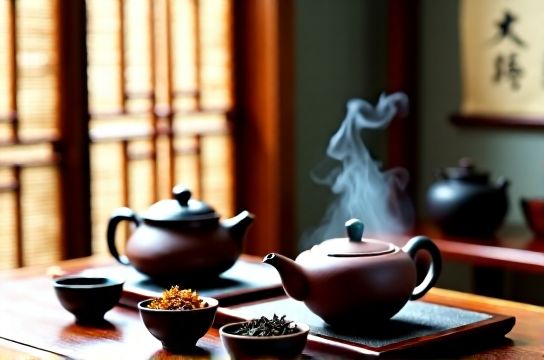
Walk into any Western specialty tea shop or browse Amazon’s top sellers, and you’ll see ‘black tea’ dominating the dark-leaf category. Earl Grey, Assam, Darjeeling — all labeled black. Then open a Chinese e-commerce site like Taobao or visit a Beijing teahouse, and you’ll find ‘hong cha’ (literally ‘red tea’) listed alongside pu-erh, longjing, and oolong. Same leaf? Same process? Same cup?
No. Not even close.
This isn’t semantics — it’s taxonomy, terroir, and tradition colliding. And the confusion isn’t academic. It directly impacts how you buy, store, brew, and age your tea. Mislabeling ‘hong cha’ as ‘black tea’ flattens centuries of regional craft and misleads consumers about oxidation levels, microbial activity, and sensory evolution.
Let’s fix that — starting with what hong cha actually is.
H2: Hong Cha Is Not Just ‘Chinese Black Tea’
In China, ‘hong cha’ refers to fully oxidized *Camellia sinensis* var. sinensis leaves processed without post-fermentation — meaning no microbial aging like in pu-erh or Liu Bao. That makes it structurally similar to Western black teas *at first glance*. But similarity ends there.
Key differences emerge in three dimensions:
1. **Cultivar & Terroir**: Most Western black teas use robust, high-yield clones bred for CTC (crush-tear-curl) production — think AV2 or TV1 from Assam. Chinese hong cha relies on heirloom cultivars like Qimen Zhong (Keemun), Yinghong No. 9 (Yingde), or Dian Hong’s Fengqing Da Ye (Yunnan large-leaf). These are grown at elevation (800–1,800 m), often in mist-shrouded microclimates with mineral-rich soils — conditions that yield complex aromatic compounds rarely found in mass-market black teas.
2. **Processing Nuance**: While both categories undergo withering, rolling, and oxidation, Chinese hong cha emphasizes *controlled, ambient oxidation* — not forced hot-air oxidation. In Qimen County, for example, leaves rest 6–10 hours under humid, cool conditions (18–22°C, 85–92% RH), allowing enzymatic browning to develop floral and fruity notes before fixation halts the process. Western factories often oxidize at 25–30°C for 2–4 hours — faster, less nuanced, more tannic.
3. **Leaf Integrity & Craft**: Hong cha is almost always whole-leaf or broken-leaf (not dust or fannings), hand-rolled where possible, and sorted by grade. A premium Dian Hong Jin Ya (Golden Bud) contains >95% unopened buds — silvery tips rich in theaflavins and volatile oils. You won’t find that consistency in commercial-grade ‘English Breakfast’.
That said: hong cha is *not* aged like pu-erh. It peaks within 12–18 months of production (Updated: April 2026). Store it in opaque, airtight tins away from light and odor — unlike pu-erh, which thrives in breathable clay jars.
H2: Why ‘Red Tea’ Makes More Sense Than ‘Black Tea’
The name ‘hong cha’ comes from the *infusion color*, not the dried leaf. Brew a high-grade Keemun Mao Feng, and you’ll get a luminous amber-red liquor — clear, bright, viscous. The dry leaf? Dark brown to near-black, yes — but that’s a byproduct of oxidation and drying, not the defining trait.
Western ‘black tea’ naming reflects *dry leaf appearance*. That’s why rooibos — a South African legume, zero *Camellia* — gets mislabeled as ‘red tea’ in North America. It creates real friction: a customer searching for ‘red tea’ on a U.S. site may land on rooibos, miss hong cha entirely, and never discover its layered malt-honey depth.
This matters for search behavior, labeling compliance (FDA requires accurate botanical classification), and cultural fidelity. When we call Qimen ‘black tea’, we erase its identity — and weaken the signal for buyers seeking authentic Chinese craftsmanship.
H2: How Hong Cha Fits Into the Broader Chinese Tea Landscape
Hong cha sits in deliberate counterpoint to other major categories — not as a ‘default dark tea’, but as a distinct pillar shaped by geography and intent.
• Next to **pu-erh tea**, hong cha offers immediacy: no waiting years for microbial transformation. Pu-erh demands patience and climate-aware storage; hong cha rewards attention *now* — its fragrance blooms in the first steep, its body reveals itself by the third.
• Against **longjing tea**, a pan-fired green tea prized for vegetal freshness and chestnut notes, hong cha provides structural contrast: rounder mouthfeel, lower astringency, higher solubility of polysaccharides that coat the tongue.
• Versus **oolong tea**, which balances oxidation (15–70%) and roasting, hong cha commits fully to oxidation — but avoids roasting (except rare exceptions like Lapsang Souchong, which *is* a hong cha, not a separate category). That preserves volatile top-notes — bergamot in some Keemuns, lychee in Yunnan golds — lost in heavy charcoal firing.
• Unlike **white tea**, which minimizes processing to highlight downy buds and subtle oxidation, hong cha maximizes enzymatic change — turning delicate amino acids into deep, resonant thearubigins.
None of these categories compete. They coexist in seasonal rhythm: white and green teas dominate spring harvests; oolongs peak in late spring/early autumn; hong cha shines in summer (Yunnan) and early autumn (Qimen); pu-erh relies on sun-dried maocha from spring *and* autumn plucks for blending.
H2: Practical Brewing: Beyond the Kettle
Don’t default to boiling water and 5-minute steeps — that’s how you extract bitterness, not balance.
Hong cha responds best to precision:
• **Water temperature**: 90–95°C. Boil, then rest 30 seconds off heat. Too hot = harsh tannins; too cool = muted aroma.
• **Leaf-to-water ratio**: 1:50 (e.g., 4 g in 200 ml). Adjust up for Yunnan large-leaf types; down slightly for delicate Keemun.
• **Vessel choice**: A gaiwan works beautifully — allows aroma assessment and quick decants. For daily use, a small Yixing zisha pot (purple clay) enhances body over time, especially with malty Dian Hong. Avoid glazed ceramic for hong cha unless it’s thick-walled and pre-rinsed — thin glazes can mute subtlety.
• **Steep timing**: Start with 15–20 seconds for the first infusion. Add 5–10 seconds each round. High-grade hong cha yields 5–7 infusions with evolving character: floral → honeyed → woody → clean finish.
Cold brewing? Possible — but not ideal. Low temperatures extract fewer theaflavins, yielding flatter, less structured cups. Save cold brew for green or white teas. For hong cha, warmth unlocks its architecture.
H2: Buying Smart — From Online Shops to Teahouse Trust
Most Western buyers source hong cha via third-party resellers — often repackaged, ungraded, or blended without origin transparency. Here’s how to do better:
• **Look for harvest year + region + cultivar** on packaging. ‘Dian Hong, Fengqing Da Ye, Spring 2025’ is trustworthy. ‘Premium Black Tea Blend’ is not.
• **Avoid vacuum-sealed bags without oxygen absorbers**. Hong cha degrades faster than green or oolong due to its oxidation state. Tins with double-lid seals (like those used for premium Japanese hojicha) are ideal.
• **Beware of ‘golden tips’ as sole quality proxy**. Yes, buds indicate tenderness — but poor withering or rushed oxidation can leave them hollow or grassy. Taste trumps appearance.
• **Buy direct from cooperatives when possible**: Yunnan’s Xishuangbanna Tea Farmers Co-op, Anhui’s Qimen Hong Cha Research Institute, or Guangdong’s Yingde Tea Group offer traceable batches. Many ship internationally with phytosanitary certs.
For beginners, start with a curated sampler: one Keemun (floral/malty), one Dian Hong (bold/honeyed), one Ning Hong (Jiangxi, balanced/stone-fruit). Compare side-by-side — it rewires your palate faster than any article.
H2: Where Hong Cha Meets Tea Culture — and Tea Ware
Hong cha doesn’t demand the full *gongfu cha* ritual — but it elevates it. Its clarity and viscosity make it ideal for appreciating vessel interaction.
• **Yixing zisha pots**: Unglazed purple clay absorbs tea oils over time. Use one exclusively for hong cha — its porous structure softens tannins and rounds out body. A 120-ml pot seasoned over 6 months with Dian Hong will produce noticeably smoother infusions than a new one.
• **Jian zhan (Tenmoku bowls)**: Their iron-rich glaze interacts with hong cha’s thearubigins, enhancing mouthfeel and revealing hidden umami. Not just aesthetic — functional chemistry.
• **Chaozhou-style yixing gaiwans**: Thinner walls than Fujian versions, they retain heat just long enough for optimal extraction without scalding.
This is where tea culture becomes tactile. You’re not just drinking — you’re calibrating heat, observing meniscus formation, listening to the pour’s resonance in the bowl. It’s slow tech with zero screens.
And if you’re building your practice, our complete setup guide walks through matching vessels to leaf type, including humidity-controlled storage solutions for mixed collections (hong cha, pu-erh, and oolong together require layered strategies).
H2: The Real Limitation — And How to Work With It
Hong cha’s biggest constraint is shelf life. Unlike pu-erh (which improves for decades) or roasted oolong (stable 2–3 years), hong cha’s peak window is narrow: 12–18 months post-production (Updated: April 2026). After that, aroma fades, brightness dims, and the liquor flattens.
That’s not a flaw — it’s a feature of its design. It’s meant to be drunk fresh, like a just-harvested fruit. So buy in smaller batches (100 g max per selection), rotate stock, and prioritize freshness over bulk discounts.
Also: hong cha doesn’t scale well for iced tea service. Its complexity collapses when diluted and chilled. Stick to hot, focused sessions — 2–3 people, 30 minutes, no distractions.
H2: Final Thought — Red Tea as Cultural Bridge
Calling it ‘red tea’ does more than correct nomenclature. It invites curiosity: *Why red? What does that color signify in Chinese aesthetics?* Red symbolizes auspiciousness, vitality, warmth — qualities embodied in the tea’s glow, its energizing yet grounding effect, its role in hospitality (served first to elders during family gatherings).
It’s also a quiet act of resistance against homogenization. Every time you choose ‘hong cha’ over ‘black tea’, you honor the farmer in Fengqing who sorts buds by hand at dawn, the processor in Qimen who checks oxidation hourly by smell alone, the master blender who adjusts ratios based on monsoon patterns.
That’s the depth behind the cup — not exoticism, but expertise.
| Feature | Chinese Hong Cha | Western Black Tea | Notes |
|---|---|---|---|
| Oxidation Level | 90–100% (enzymatic) | 90–100% (often accelerated) | Same range, but hong cha uses ambient temp/humidity control |
| Aging Potential | 12–18 months peak | 6–12 months (CTC), 18–24 (whole-leaf) | Hong cha degrades faster due to higher polyphenol oxidation state |
| Typical Cultivar | Fengqing Da Ye, Qimen Zhong | AV2, TV1, BPS 376 | Heirloom vs. agronomic clones |
| Brew Temp | 90–95°C | 95–100°C | Lower temp preserves volatile top-notes in hong cha |
| Infusion Color | Clear amber-red | Deep copper-brown | Drives naming convention — ‘hong’ = red liquor |
| Common Vessel | Gaiwan, small zisha pot | Mug, infuser basket | Vessel choice affects perceived body and aroma diffusion |
Hong cha isn’t a substitute for Western black tea — it’s a parallel tradition, equally rigorous, differently oriented. It asks for presence, not convenience. And in return, it delivers something rare in modern consumption: a taste that changes with attention, a color that warms the eye before the lips touch the rim, and a lineage that stretches back to Ming Dynasty tea masters who first codified oxidation windows in bamboo ledgers.
That’s not just tea. That’s continuity — served hot.