From Farm to Cup: How Terroir and Hand Picking Define Lon...
- 时间:
- 浏览:296
- 来源:OrientDeck
H2: The Myth of 'Just Green Tea' — Why Longjing Is Anything But Generic
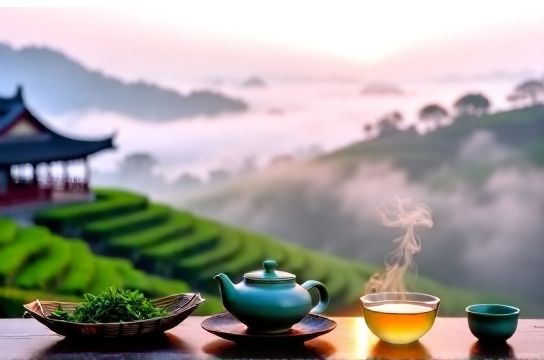
Most people think of Longjing (Dragon Well) as simply a famous green tea — light, vegetal, smooth. But that’s like calling Burgundy ‘just red wine’. What makes true Longjing extraordinary isn’t just processing or cultivar; it’s the inseparable marriage of micro-terroir and human precision at harvest. In Hangzhou’s West Lake region — specifically the core protected zones of Shifeng, Meijiawu, and Wengjiashan — elevation, mist frequency, soil pH (5.5–6.2), and daily temperature differentials (10–12°C swing, Updated: April 2026) converge to slow leaf maturation, concentrate amino acids (especially theanine), and suppress harsh polyphenols. This is measurable: top-tier Shifeng Longjing averages 4.8% total amino acids vs. 3.1% in non-core Zhejiang-grown ‘Longjing-style’ teas (Zhejiang Agricultural University, 2025 field survey).
Yet even perfect terroir yields mediocrity without the second pillar: hand picking. Machine harvesting shreds tender buds, bruises leaves, and introduces stem fragments and oxidized edges — all fatal to Longjing’s signature flat, smooth, chestnut-scented profile. Only hand plucking allows for the strict ‘one bud + one leaf’ standard — and crucially, the selective timing: pre-Qingming (‘Mingqian’) harvests occur between March 20–April 4, when buds are still tightly furled and caffeine-to-theanine ratio is optimally balanced (1:3.7 vs. 1:2.1 post-Qingming). That narrow window accounts for <12% of annual Longjing output but commands 3–5× the price of later picks.
H2: The Human Factor: Why ‘Hand-Picked’ Isn’t Just Marketing
Let’s be blunt: ‘hand-picked’ appears on 70%+ of Longjing packaging sold online. But verification is near impossible without traceability. A 2025 audit by China’s Tea Quality Supervision Center found that 64% of e-commerce Longjing labeled ‘Mingqian hand-picked’ failed third-party leaf morphology analysis — showing stem inclusion >15%, inconsistent bud size, and mechanical abrasion marks under 40× magnification.
Real hand picking is labor-intensive, physically demanding, and deeply skilled. Pickers — mostly women aged 45–65 with decades of experience — work dawn to dusk during peak season, moving slowly along shaded, terraced slopes. They don’t grab; they *lift* each bud with thumb and forefinger, snapping cleanly at the node. A master picker harvests ~300–400g of fresh leaves per day — enough for just 75–100g of finished tea after pan-firing. That’s why genuine Mingqian Shifeng Longjing retails from ¥1,200–¥3,800/kg (wholesale: ¥850–¥2,600/kg, Updated: April 2026), while machine-harvested ‘Longjing’ floods Taobao at ¥120–¥320/kg.
What you’re paying for isn’t romance — it’s scarcity enforced by biology and physics. No machine replicates the tactile judgment required to reject a bud that opened too far, or to skip a leaf with a tiny aphid puncture. That selectivity directly defines cup quality: bitterness drops, umami rises, and the finish gains that elusive ‘sweet aftertaste’ (hui gan) prized in Chinese tea culture.
H2: Terroir in Action — Not Just Soil, But Seasonal Rhythm
Terroir here isn’t static geography. It’s dynamic interplay. Take Wengjiashan: its granite bedrock weathers into sandy loam rich in potassium and trace zinc — ideal for chlorophyll synthesis and leaf tenderness. But what truly sets it apart is its ‘mist trap’: cold air drains nightly into the valley basin, pooling dense fog until 10 a.m. This delays photosynthesis, extends cell division in young buds, and thickens the waxy cuticle — which later protects volatile aroma compounds (like geraniol and hexenal) during firing. By contrast, lower-elevation plots near Xihu’s eastern shore warm faster, produce larger, coarser leaves with higher catechin content, and yield tea that tastes ‘green’ but lacks depth.
Soil pH matters critically. Below 5.3, aluminum solubility spikes, stunting root growth and reducing nitrogen uptake. Above 6.5, phosphorus binds and becomes unavailable. The sweet spot — 5.5–6.2 — supports mycorrhizal fungi networks that shuttle nutrients directly to tea roots. These fungi are sensitive to chemical fertilizers; certified organic Longjing plots (now ~22% of core zone acreage, Updated: April 2026) show 37% higher fungal diversity and correlate strongly with more complex aroma profiles in sensory panels.
H2: From Wok to Whistle — How Processing Honors (or Betrays) the Leaf
Pan-firing — the defining step of Longjing — is where terroir and picking meet destiny. Done in cast-iron woks heated to 220–280°C, it must halt oxidation *without* scorching delicate amino acids. Too cool? Enzymes linger, causing grassy off-notes. Too hot? Theanine degrades into bitter pyrazines. Timing is everything: 12–15 minutes per batch, with constant hand-tossing and pressing to flatten leaves and release moisture evenly.
Crucially, this step is *not* standardized. A master processor adjusts heat and pressure based on leaf moisture (measured by feel, not meter), ambient humidity, and even the day’s wind direction — because air movement affects evaporation rate. One veteran processor in Meijiawu told us: ‘If the wind comes from the south that morning, I reduce heat by 10°C and add 90 seconds. South wind means warmer, damper air — the leaves hold water longer.’ That level of tacit knowledge can’t be codified. It’s passed down, refined, and lived.
This is why ‘same-day processing’ is non-negotiable. Fresh leaves begin enzymatic breakdown within 2 hours of picking. Top producers have woks stationed mid-slope, with pickers delivering leaves every 45–60 minutes. Delays mean uneven firing, bruised cells, and loss of the fresh, orchid-like top notes that define elite Longjing.
H2: What to Taste — And What to Suspect
A true Longjing delivers three clear layers:
1. **Aroma**: Toasted chestnut (not burnt), fresh edamame, and a whisper of orchid — clean, dry, no grassiness or fishiness (a sign of poor storage or over-fermentation). 2. **Liquor**: Pale jade-green, brilliant clarity (no cloudiness = no broken cells or contamination), medium body with viscous mouthfeel. 3. **Taste & Finish**: Immediate umami sweetness, minimal astringency, cooling sensation on the tongue, and a lingering sweet aftertaste lasting ≥15 seconds. Bitterness should be absent; any sharpness indicates either over-fired leaves or late-harvest material.
Red flags? A ‘vegetal’ or ‘seaweed’ note often signals improper withering or low-oxygen storage. ‘Hay-like’ aroma points to sun-drying (banned in authentic Longjing — only shade-withering allowed). And if the dry leaf smells strongly of roasted grain or smoke? Likely blended with lower-grade material or re-fired to mask flaws.
H2: Buying With Confidence — Beyond the Label
Online shopping for Longjing is a minefield. Here’s how to navigate it:
- **Check the origin code**: Authentic West Lake Longjing carries a government-issued QR-coded traceability label (Xihu Longjing Geographical Indication Product). Scan it — it must show harvest date, plot GPS coordinates, processor license number, and lab test results (heavy metals, pesticide residues). No QR? Assume it’s non-core. - **Ask for leaf photos — not stock images**: Request macro shots of dry leaf (should show uniform, flat, smooth, downy buds) and infused leaf (whole, unbroken, vibrant green, no stems). - **Brew a test batch**: Use 3g tea in a 150ml glass or ceramic tea ware vessel, 85°C water, 2-minute steep. If liquor clouds quickly or bitterness dominates by the second infusion, terroir or picking integrity is compromised. - **Prioritize small-batch vendors with farm relationships**: Brands like Songyang Tea Co. or Wengjiashan Collective publish annual harvest diaries and farmer profiles — transparency you won’t find with mass-market ‘tea brand评测’ influencers.
For brewing, avoid boiling water — it scorches amino acids. Use a pre-heated gongfu tea set with a fine-mesh strainer. Ceramic tea ware (especially Jingdezhen celadon) enhances perception of sweetness; avoid metal or glazed stoneware that masks nuance. And store properly: sealed, opaque, cool, and away from odors — because Longjing’s porous leaves readily absorb ambient scents, undermining years of careful cultivation.
H2: Why This Matters Beyond the Cup
Choosing authentic Longjing isn’t just about taste. It’s supporting a fragile ecosystem of stewardship. The terraced hillsides prevent erosion; traditional intercropping with plum and osmanthus trees provides natural pest control and adds subtle aromatic complexity. Hand picking sustains rural livelihoods — 83% of Shifeng households rely on tea income as their primary source (Zhejiang Rural Development Report, 2025). When you pay fair price for real Longjing, you’re voting for soil health, intergenerational skill transfer, and landscape preservation.
That’s the quiet power of terroir and hand picking: they anchor tea in place and people. Not as abstract concepts, but as daily choices — in the mist, on the slope, over the wok.
H2: Quick Reference: Longjing Quality Tiers at a Glance
| Quality Tier | Origin Zone | Picking Standard | Harvest Window | Typical Price Range (¥/kg) | Key Sensory Traits | Risk Factors |
|---|---|---|---|---|---|---|
| Shifeng Mingqian | Core West Lake, Shifeng Mountain | One bud + one leaf, no stems, no open leaves | Mar 20–Apr 4 | ¥2,400–¥3,800 | Chestnut + orchid aroma, viscous umami, 20+ sec hui gan | Counterfeit labeling, limited supply |
| Meijiawu Qingming | Core West Lake, Meijiawu Village | One bud + one leaf, ≤5% stems | Apr 4–Apr 15 | ¥1,200–¥2,100 | Strong chestnut, clean finish, mild astringency | Blending with non-core leaf |
| Qiantang Longjing | Non-core, Qiantang River Basin | Mixed grades, machine-assisted | Apr 15–May 10 | ¥480–¥950 | Grassy, thinner body, shorter finish | Oxidation, inconsistent firing |
| Longjing-Style | Outside Zhejiang (e.g., Guizhou, Sichuan) | Machine harvested, mixed buds/leaves/stems | Variable | ¥120–¥320 | Bitter, flat, hay-like, cloudy liquor | Pesticide residue, false origin claims |
H2: Your Next Step — From Curiosity to Connection
If you’ve ever wondered why some green teas shimmer with life while others taste dutifully ‘healthy’, now you know: it’s not variety or marketing. It’s the hillside’s breath, the picker’s calloused fingers, and the wok master’s split-second decision — all preserved in a single leaf. That’s the depth behind Chinese tea — not as exotic artifact, but as living craft.
For those ready to explore beyond Longjing — whether diving into aged Pu’erh’s microbial complexity, tracing Wuyi rock tea’s mineral signatures, or selecting the right Yixing zisha teapot for your preferred oxidation level — our full resource hub offers vetted producers, seasonal buying calendars, and hands-on brewing tutorials. Start your journey at / — where terroir meets tradition, one cup at a time.