Shou Pu Erh vs Sheng Pu Erh: Aging, Taste & Value
- 时间:
- 浏览:266
- 来源:OrientDeck
H2: The Two Sides of Pu Erh — Not Just Processing, But Time’s Partner
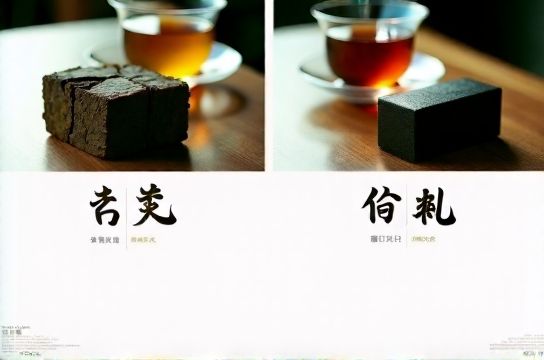
Pu Erh isn’t just another category of Chinese tea. It’s the only tea legally defined by both origin (Yunnan Province, protected GI status) and post-production potential: it ages *intentionally*. And within that universe, Shou (‘ripe’) and Sheng (‘raw’) Pu Erh represent divergent philosophies — one engineered for immediacy, the other built for decades-long dialogue with time, humidity, and microbial life.
Most newcomers assume ‘aged Pu Erh’ means ‘better’. That’s dangerously incomplete. Sheng and Shou age on fundamentally different biological and chemical tracks — and misaligned expectations are the 1 reason collectors overpay, under-store, or abandon cakes prematurely.
H2: What They Are — Beyond the Labels
Sheng Pu Erh starts as minimally processed sun-dried Mao Cha (rough tea), then is steam-pressed into cakes, bricks, or tuo cha. Its character is vegetal, astringent, sometimes floral or honeyed when young — but its real story begins *after* pressing. Natural microbes (predominantly *Aspergillus niger*, *Bacillus* spp., and indigenous yeasts) slowly oxidize and polymerize catechins and flavonoids. This is slow, ambient, unforced fermentation — often called ‘microbial aging’.
Shou Pu Erh, invented in 1973 at Menghai Tea Factory, shortcuts that wait. It undergoes Wo Dui (‘wet piling’): controlled heap fermentation where moisture, temperature, and pile depth accelerate microbial activity. The result? A tea that tastes ‘aged’ on day one — earthy, smooth, thick, with notes of damp forest floor, aged leather, or stewed plum. It’s not ‘fake’ aged tea; it’s *accelerated* fermentation, followed by *additional* aging — which behaves differently than Sheng’s path.
H2: Taste Evolution — Year-by-Year Realities
Sheng Pu Erh’s taste arc is dramatic and non-linear:
• Years 0–3: Bright, assertive, mouth-puckering (high catechin content). Think green apple skin, raw walnut, young hay. Some find it harsh — and that’s normal. Storage matters intensely here: too dry (<55% RH), and enzymatic activity stalls; too humid (>75%), mold risk spikes.
• Years 4–8: Astringency softens. Floral notes (osmanthus, lily) emerge; fruit deepens (yellow peach, dried longan). The mouthfeel gains viscosity. This is the ‘break-in’ window — many drinkers start here, especially with well-stored 2018–2020 material from trusted producers like Xiaguan or Yunnan Sourcing’s ‘Wild Tree’ series.
• Years 9–20+: Tannins fully polymerize. The tea becomes profoundly round, with layered notes of aged parchment, sandalwood, cacao nibs, and sweet root vegetables (burdock, lotus stem). The most prized examples — think 1980s–90s ‘Eight Middle-aged’ or early 2000s Yi Wu wild-grown — command $800–$3,500+/cake (Updated: April 2026). But crucially: this evolution *requires* stable, breathable storage (paper-wrapped, in clay jars or ventilated cabinets — never plastic or vacuum seal).
Shou Pu Erh evolves more subtly:
• Years 0–2: Dominated by ‘pile taste’ — musty, slightly sour, sometimes ammoniacal. This fades with proper airing (2–4 weeks open-air, then re-wrap). Avoid drinking straight off the pile.
• Years 3–7: Pile taste vanishes. Earthiness refines into humus, wet stone, blackstrap molasses. Liquor darkens to opaque mahogany. Mouthfeel thickens — almost syrupy. This is the ‘sweet spot’ for daily drinking: accessible, forgiving, deeply calming.
• Years 8–15+: Complexity increases incrementally — hints of aged pu-erh mushroom, polished teak, dried fig. But diminishing returns set in faster than with Sheng. Very few Shou teas meaningfully improve beyond 15 years unless stored in near-perfect Yunnan-like conditions (60–65% RH, 20–25°C, no light, no odor transfer). Post-2010 commercial Shou rarely justifies 20+ year holding — material quality and fermentation control weren’t consistent enough.
H2: Aging Potential — Not All Cakes Are Equal
‘Aging potential’ isn’t inherent to the Sheng/Shou label — it’s dictated by three concrete factors:
1. **Leaf Grade & Terroir**: Wild or old-growth arbor trees (e.g., Bulang Mountain, Nan Nuo Shan) have deeper polyphenol reserves and complex microbiomes than plantation leaf. Their Sheng can evolve 30+ years. Shou made from such material (rare and expensive) also holds up better long-term.
2. **Fermentation Depth & Uniformity**: Under-fermented Shou retains greenness and instability; over-fermented Shou turns flat and hollow. The best Shou (e.g., early 2000s Da Yi 7572 batches) shows even, moderate fermentation — leaving room for slow secondary changes.
3. **Storage Integrity**: This is where 90% of aging fails. Storing Sheng in a closet next to laundry detergent? You’ve just infused it with synthetic fragrance. Keeping Shou in an air-conditioned NYC apartment (30% RH in winter)? It desiccates and stalls. Real aging demands monitoring — not guesswork. Hygrometers cost $12; use them.
H2: Value Insight — When to Buy, Hold, or Drink
Market dynamics differ sharply:
• **Sheng Pu Erh**: Strongest long-term appreciation. Benchmark: 2005 Menghai Dayi 7542 (grade 4 material, medium roast) traded at ~$120/cake in 2015; today it’s $480–$620 (Updated: April 2026). But liquidity is low — selling takes months, and buyers demand provenance (original wrapper, storage photos, tasting notes). For new buyers: focus on 2018–2022 vintages from reputable sources (Yunnan Sourcing, White2Tea, Crimson Lotus). Budget $35–$90/cake. These offer drinkability now *and* upside if held 8–12 years.
• **Shou Pu Erh**: Appreciation is muted and slower. Top-tier vintage Shou (e.g., 1996–2003 Changtai ‘Golden Needle’ or early Xiaguan ‘T8653’) trades at $200–$450/cake — but volume is tiny, and counterfeits are rampant. For practical value: buy current-production Shou for drinking, not speculation. Good 2023–2024 Shou (e.g., Fengqing ‘Mao Cha Reserve’, Spring 2024) costs $18–$32/cake and delivers exceptional daily value. Holding beyond 7 years rarely doubles value — unlike Sheng.
H2: Practical Storage — No Mysticism, Just Physics
Forget ‘qi’ or ‘energy fields’. Aging is microbial ecology + oxidation kinetics. Here’s what works:
| Factor | Sheng Pu Erh Ideal | Shou Pu Erh Ideal | Why It Matters |
|---|---|---|---|
| Relative Humidity | 60–68% | 55–65% | Below 55%: stalled aging. Above 70%: mold risk spikes, especially for Sheng’s higher residual sugars. |
| Airflow | Moderate (paper wrap + clay jar) | Low (sealed paper + cardboard box) | Sheng needs oxygen for slow oxidation; Shou’s microbes are largely dormant post-fermentation and benefit from stability. |
| Temperature | 20–25°C (stable) | 18–23°C (stable) | Fluctuations >5°C/day cause condensation inside wrappers → mold. Avoid attics, garages, basements without climate control. |
| Light Exposure | Zero (opaque container) | Zero (opaque container) | UV degrades chlorophyll and volatile aromatics. Always store in darkness. |
| Odor Isolation | Critical (separate cabinet) | Critical (separate cabinet) | Tea absorbs ambient odors permanently — coffee, spices, paint, cleaning agents. Never share storage space. |
H2: Which Should You Choose?
Ask yourself three questions:
1. **What’s your timeline?** If you want something profound *now*, choose well-aged Shou (8–12 years) or mid-aged Sheng (6–10 years). If you’re willing to wait — and monitor — Sheng is the only path to true transformation.
2. **What’s your space?** Do you have a dedicated, odor-free, climate-stable cupboard? If not, Shou is lower-risk. Sheng demands attention.
3. **What’s your budget?** For <$50, prioritize Shou — you’ll get more immediate sensory reward. For $50–$150, split: one Sheng cake to hold, one Shou cake to drink. It’s the most balanced entry.
H2: Beyond the Leaf — Where Tea Meets Culture
Choosing Pu Erh isn’t just about chemistry — it’s engaging with a living tradition. The patience required to age Sheng mirrors the Confucian ideal of self-cultivation: slow, deliberate, responsive to environment. The communal ritual of breaking a cake, smelling the dry leaf, noting the color shift across infusions — that’s tea culture in action. It’s why pairing Pu Erh with a Yixing zisha pot (unglazed, porous, seasonable) makes sense: the pot absorbs the tea’s oils and deepens over years, just as the tea does. For beginners, a simple ceramic gaiwan works perfectly — no need to chase aesthetics before understanding the liquid.
And if you’re building a full setup — from sourcing to storage to service — our complete setup guide walks through every decision without jargon or fluff.
H2: Final Reality Check
• Sheng Pu Erh isn’t ‘better’ — it’s *different*. Its magic unfolds only if you respect its biology.
• Shou Pu Erh isn’t ‘inferior’ — it’s *optimized*. It solves the problem of time scarcity with integrity, when done well.
• Neither guarantees profit. Most Pu Erh bought today will be consumed, not sold. Buy for the cup, not the chart.
The deepest value isn’t in resale price — it’s in the quiet focus of a morning infusion, the shared silence over a third steeping, the realization that something alive, grown in misty mountains, has traveled across decades to meet you exactly as it is. That’s the core of tea culture — and it starts with choosing the right leaf, stored right, steeped with attention.