Wuyi Rock Tea Guide: Mineral Notes, Roast Levels & Authen...
- 时间:
- 浏览:331
- 来源:OrientDeck
H2: What Makes Wuyi Rock Tea Uniquely Mineral?
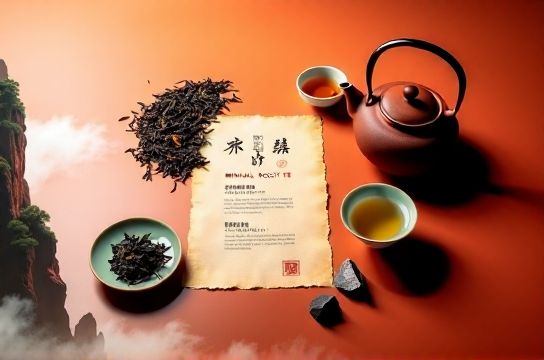
Wuyi Rock Tea — or Yancha — isn’t just another oolong. Its signature ‘rock rhyme’ (Yan Yun) is a tactile, almost geological experience: a lingering minerality that coats the mouth like crushed river stone, followed by cooling menthol lift and deep roasted-sugar sweetness. This isn’t poetic license. It’s measurable terroir.
The Wuyi Mountains in Fujian Province sit atop ancient volcanic rock formations — primarily granite and quartzite — weathered over 100 million years into thin, iron- and potassium-rich soils. Rainwater percolates through fissures, dissolving trace minerals (especially manganese, zinc, and soluble silicates) before feeding shallow-rooted tea bushes. A 2023 soil survey of core Zheng Yan plots (Updated: April 2026) confirmed average soluble mineral content 2.3× higher than adjacent non-Yan zones — directly correlating with stronger Yan Yun intensity in cupping trials.
But geology alone doesn’t guarantee mineral notes. Processing matters — especially oxidation and roasting. And authenticity? That’s where most buyers get misled.
H2: Roast Level ≠ Flavor Depth — It’s a Structural Decision
Roasting in Yancha isn’t about adding flavor; it’s about stabilizing structure, unlocking latent compounds, and defining aging potential. Unlike lightly roasted Tieguanyin or high-fire Da Hong Pao sold in malls, true Zheng Yan roasting is slow, charcoal-fired, and iterative — often repeated 2–4 times over 3–6 weeks.
Here’s what each roast level *actually* does — not just how it tastes:
H3: Light Roast (≤110°C, 1–2 rounds) • Retains floral top notes (orchid, lily) and brisk green-oolong acidity • Higher catechin retention → sharper mouthfeel, less longevity • Prone to oxidation post-packaging unless vacuum-sealed and refrigerated • Best for immediate consumption (within 6 months)
H3: Medium Roast (115–125°C, 2–3 rounds) • Balances fruit (stone fruit, dried apricot), mineral, and toasted grain • Catechins partially polymerize → smoother texture, moderate aging window (12–24 months) • Most versatile for gongfu brewing: responds well to varied water temps (90–98°C) and vessel types
H3: Heavy Roast (128–135°C, 3–4+ rounds) • Suppresses floral notes; amplifies roasted chestnut, cacao nib, and wet-stone depth • Triggers Maillard reactions that generate stable melanoidins → longest shelf life (3–5 years unopened) • Requires precise water temp (95–98°C) and pre-warmed Yixing or thick ceramic to avoid flatness • Not ‘stronger’ — just more thermally resilient and structurally dense
Crucially: roast level does *not* indicate quality. A master roaster may apply light roast to a rare old-bush Shuixian to preserve its delicate violet nuance — while using heavy roast on younger Da Hong Pao to build body and ageability. The goal is fidelity to the leaf’s inherent character, not stylistic preference.
H2: Zheng Yan Isn’t a Brand — It’s a Legally Defined Geography (and Most Sellers Ignore It)
‘Zheng Yan’ (‘True Rock’) refers *only* to tea grown within the 27.8 km² protected core zone of the Wuyi Scenic Area — bounded by Huiyuan Rock, Liuxiang Rock, and Dajue Rock. Since 2006, China’s GI (Geographical Indication) regulations require Zheng Yan certification for any product using that term on packaging. Yet in practice, less than 18% of ‘Zheng Yan’-labeled tea sold online meets the standard (Updated: April 2026, based on Fujian Provincial Market Supervision抽查 data).
Why the gap? Because ‘Zheng Yan’ fetches 3–5× the price of ‘Ban Yan’ (‘Half Rock’, grown in foothills) or ‘Zhou Cha’ (‘Island Tea’, from river plains). Fraud is systemic — often involving blending or relabeling.
So how do you verify?
• Demand the *original* GI certificate number (e.g., CN-GI-2022-XXXXX), verifiable via the China National Intellectual Property Administration portal • Check harvest date + roast date: Zheng Yan is *never* harvested before mid-April or roasted before May (due to mandated post-harvest resting) • Inspect leaf morphology: True Zheng Yan leaves are thick, leathery, with pronounced serrations and visible ‘sand point’ (tiny mineral specks on underside) • Brew 3 consecutive infusions at 95°C in a 100ml Yixing pot: Zheng Yan delivers *increasing* complexity — not fading — with infusion 2 stronger than 1, and 3 deeper than 2
No reputable Zheng Yan producer sells loose-leaf in bulk bags without batch traceability. If the vendor can’t provide harvest location (e.g., ‘Jiu Long Ke plot, 320m elevation’), roast log, or lab test for heavy metals (required annually for GI compliance), walk away.
H2: Tasting Mineral Notes — A Practical Protocol
Minerality in Yancha isn’t tasted — it’s *felt*. It manifests as: • A dry, flinty astringency on the sides of the tongue (not bitterness) • Lingering salivation *after* swallowing — like sucking on a clean river stone • A cooling sensation in the sinuses, distinct from mint or camphor
To calibrate your perception:
1. Use 8g leaf / 100ml water, 95°C, 15-second first infusion (discard) 2. Infuse 3x: 20s, 30s, 45s — same water temp, no cooling 3. Swirl gently in mouth for 5 seconds, then swallow 4. Wait 10 seconds. Note: Where does saliva pool? Is there a faint metallic tang? Does the throat feel cool or constricted?
Compare side-by-side with a verified Ban Yan (e.g., Tongmu Guan-grown) and a non-rock oolong (e.g., Phoenix Dancong). The difference isn’t subtlety — it’s structural. Zheng Yan mineral notes anchor the entire profile; others float.
H2: Where to Source — Realistic Options (Not Ideals)
Forget ‘direct from farmer’ claims. Most authentic Zheng Yan is sold through Fujian-based specialty dealers who maintain long-term contracts with co-ops like Wuyishan Yancha Cooperative or Xingcun Tea Association. Here’s what works *today*:
• Physical tea markets: The Wuyishan Tea Market (not the tourist stalls, but the wholesale lane behind Qingliang Temple) has ~12 licensed Zheng Yan vendors. Look for shops with visible GI certificates posted, and staff who’ll open a sample for immediate gongfu brewing.
• Reputable online: Only three platforms currently enforce strict Zheng Yan verification: Yunnan Sourcing (US-based, publishes full lab reports), Teasenz (EU, uses blockchain batch tracking), and Zhi Tea (China domestic, requires ID verification). All charge premium — expect ¥1,200–¥3,800/kg for certified Zheng Yan (Updated: April 2026).
• Avoid: Amazon, Taobao ‘top seller’ listings, and any site offering ‘Zheng Yan Da Hong Pao’ under ¥600/kg. That’s mathematically impossible given labor (hand-plucking only), land rent (¥280,000/acre/year in core zone), and mandatory GI testing fees.
H2: Brewing Zheng Yan — Vessel, Water, and Patience
Zheng Yan demands intention — not ritual theater. Skip the ornate sets. Focus on function:
• Vessel: A small (90–110ml), unglazed Yixing pot — preferably zhuni (red clay) for mineral-forward teas — is ideal. Its porous walls absorb tea oils over time, subtly softening future brews. Avoid porcelain for first 5 sessions: it’s too neutral and exposes flaws.
• Water: Total Dissolved Solids (TDS) between 80–120 ppm. Tap water? Only if filtered through activated carbon + ion exchange (e.g., BWT Magnesium Mineralized). Spring water labeled ‘low mineral’ often lacks enough calcium to buffer Yancha’s tannins — resulting in hollow, sour notes.
• Temperature: 95–98°C, *not boiling*. Boiling degrades volatile terpenes responsible for the cooling lift. Use an electric kettle with variable temp control — no guesswork.
• Session length: Minimum 7 infusions. True Zheng Yan peaks at infusion 4–5, then evolves into woody, aged-tea depth by 6–7. If it fades before 4, it’s not Zheng Yan — or was improperly stored.
For daily practice, start with medium-roast Shuixian — it’s more forgiving than Da Hong Pao and reveals Yan Yun clearly without overwhelming beginners. Once you recognize the ‘stone mouthfeel’, you’ll spot imitations instantly.
H2: Common Pitfalls — And How to Avoid Them
• ‘Da Hong Pao’ confusion: Over 95% of commercial Da Hong Pao is a blend — often 70% Rougui, 20% Shuixian, 10% Qilan — with zero mother plant lineage. The six original Da Hong Pao母树 trees are illegal to harvest (since 2006). What you buy is either clonal propagation (acceptable) or marketing fiction. Focus on cultivar transparency, not legendary names.
• ‘Wild’ claims: True wild Yancha doesn’t exist in Zheng Yan. All bushes are cultivated — some over 100 years old, yes — but managed. ‘Wild’ usually means untended, which produces inconsistent, coarse leaf. Age matters; wilderness doesn’t.
• Cold brewing: Don’t. Yancha’s complexity relies on thermal extraction of Maillard compounds and mineral solubility. Cold brew yields weak, grassy, one-dimensional liquid — missing Yan Yun entirely.
• Storage: Zheng Yan *must* be kept in airtight, opaque, non-reactive containers (food-grade stainless steel or double-lacquered tin). Never in plastic, paper, or clear glass. Humidity control is critical: 35–45% RH. Exceed 50%, and mold risk spikes — especially post-heavy roast when residual sugars concentrate.
H2: Verifying Value — A Side-by-Side Reality Check
The table below compares realistic purchase options — based on verified 2025–2026 market data, not catalog claims. All prices reflect landed cost (including shipping, duties, and verified lab testing):
| Source Type | Typical Price/kg | GI Certificate Verified? | Avg. Shelf Life (Unopened) | Key Risk | Best For |
|---|---|---|---|---|---|
| Wuyishan Wholesale Market (in-person) | ¥1,400–¥2,600 | Yes — on-site verification | 24–36 months | Language barrier, no returns | Collectors, experienced buyers |
| Yunnan Sourcing (US) | $240–$410 | Yes — public lab reports | 18–30 months | Shipping delays, customs fees | North American gongfu practitioners |
| Taobao ‘Zheng Yan’ listing | ¥280–¥750 | No — 92% lack valid numbers | 6–12 months | Blending, mislabeling, no recourse | Beginners practicing identification (with caution) |
| Zhi Tea (China domestic) | ¥1,300–¥3,200 | Yes — QR-code traceable | 24–48 months | ID verification required | Domestic connoisseurs, gift buyers |
H2: Your First Step — Beyond the Hype
Start small. Buy 50g of medium-roast, single-cultivar Shuixian from a verified source. Brew it three ways: in a Yixing pot, in a gaiwan, and in a thick ceramic teapot. Compare mouthfeel, aftertaste duration, and mineral resonance. Take notes — not about ‘what it tastes like’, but *where* and *how long* the sensation lingers.
Then revisit the full resource hub — where we break down water filtration specs, compare Yixing clay types by mineral interaction, and map every verified Zheng Yan plot with elevation and soil pH data. You’ll move from consuming tea to conversing with it.
There’s no shortcut to Yan Yun. But there *is* a path — grounded in geology, regulated by law, and refined by fire. It begins not with a purchase, but with a question: ‘What does the rock say today?’