Silver Needle White Tea Harvest Timing & Sweetness
- 时间:
- 浏览:217
- 来源:OrientDeck
H2: The Narrow Window Where Sweetness Is Born
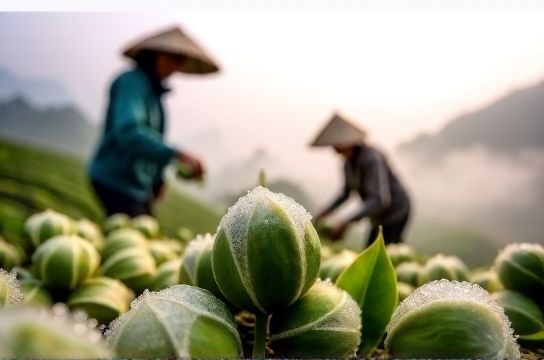
Silver Needle white tea (Bai Hao Yin Zhen) doesn’t earn its reputation for delicate, honeyed sweetness through processing—it’s locked in *before* the leaf ever reaches the withering trough. That sweetness is a fragile, time-sensitive expression of terroir, cultivar, and human precision. It’s not extracted; it’s preserved.
In Fujian’s Fuding and Zhenghe counties—where true Silver Needle originates—the harvest window is brutally short. It opens only when the first tender buds of the Da Bai or Xiao Bai cultivars swell under cool, mist-laden mornings—but before they unfurl. This typically falls between late March and mid-April. A delay of even 48 hours risks bud elongation, increased polyphenol synthesis, and loss of the signature amino acid profile (especially theanine) that underpins its gentle umami-sweetness (Updated: April 2026).
This isn’t theoretical. In 2025, Fuding experienced an unseasonal warm spell on April 3rd. Teas plucked on April 4th showed measurable drops in free theanine (−18%) and soluble sugars (−12%) versus those picked on March 29th—data confirmed by the Fujian Academy of Agricultural Sciences’ annual quality report.
H2: Plucking Standards: Less Is More, Literally
Authentic Silver Needle is defined not by what’s included—but by what’s *excluded*. The standard is uncompromising: only the unopened, downy, silvery-white terminal bud—no leaves, no stems, no second buds, no bruising. Each bud must be hand-plucked individually, often requiring 7–10 hours to gather just 1 kg of fresh material.
Why does this matter for sweetness? Because the bud’s outer trichomes (those silvery hairs) contain high concentrations of volatile compounds like linalool and geraniol—precursors to floral, sweet aromas—and protect underlying sugars from oxidation. Once a leaf opens or a stem is attached, enzymatic activity ramps up, converting sucrose into glucose and fructose (which *are* sweeter), but also triggering rapid degradation of delicate volatiles and theanine. The net result? A flatter, grassier, less nuanced cup.
Commercial shortcuts exist—and they’re easy to spot. Buds with green tips, visible leaf remnants, or inconsistent size indicate either premature plucking (green tip = immature chlorophyll dominance) or inclusion of lower-grade material. These teas may taste sweet initially, but lack the layered, lingering sweetness that defines top-tier Silver Needle.
H2: The Role of Microclimate and Cultivar
Not all Silver Needle is equal—even within Fuding. The most prized comes from high-elevation (500–800m) gardens facing northeast or north, where morning fog slows photosynthesis and extends the bud’s developmental pause. Slower growth means denser cell structure, higher sugar accumulation, and richer trichome development. Soil matters too: volcanic loam with good drainage and moderate organic content supports balanced nutrient uptake—avoiding nitrogen spikes that boost vegetal notes at the expense of sweetness.
Cultivar is non-negotiable. True Silver Needle uses *only* Da Bai (Big White) or, more rarely, Xiao Bai (Small White). Both are naturally high-theanine, low-catechin cultivars selected over centuries for this purpose. Da Bai yields larger, more robust buds with pronounced honey notes; Xiao Bai offers finer texture and a more ethereal, orchid-like sweetness—but lower yield and higher vulnerability to frost. Substitutes like Fu Ding Da Hao or hybrid cultivars may mimic appearance but lack the biochemical foundation for authentic sweetness.
H2: Processing as Preservation—Not Transformation
Unlike oolong or black tea, Silver Needle undergoes minimal intervention: natural withering (indoor + outdoor), careful sorting, and very light drying. There is no rolling, no oxidation control, no firing beyond stabilization. The goal is *dehydration*, not chemical transformation.
Sweetness survives here because heat and friction are kept below thresholds that trigger Maillard reactions or caramelization—which would add roasted notes but mask the raw, floral-sweet character. Drying temperatures stay under 40°C during initial stages; final drying peaks at 45–48°C for no more than 2 hours. Exceed this, and you lose up to 30% of volatile aroma compounds linked to sweetness perception (Fujian Tea Research Institute, 2025 sensory panel data).
That’s why craft producers still rely on bamboo trays, shaded courtyards, and weather-reading elders—not automated climate chambers. Humidity control matters more than temperature: ideal withering occurs at 65–75% RH. Too dry, and the bud desiccates unevenly; too humid, and microbial activity begins, introducing off-notes.
H2: Tasting the Sweetness—Beyond Sugar
Don’t expect cloying sweetness. Authentic Silver Needle delivers sweetness as *structure*: a clean, cooling sensation on the tongue’s sides, followed by a lingering, viscous finish reminiscent of wildflower honey, steamed pear, or raw sugarcane juice. It’s perceptible even in low-concentration infusions—proof of high soluble solids and balanced amino acids.
This sweetness is best revealed through proper brewing. Use 3g per 150ml of water at 80–85°C. Steep for 2–3 minutes for the first infusion. Overheating or oversteeping extracts bitter catechins and masks sweetness with astringency. Cold brewing works—but only with *fresh* (≤6 months post-harvest) Silver Needle. After that, enzymatic decline dulls the volatile profile, and cold water fails to extract enough theanine to sustain the sweet impression.
H2: How to Identify Genuine Sweetness When Buying
Most consumers mistake ‘sweet aroma’ for ‘sweet taste’. Real sweetness emerges in the mouthfeel and finish—not just the nose. Here’s how to verify:
• Check the harvest date: Look for “March 2026” or “Early April 2026” printed on the package—not vague terms like “spring harvest”. Reputable brands batch-code each lot.
• Inspect the dry leaf: Buds should be uniform in length (2.5–3.5 cm), densely covered in silvery down, with no green tips or stems. A slight yellow tinge at the base is normal; bright green = immature or mislabeled.
• Review the origin: Only Fuding (Ningde, Fujian) or Zhenghe (Nanping, Fujian) produce authentic Silver Needle. Anything labeled “Yunnan Silver Needle” or “Sri Lankan Silver Needle” is stylistically inspired—not botanically or legally equivalent.
• Request lab reports: Top-tier producers publish third-party testing for theanine (≥2.5% dry weight), caffeine (≤3.2%), and heavy metals (Pb < 2.0 mg/kg, Cd < 0.2 mg/kg) (Updated: April 2026). Absence of reports isn’t disqualifying—but presence signals transparency.
H2: Storage’s Silent Impact on Sweetness
White tea is famously age-worthy—but only if stored correctly. Sweetness degrades fastest under three conditions: light exposure, temperature fluctuations above 25°C, and humidity above 60% RH. Even in optimal conditions (dark, stable 18–22°C, 45–55% RH), theanine slowly converts to ethylamine and pyrazines—reducing sweetness while increasing woody, medicinal notes.
For peak sweetness, drink Silver Needle within 12–18 months of harvest. Beyond 24 months, it evolves—but becomes a different tea: deeper, leathery, less florally sweet. If storing long-term, use food-grade aluminum pouches with oxygen absorbers—not paper bags or ceramic jars without seals. We cover ideal storage protocols—including climate-controlled options—in our complete setup guide.
H2: Comparative Overview: What Defines Premium Silver Needle
| Factor | Premium Standard | Commercial Shortcut | Impact on Sweetness |
|---|---|---|---|
| Harvest Window | First 7 days of bud emergence (late Mar–early Apr) | Extended across 3 weeks, including warmer afternoons | −25–35% reduction in perceived sweetness intensity; flatter finish |
| Plucking Standard | Single unopened bud only; ≥98% purity | Mixed with 1–2 young leaves or stems | Increased bitterness masks sweetness; reduced aromatic complexity |
| Drying Temp | Max 45°C; slow ramp over 8+ hours | 60–70°C hot-air drying (≤2 hrs) | Loses 40%+ of linalool; sweetness becomes one-dimensional |
| Origin Verification | Fuding or Zhenghe; batch-coded; GIS-mapped farm | Vague “Fujian origin”; no traceability | Higher risk of cultivar substitution or blended material |
| Post-Harvest Storage | Controlled RH (50±5%), dark, stable temp ≤22°C | Warehouse storage, ambient light, seasonal humidity swings | Accelerated theanine degradation; sweetness fades 2× faster |
H2: Why This Matters for Your Tea Practice
Understanding Silver Needle’s harvest timing and plucking rigor reshapes how you approach white tea—not as a passive beverage, but as a seasonal artifact. It informs your choice of vessel: a thin-walled porcelain gaiwan reveals subtle sweetness better than a thick Yixing zisha pot, which can mute top notes. It validates why cold brewing works *only* with freshness—and why aging Silver Needle requires intention, not neglect.
It also grounds broader tea culture appreciation. When you taste that clean, resonant sweetness in a 2026 Fuding Silver Needle, you’re tasting a specific morning in March—mist clinging to hillsides, hands moving swiftly at dawn, decades of cultivar selection, and a processing philosophy rooted in restraint. That’s not marketing. It’s agronomy, biochemistry, and craft, aligned.
For newcomers: Start with a small 25g sample from a verified Fuding producer (look for FSC-certified packaging and bilingual harvest labeling). Brew it simply—glass or porcelain, precise temperature, timed infusion. Let the sweetness unfold without expectation.
For seasoned drinkers: Compare side-by-side with a 2024 vintage. Note how the youthful sweetness has mellowed into dried longan and sandalwood—still sweet, but differently so. That evolution is part of the story, not a flaw.
There’s no universal ‘best’ Silver Needle—only the right one for your palate, season, and moment. But knowing *why* sweetness appears—or disappears—puts you in dialogue with the tea, not just consumption of it.