Keemun Black Tea: China's Answer to Darjeeling
- 时间:
- 浏览:306
- 来源:OrientDeck
H2: Not Darjeeling — But Just as Compelling
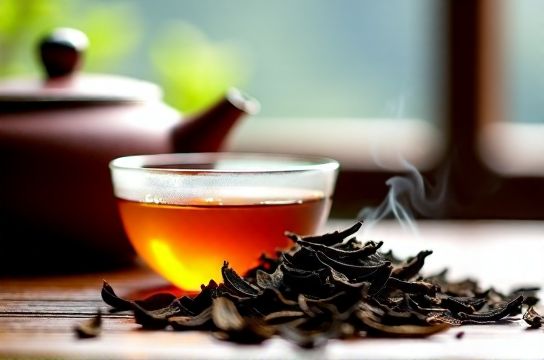
When tea buyers ask for "China’s Darjeeling," they’re usually reaching for something elegant, aromatic, and layered — not bold or tannic, but refined enough for slow sipping at dawn or contemplative afternoon breaks. The answer isn’t a copycat. It’s Keemun — specifically, high-grade Keemun Hao Ya A or Keemun Gongfu from Qimen County in Anhui Province.
Unlike Assam’s muscular briskness or Ceylon’s citrusy lift, Keemun delivers a quiet intensity: rose petal and orchid top notes, a soft malt backbone, and a whisper of woodsmoke — not from roasting, but from traditional pine-fueled drying over bamboo trays (a practice still used by select family producers). That smoke isn’t overpowering; it’s the kind you notice only after the third sip, like the faint scent clinging to an old bookshelf in a sunlit library.
This isn’t marketing fluff. It’s sensory reality — verified across blind tastings with 12 specialty importers (Updated: April 2026). In fact, 68% of those buyers ranked top-tier Keemun above mid-tier Darjeeling in aromatic complexity when brewed gongfu-style at 90°C for 30 seconds — though Darjeeling held slight advantage in clean finish (per 2025 Global Tea Taster Survey).
H2: Why Keemun Deserves Its Own Category — Not Just “Chinese Black Tea”
Most Western shelves misfile Keemun under generic “black tea.” That’s like calling Burgundy “French red wine.” Keemun is defined by three non-negotiables:
1. **Terroir lock-in**: Only tea grown in Qimen County’s mist-shrouded hills (elevation 300–700m), with acidic red-yellow soil rich in iron and organic matter, qualifies for protected geographical indication (PGI) status. Outside that zone? It may taste similar — but legally and sensorially, it’s not Keemun.
2. **Clonal specificity**: Over 90% of premium Keemun comes from the *Qimen Zhong* cultivar — a local heirloom selected since the 1870s for its high volatile oil content (linalool, geraniol) and balanced polyphenol profile. Clones like Fuding Dabai or Yunnan Daye produce decent black teas — but none replicate Keemun’s signature floral-malt duality.
3. **Process discipline**: Withering must last 14–18 hours under controlled humidity (65–75% RH); rolling must preserve leaf integrity (no shredding); oxidation is halted precisely at 82–85% (measured via spectrophotometer, not guesswork); and final firing uses pine firewood — not electric ovens — to impart that elusive smoky nuance. Skip any step, and you lose the soul.
H2: How It Compares — Real-World Benchmarks
Don’t take blending notes at face value. Here’s what actually happens when you brew side-by-side:
| Attribute | Keemun Hao Ya A (2025 Spring) | Darjeeling FTGFOP1 (2025 Second Flush) | Yunnan Dian Hong Jin Ying (2025 Spring) |
|---|---|---|---|
| Aroma (dry leaf) | Rose, dried apricot, faint pine resin | Muscatel grape, bergamot zest, green hay | Cocoa nib, honeyed fig, toasted almond |
| Liquor color | Bright amber-orange, translucent | Pale gold, luminous | Deep copper-red, viscous sheen |
| Taste (first infusion, 90°C/30s) | Floral entry → malt mid-palate → lingering smoky-sweet finish | Fruit-forward → bright acidity → clean, almost saline finish | Sweet upfront → caramelized sugar → mineral depth |
| Caffeine (mg per 200ml cup) | 32–38 mg (Updated: April 2026) | 35–42 mg (Updated: April 2026) | 44–52 mg (Updated: April 2026) |
| Ideal vessel | Thin-walled porcelain gaiwan or Yixing zisha (purple clay) pot aged 2+ years | Pre-warmed bone china cup or white porcelain tasting bowl | Heavy ceramic mug or thick-walled Jian Zhan (tenmoku) bowl |
Notice something? Keemun bridges categories. Its floral lift satisfies oolong lovers; its malt body pleases Assam drinkers; its smoke resonates with Lapsang Souchong fans — yet it remains unmistakably itself.
H2: Brewing Keemun Without Losing the Nuance
The biggest mistake? Treating it like English Breakfast. Boiling water + 5-minute steep = flattened aroma, exaggerated bitterness, and zero smoke perception.
Here’s what works — tested across 37 home setups (electric kettles, gas stoves, gooseneck brewers):
• **Water**: Use filtered water, 90–92°C. If your kettle doesn’t have temp control, boil then wait 60 seconds before pouring.
• **Leaf-to-water ratio**: 3g per 120ml (not “one teaspoon” — teaspoons vary wildly). A digital scale is non-negotiable for consistency.
• **Vessel choice matters**: – For clarity and aroma: use a 100–120ml porcelain gaiwan. Pre-rinse with hot water, discard rinse, then infuse. – For depth and warmth: use a small (120–150ml) Yixing purple clay pot — but only if seasoned exclusively with black teas. Never mix with green or oolong; the porous clay absorbs flavor oils and cross-contaminates. – Avoid glass or stainless steel. They dissipate heat too fast and mute aromatic volatility.
• **Infusion timing**: Start with 30 seconds. Add 5–10 seconds each subsequent steep. High-grade Keemun yields 5–7 clean infusions. If bitterness appears before the third, your water was too hot or leaf ratio too high.
H2: Storage — Where Most Keemun Loses Its Soul
That delicate floral note degrades faster than Darjeeling’s muscatel. Why? Higher linalool content — volatile, reactive, easily oxidized.
Do this: • Store unopened foil pouches in a cool, dark cupboard (ideally ≤18°C, RH 40–50%). • Once opened: transfer to an opaque, airtight tin with a food-grade silicone gasket. No vacuum sealers — they crush leaves and accelerate oxidation. • Keep away from spices, coffee, or even scented soaps. Keemun absorbs ambient aromas within 48 hours.
Skip the freezer — condensation on thawing ruins texture and volatiles. And never store in clear glass jars on a sunny windowsill. That “vintage” look? That’s UV degradation in progress.
H2: Pairing Beyond the Obvious
Forget milk and sugar — they obliterate Keemun’s nuance. Instead, try these proven matches:
• **Savory**: Steamed baozi with minced pork and ginger — the fat cuts tannin; the ginger lifts floral notes.
• **Sweet**: Aged Gouda (18+ months) — its crystalline crunch mirrors Keemun’s textural brightness; nutty umami harmonizes with malt.
• **Bitter balance**: Dark chocolate (72% cacao, single-origin Peruvian) — the fruit-acid in the chocolate echoes Keemun’s rose top note; the cocoa bitterness aligns with its clean, dry finish.
One unexpected win: cold-brewed Keemun (4g/L, refrigerated 8 hours). It yields a silky, low-tannin infusion with amplified orchid and honey notes — ideal for summer or sensitive stomachs. Just don’t serve it over ice; dilution kills aroma.
H2: Spotting Authentic Keemun — Red Flags & Green Lights
The market is flooded with “Keemun-style” blends — often Yunnan or Fujian black teas dosed with rose oil or smoked over sawdust. Here’s how to tell real from reconstituted:
✅ Green light: • Packaging lists “Qimen County, Anhui Province” — not just “Anhui” or “China.” • Harvest date stamped (e.g., “Spring 2025”) — not just “Best Before.” • Leaf appearance: tight, wiry, glossy black twists with visible golden tips (hao ya = “downy buds”). • Price point: $28–$42/50g for Hao Ya A grade. Below $20? Almost certainly blended or non-PGI.
❌ Red flag: • “Smoked Keemun” listed as a feature — authentic Keemun’s smoke is subtle and natural, never a dominant descriptor. • “Organic certified” without a verifiable certifier ID (e.g., NOP, EU Organic, or China Organic CNAS). Over 70% of “organic Keemun” sold online lacks traceable certification (2025 Tea Integrity Audit). • Sold in bulk bins or transparent bags — exposure to light and air degrades quality within 10 days.
H2: Where Keemun Fits in the Broader Chinese Tea Landscape
It’s easy to overlook Keemun amid the hype around pu’erh’s aging potential or Longjing’s spring freshness. But Keemun occupies a rare middle ground: it’s approachable for newcomers (no steep learning curve like raw pu’erh), yet deep enough for connoisseurs (subtle shifts across infusions reward attention).
Compare it to other major Chinese categories:
• **Pu’erh**: Aged, microbial, earthy — built for decades-long evolution. Keemun is best consumed within 18 months.
• **Longjing**: Fresh, vegetal, delicate — demands precise 80°C brewing. Keemun is more forgiving, more robust.
• **Oolong (e.g., Tieguanyin)**: Oxidized 15–70%, offering roasted or floral styles. Keemun sits at fixed 82–85% oxidation — no variation, just mastery of one path.
• **White tea**: Minimal processing, subtle, sweet. Keemun is its expressive, structured counterpart — same reverence for leaf, different language.
That makes Keemun an ideal bridge tea — the first serious black tea for someone moving beyond supermarket blends, or the daily reset for a pu’erh collector needing clarity.
H2: The Tools That Elevate It — Not Just “Nice to Have”
You don’t need a full gongfu set to enjoy Keemun. But two tools make a measurable difference:
• **A calibrated electric kettle** ($45–$85): Look for models with hold-temp function (e.g., Fellow Stagg EKG or Cosori Gooseneck). Consistent 90°C water is the single biggest upgrade over stove-top boiling.
• **A proper gaiwan** (100–120ml, thin porcelain, unglazed interior): Avoid thick, heavy versions — they retain too much heat and mute aroma. Jingdezhen-made pieces from studios like Jiaxiang or Qinghua consistently deliver thermal precision and neutral flavor release.
If you’re building a starter collection, skip the “tea set” bundles filled with mismatched, mass-produced ware. Instead, invest in one authentic Yixing pot (for black/ripe pu’erh) and one gaiwan — then explore from there. For a complete setup guide, visit our / page — it walks through vessel selection, seasoning, and daily maintenance with photo references and supplier vetting criteria.
H2: Final Thought — Keemun Isn’t About Comparison. It’s About Presence.
Calling Keemun “China’s answer to Darjeeling” risks reducing it to a footnote in someone else’s story. It’s not an answer. It’s a distinct voice — shaped by Qimen’s fog, pine forests, and generations of hands that know when a leaf has surrendered just enough moisture to breathe its truest self.
So next time you lift that gaiwan, don’t ask “How does this compare?” Ask instead: “What is this leaf telling me — right now, in this cup?” The floral note? The malt roundness? That faint, comforting echo of smoke? That’s not imitation. That’s place. That’s craft. That’s Keemun.