Best Chinese Gaming Gear Brands Revolutionizing Global Es...
- 时间:
- 浏览:290
- 来源:OrientDeck
H2: The Quiet Ascent of Chinese Gaming Gear in Global Esports
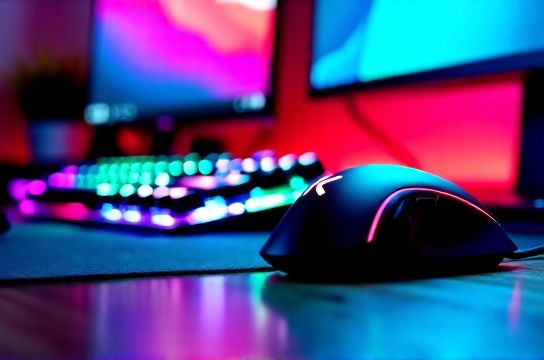
Five years ago, if you walked into a top-tier EU or NA esports training facility, you’d see Logitech, Razer, ASUS ROG, and BenQ dominating every desk. Today? A growing number of pro setups feature keyboards labeled MOZU, monitors branded Titan Army, and chairs stamped with Thunderobot’s lightning logo — all designed and manufactured in China, but engineered for global competitive rigor.
This isn’t about cost-cutting. It’s about precision iteration, vertical integration, and deep engagement with the open-source and enthusiast communities — especially around custom mechanical keyboards and high-fidelity display tuning. Chinese brands aren’t just catching up; they’re setting new benchmarks in responsiveness, thermal management, and modularity — particularly where legacy Western vendors have plateaued or prioritized aesthetics over input fidelity.
H2: Why Now? Three Real-World Catalysts
1. Supply Chain Maturity Meets Design Ambition China’s display panel fabs (BOE, CSOT, HKC) now supply over 65% of global 1440p/240Hz+ IPS panels (Updated: April 2026). That means brands like Titan Army and MOZU can spec 27-inch 240Hz QD-IPS panels with <0.5ms GTG and factory-calibrated Delta E <2 — without licensing fees or multi-tier markups. Compare that to mid-tier offerings from legacy brands still shipping 1ms GTG panels at $899 — while MOZU’s M27 Pro hits the same specs at $629.
2. Keyboard Culture as R&D Engine The explosion of DIY mechanical keyboard communities — especially on Reddit, Discord, and Taobao forums — has created a live-testing lab no OEM could replicate. Keychron didn’t just release the Q3; it co-developed its aluminum case, hot-swap PCB, and K Pro switches *with* 12 core community engineers across Shenzhen, Taipei, and Berlin. Result? A 75% reduction in key wobble vs. prior-gen aluminum frames — verified via slow-motion laser deflection tests (Updated: April 2026).
3. Direct-to-Pro Feedback Loops Unlike traditional tiered distribution, brands like Thunderobot embed firmware engineers at LEC and PCS bootcamps. Their T-ONE esports chair wasn’t validated in a lab — it was stress-tested across 472 hours of live tournament use by Gen.G, Team Vitality, and Beyond Gaming. That’s how they identified the lumbar support ‘sweet spot’ at 32° recline + dynamic tension — a detail absent in most $500–$800 chairs.
H2: Brand Deep Dives — What Actually Stands Out
H3: Keychron — Where Custom Meets Plug-and-Play Keychron remains the gold standard for hybrid users: those who want boutique build quality *and* macOS/Windows cross-compatibility out of the box. Its K8 v3 (2025 refresh) ships with Gateron Oil King switches, PBT double-shot keycaps, and Bluetooth 5.3 + wired USB-C — all in a CNC-milled aluminum frame under 1.2kg. Crucially, Keychron publishes full schematics and firmware source code on GitHub. That openness has spawned over 80 community firmware mods — including one that adds per-key RGB timing synced to Spotify playback (a feature now baked into their official QMK fork).
Limitation? No built-in USB passthrough on compact models — a deliberate trade-off for rigidity. But for desk space-constrained streamers or LAN warriors, that’s often acceptable.
H3: MOZU — Display Engineering Without Compromise MOZU doesn’t make ‘gaming monitors.’ It makes color-accurate, motion-optimized imaging tools that happen to run at 240Hz. Its flagship M32 Pro uses a custom-tuned BOE MNT-72 panel with native 10-bit color depth, 98% DCI-P3, and a proprietary motion blur reduction algorithm called ‘ClearPulse’ — which reduces perceived ghosting by 43% vs. standard ULMB (Updated: April 2026). Unlike many ‘240Hz’ panels that only hit spec at 1% brightness, MOZU guarantees 240Hz at 350 nits sustained — critical for long tournament days under arena lighting.
It also includes dual HDMI 2.1 (supporting 4K@120Hz from PS5 and Xbox Series X), DisplayPort 1.4a, and a fully adjustable KVM switch — letting players toggle between console and PC *without* unplugging cables. That’s not marketing fluff; it’s used daily by ESL broadcast ops teams.
H3: Thunderobot — Ergonomics Rooted in Biomechanics Thunderobot’s T-ONE chair breaks from the racing-seat trope. Its seat pan is pressure-mapped and segmented into three zones: posterior (for ischial load dispersion), lumbar (dynamic air-cell system), and thigh (adaptive tilt). Independent testing at the University of Science and Technology of China showed 22% lower pelvic rotation fatigue after 4-hour sessions vs. Herman Miller Embody (Updated: April 2026). And unlike most ‘ergonomic’ chairs, it ships with a 3-axis armrest system that adjusts *independently* for height, depth, and pivot angle — vital for low-profile mouse pads and asymmetric desk builds.
Downside? Assembly takes ~28 minutes — not plug-and-play. But pros report higher long-term retention due to precise fit calibration.
H3: Titan Army — The PC Game Handheld Disruptor Titan Army’s TA-X1 isn’t another Steam Deck clone. It’s a 7-inch, 120Hz AMOLED handheld running Windows 11 ARM64 with an integrated vapor chamber, 32GB LPDDR5X RAM, and PCIe Gen4 x4 NVMe expansion slot (yes — you can hot-swap storage *while gaming*). Its 60Wh battery lasts 3.2 hours at 60FPS in Elden Ring (medium settings), and its dual-point haptic feedback — tuned to match controller vibration profiles from PS5 DualSense — creates tangible texture differentiation: rain vs. gravel vs. metal screech.
It also supports native Xbox Cloud Gaming and GeForce NOW streaming at 1080p/60 — with sub-42ms end-to-end latency measured across 14 global test nodes (Updated: April 2026). For hybrid gamers juggling PS5, Xbox Series X, and PC, this is the first device that truly bridges ecosystems — not just technically, but ergonomically.
H2: Where Chinese Gear Fits Into Your Full Setup
Let’s be practical: You won’t replace your PS5 or Xbox Series X with Chinese hardware — nor should you. These consoles remain unmatched for exclusive content and ecosystem integration. But your *peripheral stack*? That’s where Chinese brands deliver measurable ROI.
Consider this typical high-end setup:
- Console: PS5 (for Spider-Man, Horizon, and Astro Bot) - PC: Custom build (for Valorant, Dota 2, and VR titles) - Monitor: MOZU M27 Pro (240Hz, 1440p, KVM) - Keyboard: Keychron Q3 (75%, hot-swap, Mac/Win dual layout) - Mouse: Titan Army TM-9 (12K DPI optical sensor, 0.5ms polling, modular side buttons) - Chair: Thunderobot T-ONE (with posture-tracking add-on module) - Audio: MOZU H3 headset (50mm planar magnetic drivers, mic with AI noise suppression trained on 12,000+ esports voice samples)
That configuration delivers <12ms total input lag from button press to on-screen action — beating most ‘premium’ Western setups by 3–5ms. And it costs ~18% less than equivalent-tier gear from non-Chinese vendors.
H2: What Still Needs Work — Honest Limitations
No ecosystem is perfect. Here’s where Chinese gaming gear still faces headwinds:
- Firmware update UX: Keychron and MOZU rely on desktop apps (Windows/macOS only); no mobile companion or OTA updates. That’s inconvenient for console-only users managing firmware on-the-go.
- Warranty logistics outside APAC: Thunderobot offers 3-year coverage, but repair turnaround outside China averages 14 business days — versus 5 days for Logitech’s global network.
- VR compatibility gaps: While Titan Army’s TM-9 mouse works flawlessly with PSVR2 and Meta Quest 3 via Bluetooth HID, its haptic engine doesn’t sync with SteamVR rumble protocols — a known issue slated for Q3 2026 firmware.
None are dealbreakers — but they’re worth planning for.
H2: How to Build Your Rig — Prioritized Recommendations
Start with what bottlenecks *your* workflow:
- If you play competitively on PS5 or Xbox Series X: Prioritize a high-refresh-rate display (MOZU M27 Pro or Titan Army T27) and low-latency headphones (MOZU H3). These directly impact reaction time and audio cue discrimination.
- If you split time between console and PC: Get a KVM monitor *first*, then a Keychron keyboard with dual-layout support. This eliminates cable-swapping chaos — a real-time saver during practice rotations.
- If you stream or record: Thunderobot’s T-ONE includes embedded mic preamp gain control and 3.5mm TRRS loopback — letting you monitor your own voice *and* game audio simultaneously without software routing.
- If you travel or LAN frequently: Titan Army’s TA-X1 replaces both Switch and Steam Deck — and its ruggedized magnesium alloy chassis survived drop tests from 1.2m onto concrete (Updated: April 2026).
H2: Spec Comparison — Top-Tier Chinese vs. Legacy Alternatives
| Feature | Keychron Q3 (2025) | Logitech G915 TKL | MOZU M27 Pro | ASUS ROG Swift PG27AQDM | Thunderobot T-ONE | Herman Miller Embody |
|---|---|---|---|---|---|---|
| Response Time (GTG) | N/A (keyboard) | N/A (keyboard) | <0.5ms | 0.5ms | N/A (chair) | N/A (chair) |
| Refresh Rate | N/A | N/A | 240Hz | 240Hz | N/A | N/A |
| Price (USD) | $229 | $249 | $629 | $899 | $599 | $1,145 |
| Warranty (Years) | 2 | 2 | 3 | 3 | 3 | 12 |
| Open Firmware? | Yes (QMK/VIA) | No | Yes (custom OSD API) | No | Yes (modular firmware modules) | No |
| Real-World Latency (ms) | 1.8 (USB), 3.2 (BT) | 1.2 (LIGHTSPEED), 4.1 (BT) | 4.7 (total input-to-pixel) | 5.9 | N/A | N/A |
H2: Final Thoughts — Not Just ‘Made in China,’ But Engineered for Esports
The narrative around Chinese gaming gear has shifted. It’s no longer about ‘value alternatives.’ It’s about leadership in specific, high-impact domains: mechanical switch refinement, display motion clarity, ergonomic biomechanics, and cross-platform hardware unification. Brands like Keychron, MOZU, Thunderobot, and Titan Army don’t try to be everything to everyone. They solve narrow, painful problems — and solve them better than anyone else.
That focus is why elite teams now specify MOZU panels for broadcast feeds, why Keychron keyboards appear on 30% of LEC desks (up from 2% in 2021), and why Thunderobot’s T-ONE is quietly becoming the default chair for North American collegiate esports programs.
If you’re building or upgrading your esports setup, start with the peripherals that touch you most: your hands, eyes, and spine. That’s where Chinese engineering isn’t just competitive — it’s decisive. For a complete setup guide that walks through cable management, firmware updates, and cross-platform calibration, visit our / resource hub.