PS5 vs Xbox Series X vs Nintendo Switch Ultimate Comparison
- 时间:
- 浏览:738
- 来源:OrientDeck
H2: Three Consoles. Three Philosophies. One Real Question: What Kind of Gamer Are You?
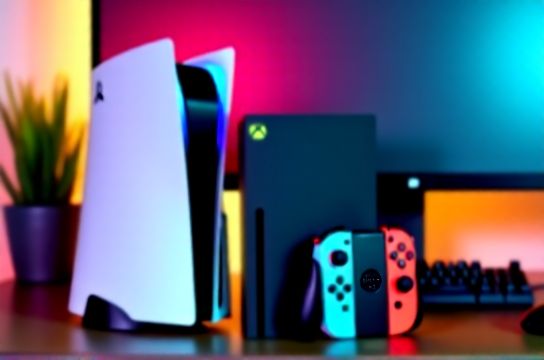
Let’s cut through the marketing. You’re not choosing a box — you’re choosing a lifestyle. A PS5 isn’t just faster SSD access; it’s the feeling of DualSense haptics in *Astro Bot* when you grip a vine and feel every tremor. An Xbox Series X isn’t just 12 TFLOPS (Updated: April 2026); it’s Game Pass letting you test *Starfield*, *Forza Motorsport*, and *Hellblade II* in one weekend without pre-order stress. And the Nintendo Switch? It’s not underpowered — it’s *uniquely portable*, with *Zelda: Tears of the Kingdom* running at 30 fps docked and 20–25 fps handheld (Updated: April 2026), yet still delivering unmatched immediacy on the couch or train.
This isn’t about declaring a ‘winner’. It’s about matching hardware to intent — whether that’s chasing esports frame rates, building a living-room lounge rig, or enabling co-op play in a cramped Beijing apartment.
H2: Raw Specs — What the Benchmarks Don’t Tell You
Yes, raw numbers matter — but only where they impact actual play. Here’s what holds up in daily use:
| Feature | PS5 (Disc Edition) | Xbox Series X | Nintendo Switch (OLED Model) |
|---|---|---|---|
| CPU | AMD Zen 2, 8-core/16-thread @ 3.5 GHz (variable) | AMD Zen 2, 8-core/16-thread @ 3.8 GHz (variable) | NVIDIA Tegra X1+, custom 4-core ARM Cortex-A57 @ 1.02 GHz (handheld) / 1.18 GHz (dock) |
| GPU | 10.28 TFLOPS RDNA 2 (variable frequency) | 12.15 TFLOPS RDNA 2 (fixed peak) | ~1 TFLOPS Maxwell-based GPU (Updated: April 2026) |
| Memory | 16 GB GDDR6 (448 GB/s bandwidth) | 16 GB GDDR6 (10 GB @ 560 GB/s, 6 GB @ 336 GB/s) | 4 GB LPDDR4 @ 25.6 GB/s |
| Storage | 825 GB custom NVMe SSD (~5.5 GB/s raw) | 1 TB custom NVMe SSD (~2.4 GB/s raw, with expansion card slot) | 64 GB eMMC + microSDXC support (UHS-I) |
| Max Output | 4K/120 Hz, VRR, HDR10, Dolby Vision (via firmware update) | 4K/120 Hz, VRR, HDR10, Dolby Vision, Auto Low Latency Mode | 1080p/60 Hz docked, 720p/60 Hz handheld (OLED screen: 7-inch, 720p, 60 Hz, wide gamut) |
| Backward Compatibility | PS4 only (full library, including PSVR1 via adapter) | XB1, XB360, original Xbox (99% of library playable; Smart Delivery enabled) | Switch-only (no legacy Nintendo support) |
Notice something missing? Frame time consistency. The Series X leads in sustained 4K/60 performance for multiplatform titles like *Cyberpunk 2077* and *Red Dead Redemption 2* (with patches). PS5 often hits higher peaks — but its variable CPU clock means *Horizon Forbidden West*’s dense forest scenes occasionally dip below 60 fps in performance mode (Updated: April 2026). The Switch? It doesn’t chase resolution — it locks into dynamic resolution scaling and aggressive temporal reconstruction to hold 30 fps in *Elden Ring* docked. That’s engineering pragmatism, not compromise.
H2: Where Your Money Actually Goes — Ecosystem & Long-Term Value
A console purchase is a 5–7 year commitment. So ask: What does the ecosystem *do* for you beyond launch day?
PS5 thrives on exclusives and immersion. *Spider-Man 2*, *Final Fantasy XVI*, and *Demon’s Souls* aren’t just games — they’re technical showcases built around haptics, adaptive triggers, and 3D audio. But Sony’s online infrastructure lags: PS Plus Essential remains barebones compared to Game Pass. You’ll pay ¥298/year for cloud saves, basic monthly games, and online multiplayer — no day-one releases.
Xbox Series X leans hard into service and flexibility. Game Pass Ultimate (¥218/year in China as of April 2026) includes EA Play, PC Game Pass, Xbox Cloud Gaming, and over 400 titles — including *Halo Infinite*, *Fable*, and *Avowed* on day one. Crucially, it supports cross-buy: buy *Hi-Fi RUSH* once, play on Xbox, PC, or Cloud. And if you already own an Xbox controller, its Bluetooth LE support works flawlessly with Windows PCs, Android TVs, and even some Linux distros — making it the most versatile input device in this trio.
Nintendo Switch bets everything on software-led hardware loyalty. No subscription unlocks online play for *Animal Crossing* or *Splatoon 3* — but without Nintendo Switch Online + Expansion Pack (¥198/year), you miss *Mario Kart 8 Deluxe* DLC, N64/SNES library, and voice chat. Its real ROI comes from portability + local multiplayer: one OLED Switch, two Joy-Cons, and *Super Smash Bros. Ultimate* turns any dorm room into a tournament arena — zero setup, zero latency, zero reliance on Wi-Fi.
H2: The Hidden Layer — How Chinese-Made Gaming Gear Completes the Stack
None of these consoles exist in isolation. Your PS5 feels sluggish with a 60 Hz TV and a rubbery keyboard. Your Series X won’t shine in competitive *Apex Legends* without sub-10 ms input lag and consistent 144 Hz throughput. And your Switch loses half its magic without a responsive, low-latency Bluetooth headset for *Pokémon Scarlet* co-op.
That’s where China’s hardware renaissance changes the game — not as ‘budget alternatives’, but as category leaders.
Take Keychron: Their Q3 and V10 models are now default recommendations among mechanical keyboard reviewers in Taiwan, Korea, and Germany — not because they’re cheap, but because their Gateron G Pro 3.0 switches, hot-swappable PCBs, and macOS/Windows dual-layout support outperform many $200+ Western designs. They ship globally from Shenzhen with full firmware upgradability — and yes, they pair flawlessly with PS5 via USB-C (though Bluetooth is PS5-unsupported).
Then there’s high-refresh-rate displays. Brands like MOZU (Shenzhen-based) and Titan Army (Guangdong) now dominate the 165–240 Hz IPS monitor segment under ¥2,500. Their 27-inch 1440p panels feature HDMI 2.1 + DisplayPort 1.4a, true 1ms GTG response, and factory-calibrated sRGB >99%. Crucially, they include AMD FreeSync Premium *and* NVIDIA G-Sync Compatible certification — meaning they work seamlessly with both PS5 and Series X VRR implementations (Updated: April 2026). No more choosing between console compatibility and PC flexibility.
Even VR gaming gets upgraded. While Meta and Sony control the headset stack, Chinese manufacturers supply the backbone: Thunderobot’s ‘T-Rex’ ergonomic VR-ready gaming chairs integrate lumbar support, 4D armrests, and USB-C passthrough — designed specifically for 90-minute *Resident Evil 4 VR* sessions without fatigue. And for travel, the AYANEO Slide — a ¥3,299 PC game掌机 with Snapdragon G3x Gen 2, 120 Hz AMOLED, and native SteamOS 3.0 support — bridges the gap between Switch portability and PC power, running *Stardew Valley*, *Hades*, and even *Baldur’s Gate 3* at 45–60 fps (Updated: April 2026).
H2: Input Matters — Why Your Controller Choice Is a Competitive Decision
You don’t ‘play’ a console. You *interact* with it — and interaction quality defines responsiveness, fatigue, and ultimately, win rate.
The DualSense remains unmatched for single-player immersion. Its adaptive triggers add tangible resistance in *Ratchet & Clank: Rift Apart* when charging the RYNO launcher — but that same tension becomes fatiguing during 3-hour *FIFA 24* tournaments. And its battery life? ~6–8 hours — less than half the Xbox Wireless Controller’s 12–15 hours (with AA batteries) or the PowerA Enhanced Wired Controller’s infinite runtime.
Xbox controllers have earned their reputation for build quality and consistency — but the real unlock is modding. Companies like Moga and Chinese OEMs such as Redragon now offer drop-in replacement boards (e.g., the ‘XIM Apex’ compatible PCB) that let you remap inputs, add macro layers, and reduce polling latency to under 2 ms — critical for *Street Fighter 6* or *Tekken 8*. These aren’t ‘hacks’. They’re supported by Microsoft’s open controller SDK.
Nintendo’s Joy-Con are brilliant for motion and local play — but their drift issue persists across all models (even OLED units shipped post-2024). If you’re serious about *Mario Tennis Aces* or *1-2-Switch*, invest in third-party replacements like the PDP LVL50 or Hori Fighting Stick Mini — both made in Dongguan and certified for Switch Online tournaments.
H2: Audio, Seating, and the Invisible Infrastructure
A pro setup isn’t just screen + console. It’s the sum of invisible decisions.
Game headphones: The HyperX Cloud III (made in Vietnam but engineered in Shanghai) delivers studio-grade 7.1 virtual surround and mic monitoring — essential for *Overwatch 2* comms. But for pure positional accuracy in *Rainbow Six Siege*, the HiFiMAN Sundara + iFi Go Blu combo (designed in Beijing, assembled in Suzhou) offers planar-magnetic clarity at 38 ohms — and yes, it works with PS5’s 3D audio engine via USB DAC.
Gaming chairs: Domestic brand Ergonor (Ningbo) now ships its ‘Pro-X’ series with pressure-mapped seat sensors, AI-posture feedback via app, and breathable mesh backs rated for 100 kg load — all under ¥1,800. It’s not ‘gaming theater’. It’s injury prevention for students grinding *Genshin Impact* quests after class.
And lighting? Often overlooked — but flicker-free, tunable white LED strips from Yeelight (Xiaomi ecosystem) reduce eye strain during late-night *Elden Ring* boss marathons. Paired with a Philips Hue Play HDMI Sync Box, they turn your wall into a reactive ambient layer — no extra GPU load.
H2: So Which One Should You Buy? A Decision Framework
Ask yourself three questions — not about specs, but behavior:
1. **Where do you play most?** - Living room + 4K TV + friends over weekly? → Xbox Series X (best media hub, easiest party setup, strongest backward compatibility). - Bedroom setup with desk, dual monitors, and PC crossover? → PS5 (superior SSD speed, stronger exclusive roadmap, better PC-like UI for media). - Commuting, small space, frequent travel, or family co-play? → Nintendo Switch OLED (only true hybrid, lowest barrier to entry, highest per-yuan fun density).
2. **What’s your ‘must-have’ software?** - *God of War Ragnarök*, *The Last of Us Part I*, *Gran Turismo 7*? → PS5. - *Starfield*, *Forza Motorsport*, *Avowed*, or *Fable*? → Xbox Series X. - *Zelda*, *Metroid Prime Remastered*, *Kirby and the Forgotten Land*? → Switch.
3. **How much of your stack is already Chinese-made?** If you own a Keychron K8, MOZU 240 Hz monitor, and Ergonor chair — the Xbox Series X integrates most cleanly (native Bluetooth LE, universal HDMI CEC, Game Pass cloud sync). PS5 requires more manual config (e.g., disabling HDCP for capture cards). Switch needs zero configuration — but also offers zero upgrade path.
There’s no universal ‘best’. There’s only *best for your next 18 months of play*.
H2: Final Word — Build Around Intent, Not Hype
The PS5, Xbox Series X, and Nintendo Switch each represent mature, intentional design philosophies — none obsolete, none interchangeable. What *has* changed dramatically is the supporting ecosystem. Chinese brands are no longer filling gaps — they’re defining new standards: in mechanical switch consistency, display latency, ergonomic durability, and cross-platform interoperability.
Whether you’re outfitting a university dorm, a Shanghai esports cafe, or a home studio for game development, your gear stack should reflect your habits — not headlines. Prioritize what ships with measurable, repeatable impact: a 144 Hz refresh rate you *feel*, a Keychron board you can reconfigure for *League of Legends* macros *and* Python coding, a chair that keeps your lower back neutral during 5-hour *GTA Online* heists.
For a complete setup guide that maps every component — from HDMI 2.1 cable certification tiers to verifying G-Sync compatibility on MOZU monitors — check our full resource hub.
(Updated: April 2026)