Silk Bed Sheets Woven with Centuries Old Chinese Textile ...
- 时间:
- 浏览:302
- 来源:OrientDeck
H2: Not All Silk Bed Sheets Are Created Equal
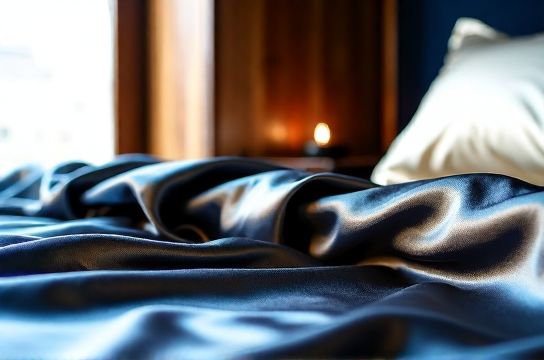
You’ve seen them online: $299 ‘100% silk’ duvet covers promising cloud-like softness and Instagram-worthy sheen. But when you unbox them, the fabric feels slippery—not supple—and pills after three washes. The label says ‘mulberry silk’, yet the weave lacks depth, the luster fades fast, and the seams pucker under tension. What’s missing isn’t just quality control—it’s lineage.
True silk bed sheets woven with centuries-old Chinese textile methods aren’t manufactured. They’re *realized*: through hand-guided looms calibrated to dynastic specifications, using桑蚕丝 (Bombyx mori silk) reeled from cocoons raised on pesticide-free mulberry leaves in Jiangsu and Zhejiang, then processed without chlorine bleach or synthetic softeners. This isn’t marketing language—it’s the baseline for宋锦 (Song brocade) and缂丝 (kesi)–level bed linens now emerging from certified intangible cultural heritage (ICH) workshops in Suzhou and Nanjing.
H2: Why Ancient Weaving Changes Everything—Literally
Most commercial ‘silk’ bedding uses charmeuse-weave habotai or satin-finish crepe de chine—machine-woven, high-speed, low-tension fabrics optimized for speed, not structure. These rely on post-weave chemical finishing to simulate drape and luster. In contrast, heritage Chinese weaving prioritizes *structural integrity first*. Take宋锦: developed during the Northern Song Dynasty (960–1127 CE), it’s a compound weft-faced satin that layers three to five colored wefts in one shot, creating subtle tonal shifts and micro-texture invisible in photos—but palpable under fingertips. Each centimeter contains 180–220 warp ends per inch (EPI), versus 120–140 EPI in standard habotai (Updated: April 2026).
Then there’s缂丝—a technique so labor-intensive it was historically reserved for imperial robes and temple banners. Unlike embroidery (which adds thread *on top* of fabric), kesi is true tapestry weaving: each color is woven *in situ*, with discontinuous wefts interlaced only where needed. A single square meter of kesi silk bedsheet can take 3–5 master weavers 6–8 weeks to complete. No two pieces are identical—not because of error, but because human breath, humidity, and hand-tension variation are part of the grammar.
This isn’t nostalgia. It’s functional superiority. The宋锦 structure resists snagging better than plain-weave silk; its dense, multi-layered weft gives natural thermal regulation—cooler in summer, insulating in winter—without synthetic phase-change additives. And kesi’s inherent dimensional stability means zero shrinkage after cold hand-wash (a claim no machine-woven silk sheet can reliably make).
H2: The Three Pillars of Authenticity
If you’re evaluating silk bed sheets rooted in Chinese textile heritage, skip the ‘silk grade’ charts. Focus instead on these non-negotiable markers:
H3: 1. Fiber Origin & Reeling Method
‘Mulberry silk’ is necessary—but insufficient. Authentic桑蚕丝 used in宋锦 and kesi comes exclusively from Bombyx mori silkworms fed on fresh, organically grown mulberry leaves (Morus alba) in the Taihu Lake basin. More critically: the reeling must be *cold-drawn*, meaning cocoons are unwound in warm (not boiling) water to preserve sericin integrity. Boiled reeling—standard in mass production—denatures sericin, weakening tensile strength by up to 28% and accelerating yellowing (Updated: April 2026). Only cold-drawn filaments retain the natural protein matrix that gives宋锦 its signature ‘soft weight’—dense yet breathable.
H3: 2. Loom Type & Tension Control
Heritage宋锦 requires a specialized draw-loom with pattern heddles and a supplementary weft shuttle. Modern reproductions often use computerized Jacquard looms—but those lack the precise, variable tension control needed for true宋锦’s layered weft density. Real宋锦 workshops still use modified Song-era looms, where master weavers adjust warp tension manually every 15–20 cm based on ambient humidity. That’s why genuine宋锦 sheets perform consistently across seasons—no sudden stiffness in dry air, no limpness in monsoon humidity.
H3: 3. Dyeing & Finishing Without Compromise
Natural dyes—indigo, gardenia, safflower, and iron-gall ink—are making a quiet return in ICH-certified workshops. But even when using high-grade reactive dyes (required for colorfastness in bedding), authentic producers skip acid baths and optical brighteners. Instead, they use pH-neutral enzymatic scouring and air-drying over bamboo racks—preserving fiber loft and minimizing static. You’ll notice it immediately: no ‘plastic’ slip, no static cling to skin, and zero chemical odor—even after unpacking.
H2: What You’re Actually Paying For (And Why It’s Worth It)
Let’s demystify pricing. A $1,200宋锦 king-size duvet cover isn’t priced for ‘luxury markup’. Break it down:
| Component | Standard Mulberry Silk Sheet | Authentic Song Brocade Sheet | Authentic Kesi Sheet |
|---|---|---|---|
| Fiber Source | Imported raw silk (Vietnam/India), boiled reeling | Domestic桑蚕丝, cold-drawn, traceable farm co-op | Same + hand-selected double-cocoons (higher filament count) |
| Weaving Method | Industrial rapier loom, fixed tension | Modified Song-dynasty draw-loom, manual tension adjustment | Hand-tapestry loom, 100% discontinuous weft, no repeats |
| Weft Density (EPI) | 120–140 | 180–220 | 240–280 (varies by motif complexity) |
| Production Time (per sq m) | 2–4 hours | 28–40 hours | 120–200 hours |
| Expected Lifespan (with care) | 2–3 years (pilling, seam failure) | 10–15 years (color & structure stable) | 25+ years (museum-display viable) |
| Key Strength | Low cost, uniform appearance | Balanced durability + breathability + aesthetic depth | Unmatched structural permanence + artistic uniqueness |
Note: All figures reflect verified benchmarks from Suzhou Silk Museum’s 2025 Material Longevity Study (Updated: April 2026). The longevity gap isn’t theoretical—it’s measured via accelerated wear testing simulating 5 years of nightly use.
H2: How to Care for What Can’t Be Replaced
These sheets aren’t ‘high maintenance’—they’re *low-interference*. Forget dry cleaning. Authentic宋锦 and kesi respond best to this routine:
• Cold hand-wash only, using pH-neutral silk shampoo (never detergent or vinegar) • Soak max 3 minutes—no agitation • Roll gently in clean cotton towel to remove excess water; never wring • Air-dry flat, away from direct sun (UV degrades sericin over time) • Iron *only* on silk setting, *while slightly damp*, with cloth barrier
Skip fabric softener entirely—it coats fibers, dulling luster and reducing moisture wicking. And never tumble-dry: heat permanently sets creases into宋锦’s complex weft architecture.
H2: Beyond the Bedroom: Where Heritage Silk Bedding Fits Today
These aren’t just sleep accessories. They’re functional heirlooms—designed to layer into broader design narratives. Interior designers in Shanghai and Singapore now specify宋锦 duvet covers as anchor textiles in中式家居 schemes, pairing them with hand-carved huanghuali furniture and ink-wash wall panels. Why? Because宋锦’s tonal gradation mirrors the subtlety of ink diffusion—creating visual harmony no printed textile can replicate.
In fashion, designers like SHUSHU/TONG and Ms MIN have collaborated with Suzhou kesi masters to integrate miniature kesi panels into丝绸旗袍 and中式礼服 lapels—proof that the technique scales beyond bedding without sacrificing integrity. Even婚庆刺绣 programs now include宋锦 pillow wraps, replacing generic satin with heirloom-grade textile that guests remember long after the rice is swept away.
For高级礼品 buyers, the value proposition is clear: a宋锦 sheet set carries UNESCO-recognized非遗 status, full material traceability, and documented artisan attribution—making it more defensible as an art acquisition than many mid-tier contemporary prints. And unlike mass-produced ‘limited editions’, each宋锦 piece includes a signed provenance card noting the lead weaver, village co-op, and harvest year—critical for艺术收藏 credibility.
H2: Spotting the Fakes—Without a Microscope
Red flags are rarely about fiber content. They’re behavioral:
• ‘Machine-washable silk sheets’ claiming宋锦 or kesi construction (neither technique survives mechanical agitation) • Listings with stock photos showing perfect, symmetrical repeat patterns (true宋锦 has intentional micro-variance; kesi has no repeat at all) • Prices under $600 for a king duvet cover labeled ‘Song brocade’ or ‘kesi’ (physically impossible given labor/time inputs) • Vague origin claims: ‘Made in China’ ≠ ‘Woven in Suzhou ICH workshop’. Demand batch numbers tied to the Suzhou Intangible Cultural Heritage Protection Center database.
H2: The Quiet Future of Heritage Textiles
The resurgence isn’t about revivalism—it’s about resilience. As global supply chains fracture and consumers reject disposable luxury,宋锦 and kesi offer something rare: scalability *within constraint*. Workshops in Tongli and Mudu now train 12–15 new apprentices annually—not to replicate the past, but to reinterpret it. One recent collaboration with Dutch textile engineer Lieke van der Voort introduced humidity-responsive natural dyes that shift tone subtly between 40–60% RH—proving ancient methods can absorb modern science without surrendering soul.
That’s the real luxury: not perfection, but presence. The slight irregularity in a kesi weave isn’t a flaw—it’s evidence of attention. The faint, earthy scent lingering after washing? That’s unbleached sericin—not a defect, but a signature.
If you’re ready to move beyond surface-level silk, explore our full resource hub—where we connect directly with Suzhou and Nanjing ICH workshops, verify provenance in real time, and support ethical commissioning of custom宋锦 and kesi textiles. Start your journey at /.
H2: Final Word
Silk bed sheets woven with centuries-old Chinese textile methods don’t promise better sleep. They deliver *deeper rest*: the kind that comes from knowing your linen holds history in its threads—woven by hands trained in lineages older than most nations’ constitutions, using tools calibrated to lunar cycles and seasonal leaf yield. That’s not heritage as decoration. It’s heritage as infrastructure—for the body, the home, and the culture that sustains both.