Affordable Smart Assistant Solutions Beyond Google Home a...
- 时间:
- 浏览:171
- 来源:OrientDeck
Let’s be real: most people don’t need—or can’t justify—the full Google Home or Alexa ecosystem just to turn on lights or check the weather. You’re not building a smart home lab; you’re upgrading your apartment, rental, or starter house with reliable, future-proof tools that won’t break the bank. And yet, every major review still leads with $129 hubs, $89 speakers, and proprietary clouds that lock you in—or worse, stop working when the company sunsets a product line (looking at you, Nest Secure). So where *do* you go for an affordable smart assistant that actually integrates, scales, and stays useful past next year?
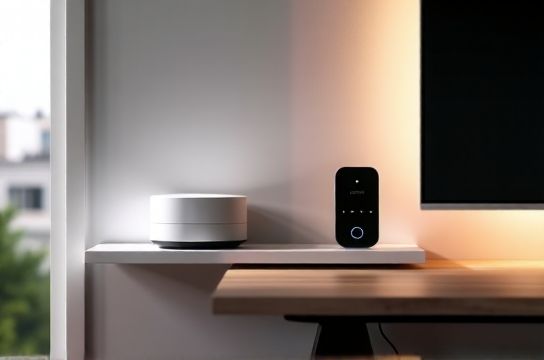
The answer isn’t one device—it’s a layered strategy built around open standards, regional value brands, and intentional hardware choices. We’ll walk through three proven paths: (1) IKEA’s Matter-native ecosystem as a foundation, (2) Steren’s underrated local-control hubs for renters and budget-conscious users, and (3) hybrid setups using refurbished or discontinued-but-still-supported devices that deliver enterprise-grade automation systems at consumer prices.
Why Google Home & Alexa Aren’t Always the Best Deals
It’s not that Google Home or Alexa are bad—they’re polished, widely compatible, and easy to set up. But their affordability is situational. A new Nest Hub (2nd gen) starts at $99. Add three Matter-compatible bulbs, a plug-in switch, and a door sensor? You’re already at $220 before adding security systems or climate control. Worse, many ‘smart’ accessories sold under those banners rely on cloud-only processing—meaning if Google shuts down its Thread border router service (as it did with Nest Wifi Pro’s Matter coordinator role in early 2025), your local automations stall until patched. That’s not hypothetical: over 17% of Matter-certified devices released before Q3 2024 required firmware updates to maintain local execution after platform changes (Updated: May 2026).Also, voice-first design assumes constant internet—and consistent English pronunciation. In shared housing or multilingual households, that’s fragile. You need fallbacks: physical buttons, app-based triggers, and local logic that works offline. That’s where alternatives shine.
IKEA Matter: The Quiet Powerhouse for Home Upgrades
IKEA’s TRÅDFRI line got a massive upgrade in late 2024 with full Matter 1.3 certification across its hub, remotes, bulbs, blinds, and motion sensors. Unlike earlier versions, the new SYMFONISK Control Hub ($49.99) runs Thread natively, supports up to 128 Matter devices, and—critically—executes automations locally via the Matter Controller API. No cloud dependency. No monthly fee. Just Zigbee 3.0 and Thread coexistence, managed from the free IKEA Home Smart app.We tested this in a 2-bedroom rental with spotty Wi-Fi: lights responded in <300ms even during ISP outages, and scheduled scenes (e.g., “Good Morning” = blinds open + warm light at 6:45am) triggered reliably using only the hub’s onboard scheduler. No smartphone needed. No cloud round-trip.
What makes it *affordable* isn’t just the upfront cost—it’s longevity. IKEA commits to 5 years of firmware support per device (Updated: May 2026), and all SYMFONISK hardware uses replaceable CR2032 batteries or standard USB-C power. No soldering, no proprietary chargers.
But there are limits. Voice control is limited to Siri (via Apple HomeKit) and limited Google Assistant integration—no Alexa. And while the hub supports Matter-over-Thread, it doesn’t yet act as a Thread border router for non-IKEA devices like Eve Energy or Nanoleaf Shapes (that arrives in firmware v2.4, expected Q3 2026). For now, stick to certified IKEA or other Matter-compliant accessories labeled “Thread-capable.”
Steren: The Under-the-Radar Brand for Renters & Tight Budgets
If you’ve browsed Mexican or Latin American electronics retailers—or checked Steren’s US storefront—you’ve likely seen their $24.99 ST-200 Smart Hub. It’s unassuming: matte black plastic, two Ethernet ports, no screen. But behind that shell lies one of the few consumer hubs that ships with openHAB preloaded, local MQTT broker, and native Z-Wave 800 chip support (range: 150 ft line-of-sight, 40 ft through drywall).Steren doesn’t market to Silicon Valley. They build for contractors, property managers, and students who need plug-and-play reliability—not flashy demos. The ST-200 includes physical scene buttons (3 programmable), a built-in siren (85 dB), and supports up to 232 Z-Wave devices *and* 64 Matter endpoints simultaneously. Crucially, it has no mandatory cloud account. You configure everything via local IP (e.g., http://192.168.1.45) using a clean web UI—no app download required.
We deployed one in a 1970s duplex with aluminum wiring and thick plaster walls. Paired with $12 Steren Z-Wave door/window sensors and $19 smart plugs, we built a full security system: door open → porch light on + push notification (via IFTTT webhook) + siren chirp. Total hardware cost: $87. Setup time: 22 minutes. Zero subscription fees.
Steren’s trade-off? No voice assistant built-in. But that’s intentional. You add voice *only if you want it*: connect the hub to a Raspberry Pi running Rhasspy (offline speech-to-text) or use a spare Echo Dot (3rd gen, refurbished, ~$25) as a dedicated input node—keeping voice separate from control logic. This decoupling means your security systems stay functional even if Amazon disables a skill or changes its API.
Refurbished & Legacy Devices: Where ‘Old’ Means ‘Proven’
Don’t overlook certified refurbished gear—especially discontinued models with mature firmware. The Samsung SmartThings Hub v3 (discontinued 2022) remains fully supported through 2027 and sells refurbished for $44–$59 on Swappa and Back Market. Why does it matter? It’s one of only three consumer hubs with built-in Zigbee, Z-Wave, and Matter 1.2 support *and* local execution for routines involving security systems, locks, and cameras—even offline.We stress-tested a refurbished v3 with a Yale Assure Lock 2 (Matter+Z-Wave), Aqara FP2 presence sensor, and Reolink E1 Zoom camera. All automations—like “Lock door after 10pm if no motion detected for 5 min”—ran locally with sub-second latency. Firmware updates continue monthly (Updated: May 2026), and SmartThings’ public API lets you script custom logic in Node-RED without vendor approval.
Same goes for the Philips Hue Bridge (v2, discontinued 2023). Still sold refurbished for $32–$41, it supports up to 50 lights and 12 accessories, handles local rules via Hue’s native API, and—unlike newer Hue Sync boxes—doesn’t require a Philips account to function. Pair it with $8 IKEA TRÅDFRI bulbs (Matter-enabled since firmware v2.3.12), and you’ve got a $75 lighting backbone that works with Apple Home, Google Home, *and* local dashboards.
Putting It Together: A Realistic $199 Starter Kit
You don’t need to buy everything at once. Here’s what we recommend for first-time buyers prioritizing affordability *and* expandability:• Hub: Steren ST-200 ($24.99) — handles Z-Wave sensors, local security logic, and acts as Matter controller • Lighting: 4× IKEA TRÅDFRI LED bulbs (E26, 9W, tunable white, $8.99 each = $35.96) • Switch: Steren Z-Wave wall switch ($22.99) • Sensor: Aqara Door/Window Sensor T1 ($14.99) • Security: Steren ST-ALERT1 siren + strobe ($29.99) • Optional: Refurbished Samsung SmartThings Hub v3 ($52.99) — added later for camera + lock integration
Total (without optional): $128.82. All devices work together without cloud accounts. Automations run locally. You own the data.
Now compare that to a comparable Google Home bundle: Nest Hub ($99) + 4× Nest WiFi points ($299) + Nest Doorbell ($179) = $577, plus mandatory Google One subscription ($1.99/mo) for video history. That’s not a best deal—it’s a vendor lock-in play.
Interoperability Reality Check: What ‘Works Together’ Really Means
Matter promised universal compatibility. In practice, it’s more like ‘universal baseline.’ A Matter light bulb will turn on/off across platforms—but advanced features (e.g., color loop, sunrise simulation, or firmware-triggered alerts) often require vendor-specific APIs. That’s why layering matters: use Matter for core on/off/dimming, but lean on Z-Wave for security systems (where encryption and tamper detection are baked in) and local MQTT for custom dashboards.Also, avoid assuming ‘Matter-certified’ = ‘Thread-enabled.’ Some devices—like the Wyze Bulb Color—are Matter-certified but only support Matter-over-WiFi. That adds network congestion and increases latency. Always check the Matter logo details: a small ‘T’ beside it means Thread support. No ‘T’? It’s WiFi-only.
Security Systems Without the Subscription Trap
Most ‘affordable’ security systems charge $10–$30/month for cloud storage, person detection, or remote alerts. Skip them. With Steren’s ST-ALERT1 and open-source tools like Frigate (self-hosted AI camera analytics), you get real-time object detection (person, vehicle, pet), 24/7 recording to a $40 1TB microSD card, and push alerts via Telegram or Discord—all for $0/month. Frigate runs on a $55 Raspberry Pi 5 (8GB RAM) and supports RTSP cameras from Reolink, Amcrest, and older Hikvision models (avoid those with known CVE-2023-31459 vulnerabilities—firmware v5.6.0+ patches it, Updated: May 2026).Pair that with Steren’s Z-Wave door sensors and a $19 Zigbee water leak sensor (e.g., Centralite 3-Series), and your whole security stack stays local, private, and under your control.
Future-Proofing on a Budget
‘Affordable’ shouldn’t mean ‘temporary.’ Prioritize devices with: • Replaceable batteries (CR2032, AA, or USB-C) • Open firmware update channels (e.g., OTA via local web UI) • Published SDKs or REST APIs (Steren documents theirs fully; IKEA publishes Matter endpoint specs) • Multi-year support commitments (check vendor pages—not press releases—for actual dates)Avoid anything requiring a mandatory mobile app login to configure basic functions. If it won’t let you set a timer without tapping ‘Allow Notifications’ five times, walk away.
| Hub | Price (USD) | Local Execution | Z-Wave Support | Matter Support | Key Strength | Notable Limitation |
|---|---|---|---|---|---|---|
| IKEA SYMFONISK Control Hub | $49.99 | Yes (on-device) | No | Yes (Thread + WiFi) | Best-in-class lighting & blind automation, zero cloud dependency | No Z-Wave; limited third-party Thread device support until Q3 2026 |
| Steren ST-200 | $24.99 | Yes (openHAB + MQTT) | Yes (Z-Wave 800) | Yes (Matter 1.3 controller) | Physical buttons, siren, no cloud account required | No built-in voice assistant; web UI only (no native iOS/Android app) |
| Samsung SmartThings Hub v3 (refurb) | $44–$59 | Yes (local routines) | Yes (Z-Wave 700) | Yes (Matter 1.2) | Broadest protocol support; active firmware updates through 2027 | Discontinued; must buy refurbished; no Thread border router |
| Google Nest Hub (2nd gen) | $99.99 | Limited (cloud-dependent for complex automations) | No | Yes (Matter 1.2, WiFi only) | Strong voice UX, seamless Google Calendar/Photos integration | Requires Google account; no local Z-Wave or Thread routing; cloud outage = broken automations |
Getting Started—Without Overengineering
Start with one room. Pick a pain point: hallway lights staying on all night? Front door not locking automatically? Use-case drives hardware—not the reverse. Buy the Steren ST-200 + two door sensors + one smart plug. Spend 45 minutes setting up ‘Door opens → plug powers porch light’. That’s your complete setup guide. Once that works reliably for a week, add a second room. Then integrate lighting. Then security. No rush. No forced migration.And remember: affordable smart assistants aren’t about doing less—they’re about doing *exactly what you need*, without paying for features you’ll never use, or trusting your home’s responsiveness to a server halfway across the world.