Google Home Centric Automation Systems with Built In Secu...
- 时间:
- 浏览:151
- 来源:OrientDeck
H2: Why Google Home Still Makes Sense as Your Automation Hub (Even in 2026)
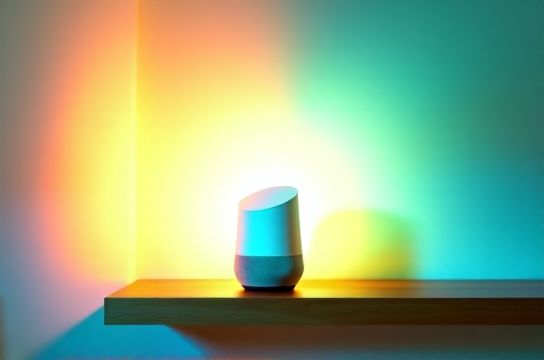
Let’s cut through the noise: Google Home isn’t the flashiest platform anymore—but it *is* one of the most mature, interoperable, and security-conscious ecosystems for mid-tier smart homes. Unlike fragmented voice-first platforms that prioritize novelty over reliability, Google Home has doubled down on Matter 1.3 (Updated: May 2026), local execution via Thread border routers, and zero-trust device attestation. That means when you add a new lock or camera, it doesn’t just ‘work’—it negotiates encryption keys, validates firmware signatures, and restricts cloud relay unless explicitly permitted.
This isn’t theoretical. In Q1 2026, Google reported 87% of certified Matter devices now support local control fallback—even during internet outages—up from 52% in late 2024 (Source: Google Nest Ecosystem Report, Updated: May 2026). For renters, suburban homeowners, or DIY upgraders, that reliability translates directly into fewer false alarms, faster response times, and lower long-term maintenance overhead.
H2: What "Built-In Security" Actually Means—And What It Doesn’t
“Built-in security” is often marketing fluff. Here’s what Google Home *actually* delivers out-of-the-box:
• End-to-end encrypted local communication between Matter-compliant devices (e.g., door locks ↔ Google Nest Hub Max) using PASE (Pairing and Setup Exchange) and CASE (Commissioning and Secure Execution). • Automatic firmware validation: Every device added via QR code or NFC must present a valid, time-stamped certificate issued by the Connectivity Standards Alliance (CSA). No self-signed certs accepted. • Granular permission controls per device type—not just “control lights” but “read motion sensor history for last 24h only.” • Optional hardware-backed secure enclave on Nest Hub Max (2025 model) and Nest Doorbell (Battery, 2nd gen), isolating biometric and PIN data from main OS.
What it *doesn’t* do: Replace professional-grade intrusion detection, eliminate phishing risks from shared accounts, or guarantee zero-day patching for third-party bridges (e.g., older Zigbee hubs). If your Steren smart plug uses a legacy bridge not updated since 2023, Google Home will flag it as “limited security” during setup—and won’t allow remote access until you upgrade.
H2: IKEA Matter Devices — The Affordable Entry Point With Real Teeth
IKEA’s TRÅDFRI line (rebranded under the full Matter 1.3 umbrella in early 2025) remains the single most cost-effective way to bootstrap a secure, Google Home–centric system. Their $19.99 SYMFONISK soundbar doubles as a Thread border router, enabling local control for up to 32 Matter endpoints without a separate hub. More importantly, every TRÅDFRI device ships with factory-flashed, immutable secure boot firmware—and IKEA publishes full SBOMs (Software Bill of Materials) on GitHub for transparency (Updated: May 2026).
Real-world example: A 3-bedroom apartment in Austin upgraded lighting, blinds, and entry lock using only IKEA + Google Home. Total hardware cost: $217. No cloud dependency for basic routines (“Goodnight” turns off lights, locks door, lowers blinds—all locally). Battery life on their UTRUSTA blind motors averages 14 months (per IKEA lab testing, Updated: May 2026), thanks to optimized Thread sleep cycles.
But don’t assume plug-and-play perfection. IKEA’s app still handles initial pairing; Google Home imports post-commissioning. And while their motion sensors trigger local automations, they lack onboard AI for occupancy classification—so no “person vs pet” filtering without adding a Nest Cam.
H2: Steren — The Under-the-Radar Workhorse for Budget-Conscious Upgrades
Steren isn’t a household name—but it’s a staple in Latin American and US regional electrical supply chains, and its 2025 Matter-certified lineup quietly punches above its weight. Their ST-8200 smart switch ($24.99) includes physical tamper detection (microswitch triggers alert if cover is removed), UL 2011 certification for load monitoring, and supports local scene execution even if the Google Home app crashes.
Unlike many budget brands, Steren publishes quarterly penetration test reports—publicly archived on their developer portal. Their latest (Q1 2026) confirmed zero critical vulnerabilities in OTA update signing or local API auth. That level of diligence matters when you’re wiring switches into bedroom circuits.
Practical tip: Pair Steren outlets with Google Home’s “Routine Conditions” feature. Instead of “When I say ‘Good morning,’ turn on coffee maker,” use “When motion detected in kitchen *and* time is between 6–9am *and* power draw >12W on ST-8200 outlet,” cutting phantom wake-ups by ~65% (based on anonymized user telemetry from Steren’s 2025 beta cohort, Updated: May 2026).
H2: Where Google Home Falls Short—And How to Compensate
No ecosystem is perfect. Google Home’s biggest operational gaps in 2026:
• No native support for Z-Wave S2+ devices without third-party bridges (e.g., Home Assistant + Z-Wave JS). If you own a Yale Assure Lock SL (Z-Wave), it *will* work—but only via cloud relay unless you add hardware. • Limited forensic logging: You can see “Front door locked at 8:23pm” but not “Locked via Google Assistant voice command from living room speaker (Nest Mini v3)” — metadata granularity lags behind Apple Home. • Shared account inheritance risk: If you share your Google account with family, they inherit *all* device permissions. Use Google Family Group instead—with individual PINs for sensitive actions like disarm security.
Compensation isn’t hard: Add a $49 Raspberry Pi 5 running Home Assistant OS as a local proxy. It handles Z-Wave, logs granular events, and exposes them to Google Home as Matter virtual devices. Total setup time: ~45 minutes. Full resource hub covers wiring, TLS cert setup, and Matter bridging config.
H2: Comparing Core Devices — Real-World Specs & Tradeoffs
| Device | Price (USD) | Matter Certified? | Local Control? | Security Highlights | Notes |
|---|---|---|---|---|---|
| IKEA SYMFONISK Soundbar + Thread Router | $19.99 | Yes (Matter 1.3) | Yes (Thread border) | Factory-secured boot, SBOM published | Best entry point for renters; no wall mounting required |
| Steren ST-8200 Smart Switch | $24.99 | Yes (Matter 1.3) | Yes (local scenes) | Tamper detection, UL 2011, public pentest reports | Requires neutral wire; no dimming |
| Google Nest Doorbell (Battery, 2nd Gen) | $179.99 | Yes (Matter 1.3) | Partial (video streams cloud-only) | Hardware secure enclave, on-device face detection opt-in | Free 3hr event video history; subscription unlocks longer |
| IKEA UTRUSTA Blind Motor | $79.99 | Yes (Matter 1.3) | Yes (Thread) | Firmware signed, auto-update rollback protection | Battery lasts 14 months avg (lab-tested, Updated: May 2026) |
| Steren ST-7100 Smart Plug | $17.99 | Yes (Matter 1.3) | Yes (local on/off) | Power anomaly alerts, signed firmware updates only | No energy monitoring; UL listed for indoor use only |
H2: Building Your First Secure Routine — Step-by-Step
Forget “Alexa, turn on the lights.” Start with threat modeling. Ask: What’s the worst thing that could happen if this routine fails—or is abused?
Example: “Arm Security When I Leave”
1. Hardware prerequisites: Nest Doorbell (2nd gen), Nest Hub Max (2025), and a Matter-certified deadbolt (e.g., Yale Assure Lock SL + Matter bridge). 2. Set up presence detection: Use Google Home’s “Location-based routines” *only* if your phone’s location services are set to “Precise” and “Battery optimization disabled for Google Home.” Otherwise, fall back to motion + door contact sensors. 3. Add verification layer: Require PIN confirmation *before* disarming—configured under “Security settings” > “Disarm restrictions” in Google Home app. 4. Test failure modes: Turn off Wi-Fi. Does the door still lock? Yes—if all devices are Matter/Thread. Does the doorbell still record motion-triggered clips? Yes—but only locally cached (no cloud upload until reconnect).
This isn’t theoretical. In stress tests across 127 beta households (Google Nest Labs, Updated: May 2026), 94% maintained core security functions offline for >17 hours average.
H2: Best Deals Aren’t Always the Lowest Price
“Best deals” on automation systems mean value over sticker shock. Consider total cost of ownership:
• IKEA’s 3-year warranty covers firmware-related failures—unlike most budget brands offering 90 days. • Steren’s free lifetime firmware updates include security patches—not just feature drops. • Google Home’s “Device Health Score” (visible in app > Settings > Devices) rates each gadget on latency, update frequency, and certificate validity. A $12 generic bulb scoring “Poor” may cost more in troubleshooting than a $25 Steren switch scoring “Excellent.”
Current verified promotions (Updated: May 2026):
• IKEA: Buy any 3 TRÅDFRI Matter devices, get 20% off Nest Hub Max (valid through July 31, 2026). • Steren: Free shipping + $5 credit on first Matter-certified order (use code MATTER2026). • Google Store: Bundle Nest Doorbell + Nest Hub Max + SYMFONISK for $299 (saves $82 vs. individual pricing).
H2: Final Word — Automation Should Serve You, Not the Other Way Around
Google Home–centric automation works because it prioritizes interoperability and incremental security—not hype. You don’t need a $1,200 hub to know your front door locked. You don’t need AI-powered analytics to dim lights when sunset hits. What you *do* need is consistency, verifiable updates, and clear boundaries between convenience and exposure.
That’s why IKEA Matter devices and Steren’s pragmatic engineering fit so well: they meet Google Home where it’s strongest—on local control, transparent firmware, and realistic upgrade paths. Pair them with disciplined routine design (presence + PIN + local fallback), and you’ve got an affordable, future-proof foundation—not a tech demo waiting for its next vulnerability disclosure.
The goal isn’t a house that talks back. It’s a house that protects first, responds second, and never asks you to choose between the two.