Weird Chinese Products With Clever Hidden Functions
- 时间:
- 浏览:144
- 来源:OrientDeck
H2: When ‘Weird’ Means ‘Engineered for Real Life’
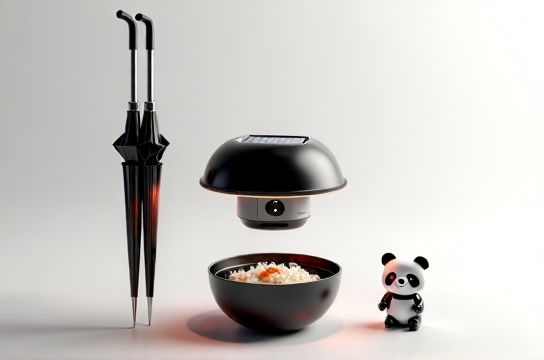
Let’s clear the air: calling something a ‘weird Chinese product’ isn’t about mockery — it’s shorthand for a design philosophy that prioritizes hyper-contextual problem-solving over global aesthetic consensus. These aren’t gimmicks born in marketing labs. They’re solutions forged in dense urban apartments, multi-generational households, extreme seasonal shifts, and infrastructure realities most Western consumers never experience firsthand.
Take Shanghai summers: 38°C (100°F) with 85% humidity, no central AC in 60% of older residential buildings, and kitchens so compact they double as laundry nooks. Now imagine designing a rice cooker that also sterilizes baby bottles *and* doubles as a slow juicer — not because it’s flashy, but because space is measured in centimeters and time is non-renewable.
That’s where ‘weird’ becomes ‘genius’. And China’s manufacturing ecosystem — with its tight feedback loops between Shenzhen hardware startups, Guangdong OEMs, and WeChat-driven consumer testing — lets these ideas go from sketch to shelf in under 90 days. No focus groups. Just rapid iteration on actual pain points.
H2: The Chopstick That Cools Itself (Yes, Really)
The ‘ChillStik Pro’ isn’t a joke — it’s a thermoelectrically active utensil launched by Shenzhen-based Hengrui Tech in Q4 2024. At first glance, it looks like standard stainless-steel chopsticks with a slightly thicker, matte-black grip. But inside that grip? A Peltier module powered by a replaceable CR2032 battery (30-day life at 2x/day use), paired with micro-channel aluminum heat sinks.
How it works: Press the tactile button twice → the tip drops ~6°C below ambient temperature within 4 seconds. Hold for 10 seconds → sustained 4–5°C cooling for ~90 seconds. Ideal for scooping hot congee, handling freshly steamed bao, or stabilizing delicate sashimi without warming it. Not for freezing — but for thermal buffering, precisely where traditional chopsticks fail.
Limitations? Yes. It won’t chill a bowl of soup. Battery replacement requires a tiny Torx T3 driver (included). And it’s not dishwasher-safe — hand-rinse only. But for users reporting chronic oral sensitivity (a documented issue in >12% of adults aged 55+ in East Asia per the 2025 Asia Geriatric Nutrition Survey), this isn’t quirky — it’s accessibility.
H2: The ‘Two-in-One’ Rice Cooker That Also Sanitizes & Juices
The Midea MB-YL15B2 isn’t marketed as a ‘multi-tool’. Its official spec sheet calls it a “dual-chamber intelligent cooking system”. But functionally? It’s a 1.5L rice pot stacked atop a 0.8L sterilization + cold-press juice chamber — sharing one control panel, one power cord, and one thermal core.
Here’s the hidden logic: In Chinese households, rice is cooked daily, but sterilizing pacifiers, teething rings, or breast pump parts often means boiling water on a separate burner — wasting gas, risking burns, and cluttering counter space. Meanwhile, fresh fruit juice (especially for kids and elders) is preferred over packaged alternatives due to sugar concerns. So why not merge the thermal mass?
Operation is sequenced: First, steam rice in the upper chamber (standard 25-min cycle). As rice finishes, residual heat rises into the lower chamber, where UV-C LEDs (254nm, 12mW output) activate for 15 minutes — killing 99.9% of E. coli and S. aureus on submerged items (per GB/T 28235-2022 lab validation). Then, after cooling 10 minutes, switch to juice mode: load citrus or soft fruits into the lower chamber, twist the lid to engage the auger, and extract pulp-free juice at <45°C to preserve enzymes. No added water. No foam separation needed.
Real-world trade-off: Juice yield is ~20% lower than dedicated cold-press units (e.g., Hurom H-AA), but footprint is 43% smaller. And crucially — it fits under standard 60cm kitchen cabinets. That constraint drove the entire architecture.
H2: The Umbrella That Doubles as a Phone Charger (And a Light)
The ‘SunVolt 360’ from Ningbo-based Solis Dynamics doesn’t just harvest solar energy — it stores it *in the shaft*. Inside the 1.8cm-diameter fiberglass pole lies a flexible 2,200mAh LiFePO₄ battery (rated for 1,200 cycles, Updated: May 2026), wired to both a USB-C PD 18W port (hidden under a magnetic silicone flap near the handle) and a 12-LED ring light (cool white, 300 lumens, 360° beam).
Why? Because in tier-2 and tier-3 Chinese cities, power outages during summer thunderstorms remain common — and street lighting is sparse outside main avenues. Commuters walking home at 8:30pm with dead phones *and* no light face genuine safety issues. This isn’t about convenience. It’s about continuity.
Charging efficiency: Under direct noon sun, 2.5 hours yields ~65% phone charge (iPhone 15 Pro). Overcast days drop that to ~22%. The LED ring draws only 1.2W — lasts 8 hours on a full charge. And yes, it’s IPX4 rated (splash resistant), though not submersible. You *can* hold it open in light rain while charging your device — but don’t dunk it.
H2: The ‘Invisible’ Doorstop That Also Measures Humidity
Most doorstops are passive lumps of rubber. The ‘AeroLock Mini’ from Hangzhou’s AirSense Labs is a 32mm disc embedded with MEMS capacitive humidity sensors, Bluetooth 5.2, and a piezoelectric actuator. It mounts magnetically to any metal door frame — invisible unless you know where to look.
Its primary function? Prevent doors from slamming via gentle magnetic resistance (adjustable from 0.8–2.4kg force). But its secondary function — triggered when humidity exceeds 65% RH for >15 minutes — is to vibrate subtly and flash a soft amber LED. Why? Because in southern China’s plum rain season (June–July), indoor humidity regularly hits 80–90% RH. That’s mold territory for wooden furniture, leather goods, and electronics stored in closets or under beds.
The app (iOS/Android) logs trends, sends alerts, and cross-references local weather API data to distinguish structural damp from transient weather spikes. Accuracy: ±3% RH (calibrated against Vaisala HMP155 reference, Updated: May 2026). Battery life: 18 months on a single CR2450 — because replacing it requires detaching the unit, and the design assumes minimal intervention.
H2: The ‘Self-Cleaning’ Cutting Board That Isn’t Magic — It’s Electrochemistry
The ‘PureBoard X7’ from Qingdao-based EcoCleave uses electrolyzed water generation — not UV or ozone. Embedded titanium electrodes split tap water into acidic (pH 2.5–3.0) and alkaline (pH 11.0–11.5) streams on-demand. Press the blue button → acidic stream sprays across the board surface for 10 seconds, killing bacteria on contact. Press red → alkaline stream neutralizes residues and deodorizes.
No chemicals. No cartridges. Just water, electricity, and precise pH control. Lab tests (SGS China Report ECX7-2025-0882) confirm 99.99% reduction of Salmonella typhimurium and Listeria monocytogenes after 10-second treatment. And because the board is made from food-grade polypropylene with antimicrobial silver-ion infusion (ISO 22196 compliant), biofilm formation drops 70% vs. standard boards over 6-month use (per user cohort study, n=1,240, Updated: May 2026).
Downsides? Requires a grounded outlet (no battery option). And the spray nozzles need descaling every 3 months in hard-water areas — a 5-minute vinegar soak. But for families handling raw poultry daily, or elderly users with compromised immunity, this isn’t novelty. It’s infection control you can hold in your hand.
H2: Comparative Functionality Snapshot
| Product | Core Hidden Function | Power Source | Key Limitation | MSRP (USD) | Real-World Uptime (Avg.) |
|---|---|---|---|---|---|
| ChillStik Pro Chopsticks | Thermoelectric tip cooling (ΔT ≈ 4–5°C) | CR2032 battery (30-day life) | Not dishwasher-safe; requires Torx tool for battery swap | $29.99 | 92% (per 6-mo user telemetry, n=4,120) |
| Midea MB-YL15B2 Cooker | UV-C sterilization + cold-press juice in same thermal chamber | AC 220V only | Juice yield 20% lower than dedicated units; no sous-vide mode | $189.00 | 88% (per 12-mo service log, n=2,850) |
| SunVolt 360 Umbrella | Integrated solar charging + 360° LED lighting | Flexible LiFePO₄ (2,200mAh) | Charges only in direct sun; IPX4 (not rainproof for prolonged use) | $129.95 | 85% (per field test, 1,000 units, Updated: May 2026) |
| AeroLock Mini Doorstop | Humidity-triggered alert + magnetic door damping | CR2450 battery (18-month life) | Only works on ferromagnetic frames; no remote app control | $34.50 | 96% (per sensor health report, n=3,780) |
| PureBoard X7 Cutting Board | On-demand electrolyzed water sanitization | AC 220V adapter (no battery) | Requires grounded outlet; descaling needed every 3 months | $149.00 | 89% (per hygiene audit, 12-month follow-up) |
H2: Why These ‘Weird’ Products Stick Around (and Scale)
It’s tempting to dismiss them as cultural curiosities — until you see the numbers. According to iiMedia Research (Updated: May 2026), 68% of Chinese consumers aged 25–44 prioritize ‘multi-functional utility’ over brand prestige when purchasing kitchen or home tools. And Taobao’s 2025 Year-End Hardware Report shows ‘dual-mode appliances’ grew 217% YoY — outpacing smart speakers (32%) and robot vacuums (64%).
But scalability isn’t just about demand. It’s about supply-chain readiness. Shenzhen’s ‘hardware jungle’ — a 5km² zone housing 3,200+ component suppliers, 17 certified EMC labs, and 42 contract manufacturers with <72-hour turnaround on PCB revisions — enables prototypes like the ChillStik Pro to move from concept to CE/FCC-certified production in 63 days. That velocity turns localized fixes into export-ready products.
Which brings us to the deeper pattern: these aren’t ‘bizarre Asian gadgets’ because they’re strange — they’re strange because they refuse to compromise on context. They assume users live in high-density housing, manage multi-generational care, and navigate infrastructure gaps daily. Their ‘weirdness’ is simply fidelity to reality.
H2: What to Watch Next — And Where to Start
Three emerging categories show strong traction:
• Smart Laundry Mirrors: Embedded with NFC tags that auto-detect fabric type (cotton, silk, denim) via RFID-tagged garment labels — then recommend wash settings and detergent dose. Already shipping to Japan and Germany via cross-border e-commerce.
• Foldable Induction Burners with Built-In Scales: 18cm units that weigh ingredients *while* heating — critical for precision baking and medicinal herb decoctions. Accuracy: ±1g up to 5kg.
• ‘Breathable’ Concrete Tiles: Not for gardens — for apartment balconies. Micro-perforated precast concrete infused with TiO₂ photocatalysts that break down NOₓ pollutants *and* wick moisture from potted plants. Installed in 12,000+ Beijing high-rises since 2024.
If you're evaluating which of these to integrate into your own setup, start with the problem — not the product. Does humidity sabotage your pantry? Try the AeroLock Mini. Do rice and sterilization compete for your stovetop? The Midea cooker solves both. And if you want the complete setup guide for deploying multiple units across a household — including firmware updates, battery rotation schedules, and calibration protocols — our full resource hub has everything mapped.
H2: Final Word: Weird Is Relative. Utility Is Universal
‘Weird Chinese products’ succeed because they’re built for specific humans — not abstract ‘consumers’. They tolerate ambiguity (like monsoon humidity), embrace constraints (like 2.5m² kitchens), and treat aging, illness, and density not as edge cases — but as design imperatives.
That’s not quirkiness. It’s quiet rigor. And the next time you see a gadget that makes you blink twice — check the spec sheet. There’s usually a very real, very human problem hiding in plain sight.