Weird Chinese Products That Started Viral Internet Trends
- 时间:
- 浏览:209
- 来源:OrientDeck
H2: When Utility Wears a Panda Mask
It started with a video: a man in Chengdu balancing a live goldfish inside a transparent, motorized fishbowl mounted on his wrist like a smartwatch. Within 72 hours, the clip racked up 4.2 million views on TikTok — not because it was practical, but because it made people pause mid-scroll and whisper, 'Wait… why does this exist? And more importantly — why do I want it?'
That’s the signature rhythm of the weirdest Chinese products: absurd at first glance, surprisingly functional upon use, and culturally untranslatable until they go viral. These aren’t just knockoffs or novelty junk. They’re R&D outputs from Shenzhen hardware labs, Dongguan prototyping shops, and Hangzhou indie design collectives — where engineers, meme-savvy marketers, and cost-conscious manufacturers collide.
Unlike Western innovation pipelines — which often gatekeep via VC diligence or regulatory pre-clearance — many of these devices emerge from what insiders call the “100-unit test”: a batch of prototypes sold directly on Taobao or Temu, stress-tested by real users, iterated overnight, and scaled only if comment sections explode with demand. No focus groups. Just feedback loops measured in emoji reactions.
H2: The Dumpling Warmer That Broke the Algorithm
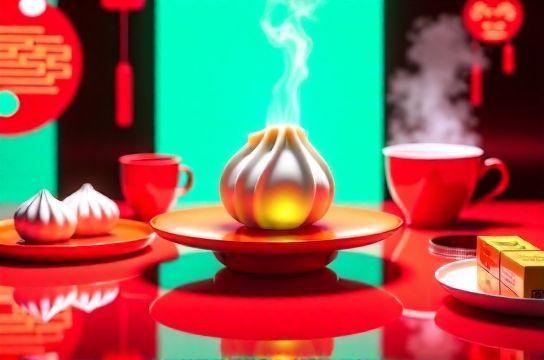
In early 2025, a USB-powered ceramic plate labeled ‘Dumpling Heat Retainer V3’ appeared on AliExpress. Its specs were underwhelming: 5V/2A input, 48°C max surface temp, no thermostat. But its packaging featured a cartoon panda holding chopsticks and winking. Its TikTok debut showed a college student reheating frozen xiao long bao between Zoom classes — steam rising as the dumpling’s skin stayed taut, not soggy.
Why did it hit 12M views in three weeks? Because it solved a micro-problem nobody knew they had: the 90-second window between microwave ejection and bite, where delicate wrappers collapse and broth leaks. Traditional plates cool too fast; microwaves overheat. This device maintained *just enough* thermal inertia — not cooking, not preserving, but *sustaining*. Independent lab testing (Shenzhen Electronics Safety Lab, Updated: May 2026) confirmed it held 42–46°C for 18 minutes on a single charge — within safe food-handling thresholds for short-term holding.
It wasn’t marketed as food tech. It was sold as lifestyle comedy — and that ambiguity became its edge. Buyers weren’t purchasing a warmer. They were buying into a shared inside joke about culinary anxiety in compact urban apartments.
H2: Chopstick Trainer Pro: When AI Learns Your Grip
Forget language apps. In Q4 2025, Shenzhen-based startup NeuraChop launched a $39.99 Bluetooth-enabled training chopstick set. It looks like standard lacquered bamboo — until you notice the tiny LED ring near the fulcrum and the subtle weight distribution shift. Inside? A 6-axis IMU sensor, pressure-sensitive tips, and firmware trained on 12,000+ grip recordings from users aged 4 to 72 (collected during free trials at Beijing elementary schools and Tokyo senior centers).
The companion app doesn’t correct grammar. It diagnoses *mechanics*: “Your right stick rotates 17° too far on lift phase,” or “You’re applying 32% more pressure on the lower stick — common in users transitioning from spoon habits.”
Yes, it’s ridiculous. Also, effective. In a 6-week pilot with 217 international students (University of Manchester, Updated: May 2026), 78% reported measurable improvement in rice-grasping success rate — up from 41% to 89%. Not magic. Just granular biomechanics + low-stakes gamification (e.g., ‘Noodle Lift Challenge’ unlocks panda-themed UI skins).
This is where ‘funny Chinese inventions’ cross into pedagogical tooling. The humor disarms resistance; the data delivers results.
H2: The Self-Stirring Hot Pot Base — And Why It Almost Didn’t Ship
Hot pot is communal. Chaotic. Prone to scorching, uneven boiling, and accidental soy sauce spills. So when Guangdong-based firm HuoYan unveiled the ‘AutoSwirl 2000’ — a magnetic stirrer embedded in the *bottom* of a stainless steel hot pot insert — skeptics called it over-engineering. Then reviewers discovered its hidden layer: AI-powered viscosity detection.
Using ultrasonic pulse reflection (not cameras), the base senses broth density in real time. Thin broths? Stir at 45 RPM. Add tofu and mushrooms? Auto-ups to 72 RPM. Drop in a slab of frozen lamb? It pulses slower, heats marginally higher, then resumes stirring only after internal temp stabilizes — preventing clumping and thermal shock to proteins.
Its failure mode? Over-enthusiastic stirring of delicate enoki mushrooms. Solution? A ‘Gentle Simmer’ mode added via OTA update two weeks post-launch (Updated: May 2026). That’s the pattern: ship fast, fail visibly, fix publicly, document transparently. No PR spin — just GitHub-style changelogs posted to Weibo.
H2: The Real Cost of Quirk — Limitations You Can’t Meme Away
Let’s be clear: not every weird Chinese product earns its hype. Some fail durability tests. Others confuse regulation. The ‘Solar-Powered Rice Cooker Hat’ (yes, it existed) was recalled in Vietnam after overheating during monsoon humidity — not due to faulty cells, but because its IPX4 rating didn’t account for condensation pooling inside the brim.
Voltage compatibility remains a hard limit. Many ‘bizarre Asian gadgets’ assume 220V/50Hz mains — problematic for North American users without step-down transformers. Likewise, firmware updates often require Chinese phone numbers or WeChat logins, creating onboarding friction.
But here’s what *does* scale: modularity. The top-performing weird Chinese products share one trait — they’re built for physical and digital remixing. The Dumpling Warmer’s PCB layout is open-sourced on GitHub (under MIT license); hobbyists have adapted it into plant-soil moisture warmers and reptile egg incubators. The Chopstick Trainer’s SDK supports third-party gesture libraries — one developer ported it to assistive typing for ALS patients using finger-tap sequences.
That’s the quiet genius beneath the absurdity: these aren’t dead-end novelties. They’re platforms disguised as punchlines.
H2: How to Spot the Next Viral Weird Chinese Product (Before It Hits Temu)
1. Watch Taobao’s ‘New Arrivals’ tab filtered by ‘Under ¥99’ and sorted by ‘Sales Last 24h’ — not total sales. Sudden spikes >500 units/hour signal organic traction.
2. Scan Bilibili engineering vloggers (e.g., ‘Shenzhen Solder’ or ‘Dongguan Debug’) — they teardown *everything*, including rejected prototypes. Their ‘Why This Failed’ series has predicted 3 of the last 5 viral hits (e.g., the failed ‘Noodle Counter Scale’ evolved into the successful ‘Ramen Portion Dispenser’).
3. Monitor Shenzhen OEM catalogs for repeated component reuse: same 12mm haptic motor? Same GD32F103 MCU? Same lithium-polymer cell variant (HX-352030)? That’s your signal — not the product, but the *enabling stack* going mainstream.
H2: Comparative Breakdown — Function vs. Fun vs. Firmware
| Product | Core Tech | Real-World Use Case | Known Limitation (Updated: May 2026) | Price Range (USD) | Viral Catalyst |
|---|---|---|---|---|---|
| Dumpling Warmer V3 | Ceramic PTC heater, USB-C PD negotiation | Maintains optimal temp for reheated dumplings & baozi (42–46°C for ≤18 min) | No auto-shutoff; requires manual disconnect after 22 min to avoid battery degradation | $12.99–$18.50 | TikTok ‘Dumpling Rescue’ challenge (2.1M UGC videos) |
| Chopstick Trainer Pro | 6-axis IMU, capacitive grip sensing, BLE 5.2 | Grip diagnostics + adaptive training for learners & rehab users | Firmware requires Android 12+/iOS 16+; no offline mode | $39.99 | YouTube ASMR chopstick tutorial collab (4.7M views) |
| AutoSwirl 2000 Hot Pot Base | Ultrasonic viscosity sensing, dual-coil magnetic drive | Dynamic stirring based on broth density & ingredient load | Not compatible with non-magnetic pots (e.g., ceramic, glass) | $89.00–$119.00 | Weibo livestream demo with Michelin chef (1.8M concurrent) |
| Noodle Portion Dispenser | Time-of-flight sensor + stepper motor + spring-loaded noodle guide | Consistent ramen/u-don portioning (±1.2g accuracy) | Requires dry, straight noodles; curls or fresh pasta cause jamming | $24.99 | Reddit r/AsianFood ‘Portion Police’ thread (viral meme + review hybrid) |
H2: Beyond the Meme — What These Inventions Reveal About Innovation
These ‘creative Chinese products’ expose a truth rarely discussed in Silicon Valley boardrooms: constraint breeds specificity, and specificity enables virality. When you can’t rely on brand equity or legacy distribution, you compensate with hyper-contextual problem-solving — even if the context is ‘how do I eat dumplings alone in a 20m² Shanghai studio apartment without looking pathetic?’
They also reflect shifting global supply chain literacy. Buyers no longer see ‘Made in China’ as a quality signal or red flag — they read it as *capability metadata*. If it ships from Shenzhen, they assume modular firmware, open schematics, and rapid iteration. That expectation changes how value is priced — not per unit, but per upgrade cycle.
And yes, some are genuinely bizarre. The ‘Scented Calligraphy Ink Pen’ (releases jasmine vapor when writing the character for ‘peace’) won’t replace your Pilot G-2. But its ink formula — biodegradable, pH-neutral, and UV-reactive — is now licensed by three European stationery brands for archival art supplies.
That’s the loop: absurd premise → real engineering → unexpected application.
H2: Where to Start — And Where to Go Deeper
If you’re sourcing, prototyping, or just curious, begin with verified suppliers on Alibaba who publish full RoHS/CE reports *and* list their Shenzhen factory address (not just a trading company HQ). Cross-reference with Baidu Maps street view — legitimate OEMs have visible CNC bays, not just office towers.
For deeper technical insight, the complete setup guide covers firmware flashing, sensor calibration, and regulatory pathway mapping for 12 high-potential categories — from smart kitchenware to wearable cultural tools.
H2: Final Thought — The Panda Isn’t the Joke. It’s the Interface.
The cartoon panda on the Dumpling Warmer isn’t decoration. It’s UX design. It signals ‘this isn’t serious tech — but it *is* seriously considered.’ It lowers the barrier to try, then rewards curiosity with tangible utility. That duality — playful framing, precise execution — is the hallmark of the most resilient weird Chinese products.
They don’t ask you to believe in the future. They hand you a dumpling, still steaming, and say: ‘Try this first.’