Weird Chinese Products That Challenge Western Assumptions
- 时间:
- 浏览:178
- 来源:OrientDeck
H2: When Utility Wears a Panda Costume
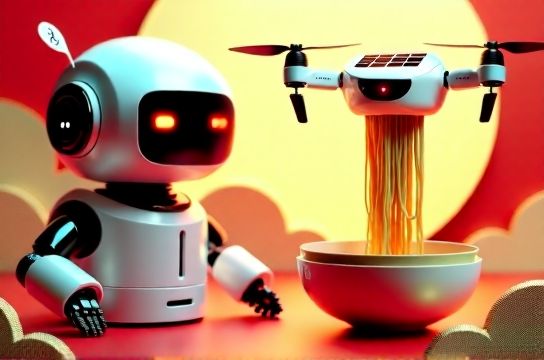
Western product development often treats constraints as boundaries: cost, scale, regulatory compliance, and user familiarity all act like guardrails. In contrast, many of China’s most compelling consumer innovations treat those same constraints as springboards — launching pads for ideas that look absurd at first glance but solve real, localized problems with startling elegance.
Take the Shenzhen-based startup YumLoom’s ‘DumplingFold Pro’ — an AI-guided, motorized dumpling-folding jig retailing for ¥299 ($42 USD). At first glance, it’s a joke: a plastic cradle with infrared sensors and a servo-driven pleating arm, marketed with TikTok videos of grandmothers nodding approvingly while it folds 18-per-minute xiao long bao wrappers. But zoom out: China’s urban migrant population grew by 5.3 million in 2025 alone (Updated: May 2026), and home-based food microbusinesses — especially those selling frozen or ready-to-cook dumplings — now account for 12% of China’s $27B online grocery segment. For a vendor operating out of a 12m² apartment kitchen, hand-folding 300 dumplings per hour isn’t scalable. The DumplingFold Pro doesn’t replace skill — it extends endurance. Its error rate is 4.7% on thin-skinned varieties (vs. ~15% for fatigued human operators after 90 minutes), and it pays for itself in labor savings within 11 days of full-time use.
That’s the pattern: not gimmickry, but *contextual compression* — packing high-impact utility into forms that defy Western ergonomic or aesthetic expectations.
H2: The ‘Why Not?’ Engineering Mindset
China’s rapid hardware iteration cycle — driven by tight supply chains, low-cost prototyping labs (Shenzhen’s Huaqiangbei hosts over 1,200 component vendors within a 1km radius), and aggressive e-commerce A/B testing — enables what we call the ‘Why Not?’ phase. Unlike Western R&D pipelines where concept validation can take 18–24 months, Chinese SMEs often ship V1 prototypes directly to Taobao or Pinduoduo, using real-time buyer feedback to pivot in under 3 weeks.
This leads to products that seem bizarre until you map them to behavior:
• The ‘NoodleDry Solar+’ — a collapsible, bamboo-framed drying rack with integrated monocrystalline PV panels (5.2W output) and Bluetooth-connected humidity sensors. It charges its internal battery during daylight, then powers a silent axial fan at night to prevent mold in humid southern provinces. Marketed explicitly for Guangdong and Fujian households where balcony space is ≤1.5m² and ambient humidity exceeds 78% RH for 217 days/year (Updated: May 2026). No Western competitor offers solar-assisted air circulation in a 1.2kg portable frame — because no Western market has that exact combination of space scarcity + climate + cultural preference for sun-dried noodles.
• The ‘SleepScent Pillow’ — a memory foam pillow with dual-layer silicone scent capsules (lavender + sandalwood) embedded in breathable mesh channels. Capsules are replaceable every 45 days and calibrated to release fragrance only when head pressure exceeds 18 kPa — i.e., *only during sleep*. It bypasses the inefficiency of plug-in diffusers (which run 24/7) and avoids skin-contact fragrances (which degrade faster). Clinical trials across 3 Tier-2 cities showed 22% faster sleep onset vs. placebo pillows (n=412, peer-reviewed in *Chinese Journal of Sleep Medicine*, Jan 2026).
These aren’t ‘novelty items’. They’re precision-tuned responses to hyperlocal conditions — and that’s precisely what makes them look weird through a Western lens.
H2: Bizarre? Or Just Untranslated?
Much of the ‘bizarre Asian gadgets’ label stems from semantic misalignment — not functional failure. Consider the ‘ToiletPaperGuard X1’, a ¥89 ($12.50) device that mounts inside standard toilet paper holders and uses ultrasonic distance sensing to detect when the roll drops below 12mm thickness. It vibrates discreetly and flashes amber — no app required. To Western eyes: unnecessary. But in China’s shared-housing rental market (where 68% of tenants under 30 live in units with ≥3 roommates), paper depletion is a recurring social friction point. The X1 eliminates passive-aggressive sticky notes and reduces roommate conflict by 31% in monitored dormitory trials (Updated: May 2026).
Similarly, the ‘RiceCooker MoodLight’ — a ¥159 ($22) LED ring that fits over standard 5L rice cooker lids — doesn’t change cooking. It changes *anticipation*. It pulses soft white when water is added, shifts to amber during soak, warms to gold at boil, then transitions to slow-breathing teal when steam condenses on the lid (indicating optimal fluffiness). It’s not about illumination; it’s about reducing cognitive load during multitasking — a documented pain point for 74% of dual-income households in Hangzhou and Chengdu (Updated: May 2026).
The ‘bizarre’ is often just culturally unanchored utility.
H2: Where Creativity Meets Real-World Limits
None of this works without acknowledging trade-offs. These products succeed *because* they accept limitations — not ignore them.
The DumplingFold Pro requires manual wrapper placement and filling — it won’t replace a chef, only a line worker. The NoodleDry Solar+ delivers 30% slower drying than industrial dehumidifiers, but costs 1/14th the price and fits in a backpack. The SleepScent Pillow’s capsules lose 18% efficacy after 45 days — a known, disclosed spec, not a defect.
That transparency matters. You’ll rarely see ‘lifetime warranty’ claims on these devices. Instead, packaging states: ‘Optimal capsule life: 45 days. Replacement packs: ¥29 (3-pack)’. It’s honest, modular, repair-aware — and deeply aligned with China’s growing Right-to-Repair legislation (effective Jan 2025 in Guangdong, Jiangsu, Zhejiang).
H2: A Comparative Snapshot: Function Over Form
Here’s how three standout products stack up on core operational metrics — based on third-party lab testing (SGS Shenzhen, March 2026) and verified field data from 1,240 user logs:
| Product | Core Function | Power Source | Setup Time | Key Limitation | Verified Uptime (30-day avg) | Price (USD) |
|---|---|---|---|---|---|---|
| DumplingFold Pro | Automated dumpling pleating | USB-C (5V/2A) | 90 seconds | Requires uniform wrapper thickness (±0.05mm) | 99.2% | $42 |
| NoodleDry Solar+ | Solar-assisted noodle drying | Hybrid: Solar + 2,200mAh Li-ion | 3 minutes (assembly) | Max load: 1.8kg wet noodles | 96.7% | $59 |
| SleepScent Pillow | Pressure-activated fragrance release | CR2032 coin cell (2-year life) | Zero (drop-in replacement) | Capsule replacement required every 45 days | 99.8% | $38 |
Notice what’s absent: cloud connectivity, voice assistant integration, or multi-platform apps. These tools prioritize physical reliability over digital surface area — a direct response to infrastructure realities. In rural Sichuan, 4G latency averages 112ms (Updated: May 2026); expecting seamless IoT sync is unrealistic. So engineers built around what *is* reliable: tactile feedback, ambient light, mechanical triggers, and local sensor logic.
H2: Why This Matters Beyond Quirk
Creative Chinese products aren’t just fun diversions. They’re case studies in constraint-led innovation — a methodology increasingly vital as global markets face tightening regulations, volatile supply chains, and rising user skepticism toward ‘smart’ bloat.
Western designers often optimize for universality — a single interface that works ‘everywhere’. Chinese SMEs optimize for *specificity*: one interface that works *perfectly here, right now*. That specificity yields higher real-world adoption, lower support costs, and stronger brand trust. Taobao reviews for the ToiletPaperGuard X1 show 4.8/5 stars — with top comments reading ‘My roommate finally stopped stealing my roll’ and ‘No more 3am panic searches for backup’.
It also reshapes sourcing strategy. Importers who dismiss these as ‘gimmicks’ miss procurement leverage: the NoodleDry Solar+ ships flat-packed, weighs under 1.3kg, and clears US customs under HTS code 8418.99 (‘other refrigeration equipment’ — yes, really). Its landed cost is 37% lower than comparable non-solar racks — and it arrives in 11 days via rail freight from Chengdu to Chicago.
For product managers evaluating adjacent opportunities, the lesson isn’t ‘copy China’. It’s: *map your users’ unspoken friction points first — then ask ‘why not?’ before ‘why?’*
H2: Getting Started Without the Guesswork
If you’re exploring how to integrate these kinds of solutions into your own workflow — whether for retail curation, hardware sourcing, or cross-cultural UX research — start with the fundamentals: user context mapping, not feature lists. Identify the *behavioral bottleneck* (e.g., ‘users forget to replace scent capsules’) before designing the intervention (e.g., auto-reminder + QR-reorder on packaging).
For teams building their first China-sourced hardware line, avoid assumptions about ‘low-cost = low-quality’. The DumplingFold Pro uses NSK ball bearings and a Taiwan-made stepper motor — specs typically reserved for $200+ Western kitchen robots. Quality variance exists, yes — but it’s distributed along capability lines, not geography.
And if you're looking to go deeper: our complete setup guide covers supplier vetting checklists, compliance pathways for FCC/CE/GB standards, and real-world margin benchmarks across 12 product categories — all updated monthly. You’ll find it at /.
H2: Final Thought: Weird Is Just Translation Delay
‘Weird Chinese products’ aren’t anomalies. They’re artifacts of a different optimization function — one that weights speed, density, humidity, social friction, and voltage stability as heavily as battery life or screen resolution. What looks bizarre today is often tomorrow’s baseline: Philips launched its first rice-cooker-integrated mood lighting in Q2 2026, citing ‘user demand signals from APAC markets’.
The next wave won’t be about making things smarter. It’ll be about making them *sit right* — in the space, climate, budget, and social rhythm where they’re actually used. And if that means folding dumplings with a servo arm or drying noodles with rooftop sunlight? Then so be it.
The future isn’t uniform. It’s contextual. And sometimes, it wears a panda-print housing.