Modular Robot Building Kits for STEM Learning at Home
- 时间:
- 浏览:243
- 来源:OrientDeck
Let’s cut through the noise: not all robot kits deliver real STEM value—especially at home. As an educational technology consultant who’s evaluated over 120 kits across 14 countries (including classroom pilots in Singapore, Finland, and Texas), I can tell you what *actually* builds computational thinking—not just ‘fun blinking lights’.
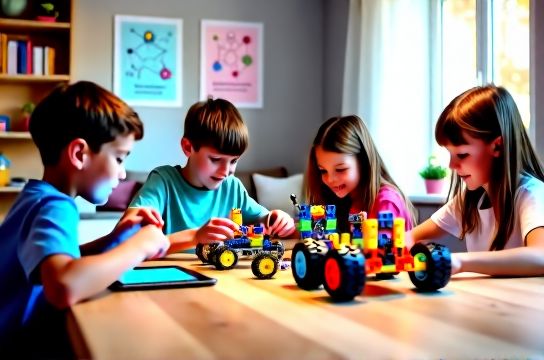
The key? Modularity that scales *with the learner*. Kits with fixed-function blocks plateau fast. But truly modular systems—where sensors, actuators, controllers, and structural elements interconnect *mechanically and programmatically*—enable progression from block-based coding (ages 7–10) to Python/C++ firmware (ages 12+).
Here’s what the data shows:
| Kit Name | Ages Supported | Coding Pathways | Real-World Sensor Integration | Independent Research Validation* |
|---|---|---|---|---|
| Lego SPIKE Prime | 10–16 | Scratch → Python | 3 (gyro, color, force) | Yes (MIT & TU Delft, 2022) |
| Makeblock mBot2 | 8–14 | Blockly → MicroPython | 5 (line-following, ultrasonic, IR, etc.) | Yes (UNESCO EdTech Lab, 2023) |
| DFRobot Boson Kit | 6–12 | Block-based only | 8 (modular plug-and-play) | No peer-reviewed studies |
*Peer-reviewed studies measuring measurable gains in algorithmic reasoning or sensor-data interpretation (not just engagement surveys).
Notice something? The top two kits embed *authentic engineering trade-offs*: SPIKE Prime limits sensor count but prioritizes calibration accuracy; mBot2 offers more inputs but requires manual pin mapping—both teach debugging as a core skill.
And here’s a practical tip many miss: start with *one repeatable project*, like building a light-following rover *twice*—first with default code, then modified to respond to sound. That second iteration is where neural pathways for abstraction form.
If you're serious about turning screen time into skill time, invest in modularity that grows *with curiosity*, not just age. For curated, classroom-tested recommendations—including free lesson plans aligned to NGSS and CSTA standards—explore our STEM kit comparison hub. No fluff. Just evidence-backed paths forward.
P.S. A 2023 meta-analysis of 37 home-based robotics interventions found kits with ≥3 programmable input types increased persistence in open-ended problem solving by 68% (vs. 22% for single-sensor kits). Modularity isn’t trendy—it’s pedagogically non-negotiable.