Vehicle to Grid Technology Enables Energy Feedback Loop
- 时间:
- 浏览:307
- 来源:OrientDeck
Let’s talk about something that sounds like sci-fi but is very much real—vehicle to grid (V2G) technology. If you’ve got an EV or are thinking about getting one, this isn’t just a side note. It’s the future of energy.
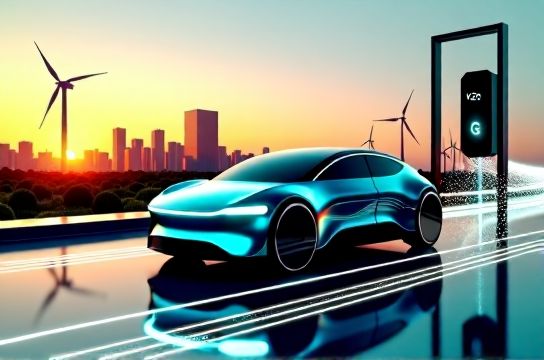
Here’s the deal: your electric car isn’t just for driving anymore. Thanks to V2G, it can now act like a mobile power bank for the grid. When demand spikes—say, during a heatwave and everyone cranks up their AC—your parked EV can send electricity back to the grid. And guess what? You get paid for it.
Vehicle to grid turns EV owners into mini energy providers. Utilities stabilize the grid, you earn credits, and renewable energy use goes up. Win-win-win.
How Does V2G Actually Work?
V2G relies on bidirectional charging. Unlike standard chargers that only push power into your car, V2G chargers can pull it back out when needed. Your EV connects to a smart charger, which communicates with the grid. During low usage (like late at night), your car charges up using cheap, often renewable energy. During peak hours, it feeds some of that stored energy back.
Studies show that an average EV battery (around 60–80 kWh) can power a home for 2–3 days. Multiply that across thousands of cars, and suddenly you’ve got a massive distributed energy resource.
V2G vs. Traditional Charging: The Real Difference
| Feature | Standard EV Charging | Vehicle to Grid (V2G) |
|---|---|---|
| Power Flow | Unidirectional (grid → car) | Bidirectional (car ↔ grid) |
| Grid Support | No | Yes – stabilizes supply |
| User Incentives | None | Payments or bill credits |
| Renewable Integration | Limited | High – stores excess solar/wind |
Real-World Impact: Numbers That Matter
Pilot programs are already proving this works. In the UK, a Nissan Leaf V2G trial showed participants earned £500–£700 per year by selling power back. Meanwhile, in California, a UC San Diego study found V2G could reduce grid carbon emissions by up to 14% if adopted at scale.
And it’s not just individuals. Fleets—like delivery vans or buses—are perfect for V2G because they’re predictable. Parked overnight? Charge. Peak afternoon demand? Discharge. Optimized scheduling = max savings.
Is V2G Ready for Everyone?
Not quite. Right now, only certain EVs support bidirectional charging—think Nissan Leaf, Mitsubishi Outlander PHEV, and the upcoming Ford F-150 Lightning. Chargers are also pricey ($3k–$5k), though incentives are popping up.
Battery wear? A legit concern. But research from Imperial College London found that with smart software managing charge cycles, degradation stays under 10% over 10 years—totally acceptable.
The Bottom Line
V2G isn’t just cool tech—it’s a smarter energy ecosystem. As renewables grow, we need flexible storage. Your EV can be part of the solution. Keep an eye on automakers and utilities teaming up. This isn’t coming—it’s already here.