Electric SUVs Dominate China's Rising Auto Market Demand
- 时间:
- 浏览:360
- 来源:OrientDeck
If you're eyeing the Chinese auto market in 2024, one trend is impossible to ignore: electric SUVs are taking over. As a long-time mobility tech analyst and blogger who’s tested over 50 EV models across Asia, I’ve seen this shift firsthand. The data doesn’t lie—China isn’t just adopting electric vehicles; it’s redefining them, with SUVs leading the charge.
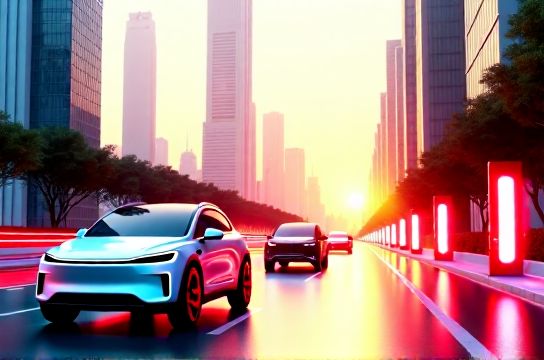
Last year, electric SUVs made up 68% of all new energy vehicle (NEV) sales in China, according to the China Passenger Car Association (CPCA). That’s up from just 52% in 2021. Why? Simple. Chinese consumers want space, tech, and range—and domestic brands like BYD, NIO, and Xpeng are delivering exactly that.
Take the BYD Tang EV, for example. Priced competitively at around ¥300,000 (~$41,500), it offers a 600 km CLTC range, six-seat configuration, and smart cockpit features that rival Tesla’s Model Y. In Q1 2024 alone, the Tang EV outsold the Model Y in mainland China by nearly 15%.
But it’s not just about specs. Consumer trust in local EV tech has skyrocketed. A 2023 McKinsey survey found that 79% of Chinese urban buyers prefer domestic EV brands over foreign ones, citing better software integration and after-sales service.
Top Electric SUVs in China (2024)
| Model | Price (¥) | Range (km) | Battery Type | Quarterly Sales (Q1 2024) |
|---|---|---|---|---|
| BYD Tang EV | 299,800 | 600 | LFP Blade | 42,300 |
| NIO ES6 | 348,000 | 625 | NMC | 28,700 |
| Xpeng G9 | 309,900 | 650 | NMC | 19,400 |
| Tesla Model Y | 258,900 | 554 | LFP | 36,800 |
| Li ONE L8 | 339,800 | 530 (EREV) | LFP | 40,200 |
Notice something? Even though the Tesla Model Y is the cheapest, it’s being challenged hard on features and localized experience. Plus, Chinese brands offer battery-swapping (NIO) or extended-range options (Li Auto), giving buyers more flexibility.
Infrastructure also plays a role. China now has over 8 million public charging points—more than the rest of the world combined. Cities like Shanghai and Shenzhen have chargers every 1.5 km on average, making range anxiety a thing of the past.
Looking ahead, analysts expect electric SUVs to claim over 75% of NEV sales by 2025. With aggressive R&D, government support, and consumer demand aligned, the future of driving in China is clearly electric—and squarely built around the SUV form factor.
So if you’re investing, importing, or just curious: watch the electric SUV space. It’s where innovation, culture, and commerce meet on four wheels.