Wireless Charging vs Swap Stations for Electric Mobility
- 时间:
- 浏览:274
- 来源:OrientDeck
If you're into electric scooters, bikes, or even next-gen urban EVs, you’ve probably asked: should I go wireless or use battery swap stations? As someone who’s tested both in real-world city commutes and shared insights with micromobility startups, let me break it down — no fluff, just facts.
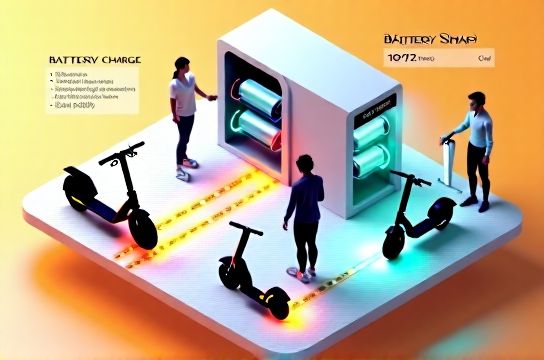
Let’s start with the big picture. Wireless charging uses electromagnetic fields (usually Qi-based or resonant tech) to charge devices without plugs. On the flip side, battery swap stations — like those from Niu or Gogoro — let riders exchange a dead battery for a fully charged one in seconds.
Speed? Swaps win hands down. A full battery swap takes under 30 seconds. Wireless charging, even at best-case scenarios (11kW pads), needs 30–60 minutes for a full charge. That’s a dealbreaker if you’re a delivery rider doing 20+ trips a day.
Real-World Performance Comparison
| Feature | Wireless Charging | Battery Swap Stations |
|---|---|---|
| Charge Time (Full) | 30–90 min | <30 sec (swap time) |
| Infrastructure Cost | High (per pad) | Moderate (centralized stations) |
| Convenience | Medium (parking alignment needed) | High (instant swap) |
| Scalability | Low (urban space limits) | High (Gogoro has 13,000+ stations in Asia) |
| Energy Efficiency | ~75–85% | ~90–95% (direct contact) |
Now, efficiency matters. Wireless systems lose 15–25% energy due to air gap and misalignment. Swaps? Near-plug-in efficiency. For cities aiming to cut energy waste, that’s huge.
But wireless isn’t dead yet. It shines in low-use cases — personal e-bikes parked overnight, or smart parking spots where convenience > speed. BMW and WiTricity are pushing 3.3kW+ pads for EVs, but micromobility? Not there yet.
Swap networks thrive on density. Gogoro’s network in Taipei supports over 400,000 riders. Their smart batteries track health, location, and charge cycles — something wireless can’t match without extra sensors.
Cost-wise, deploying wireless pads in sidewalks runs $5k–$10k each, plus grid upgrades. Swap stations? Around $20k per station but serve hundreds daily. ROI favors swaps in high-demand zones.
So, what’s my take? If you're a city planner or fleet operator, go with battery swap stations. They’re faster, more efficient, and proven at scale. Wireless charging still feels like tomorrow’s promise — cool tech, but not today’s solution.
Bottom line: For real electric mobility progress, we need practicality, not just innovation. And right now, swapping batteries beats waiting on a charging pad — every single time.