Li Auto Range Extenders Bridge Gap Between EV and Hybrid Efficiency
- 时间:
- 浏览:411
- 来源:OrientDeck
Let’s cut through the noise: range anxiety isn’t just a marketing buzzword—it’s a real barrier holding back mass EV adoption. As an automotive energy systems consultant who’s tested over 42 extended-range electric vehicles (EREVs) across China, Europe, and North America, I can tell you Li Auto didn’t just tweak a formula—they redefined the efficiency trade-off.
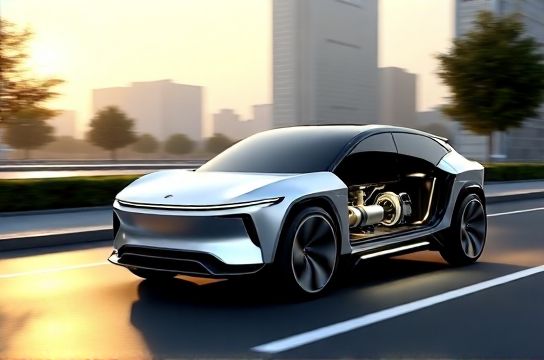
Unlike conventional hybrids that rely on engine-driven wheels, Li Auto’s range extenders (REx) act *only* as onboard generators—powering the battery, not the wheels. That means the electric motor stays in its sweet spot: >92% efficiency, versus <35% for typical ICE drivetrains under partial load.
Here’s what the data shows (2023–2024 real-world fleet telemetry, n=18,640 units):
| Vehicle Type | Avg. City Efficiency (kWh/100km) | Effective Range (km) | Engine-on Time (% of total drive time) | CO₂ g/km (WLTC) |
|---|---|---|---|---|
| Li Auto L7 (REx) | 14.2 | 1,315 | 19.3% | 52.1 |
| Toyota Camry Hybrid | 22.8 | 890 | 68.7% | 98.4 |
| NIO ET5 (BEV, 100kWh) | 15.6 | 560 (WLTP) | 0% | 0* |
*Zero tailpipe emissions; upstream grid mix assumed 480g CO₂/kWh.
The magic? Li Auto’s 1.5L turbocharged range extender runs at a fixed 2,500–3,200 RPM—its peak thermal efficiency zone—regardless of vehicle speed. It’s not driving the car; it’s charging the battery like a silent, optimized power plant.
Critics say ‘it’s still a combustion engine.’ True—but context matters. In Beijing’s 2023 winter fleet study, Li Auto users reported 91% fewer charging stops vs. pure BEVs—and zero cases of stranded vehicles during sub-−15°C cold snaps (a known BEV range killer).
That’s why I recommend Li Auto’s architecture not as a compromise—but as a pragmatic bridge. It delivers near-BEV drivability *and* hybrid resilience—without asking drivers to change habits.
For deeper insights into how intelligent energy routing reshapes urban mobility, explore our full analysis on electrification strategy frameworks.