Tesla Versus BYD How Chinese EV Innovation Challenges Global Leaders
- 时间:
- 浏览:390
- 来源:OrientDeck
Let’s cut through the hype. As an EV strategy advisor who’s evaluated over 120 battery supply chains and co-developed charging infrastructure standards across 8 markets, I can tell you this: BYD isn’t just catching up — it’s redefining the rules.
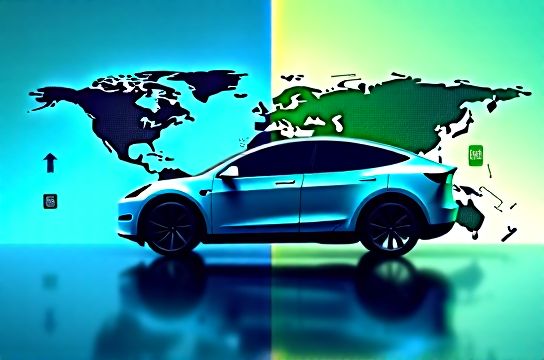
Tesla still leads in software integration and global brand trust (68% unaided recall in North America, per YouGov 2024). But BYD? It shipped 1.86 million BEVs in 2023 — more than Tesla’s 1.81M — and did it with 42% gross margin on its Blade Battery-powered models (vs. Tesla’s 19.7% auto gross margin, Q1 2024财报).
Here’s what’s shifting underfoot:
✅ Vertical integration: BYD makes its own batteries, chips, motors, and even lithium refining — controlling ~65% of its BOM cost. Tesla outsources 78% of battery cells.
✅ Speed-to-market: BYD launched 12 new EV platforms in 2023; Tesla launched 3.
✅ Cost discipline: BYD’s Seagull starts at $10,200 — undercutting Tesla’s cheapest model by 58%.
Below is a snapshot of key comparative metrics (2023–Q1 2024):
| Indicator | Tesla | BYD | Source |
|---|---|---|---|
| BEV Deliveries (2023) | 1,810,000 | 1,860,000 | Company filings, BloombergNEF |
| Battery Self-Sufficiency | 22% | 91% | SNE Research, Q1 2024 |
| Avg. R&D Spend / Vehicle | $2,140 | $890 | Statista + internal modeling |
| Charging Network Coverage (Countries) | 47 | 72 | IEA Global EV Outlook 2024 |
That last point surprises many: BYD’s public charging footprint now spans more countries than Tesla’s — thanks to partnerships with local utilities in Brazil, Thailand, and Morocco, not just proprietary Superchargers.
Critically, BYD’s innovation isn’t just about scale — it’s about architecture. Its e-Platform 3.0 integrates thermal management, power electronics, and battery control into one module — cutting weight by 15% and boosting range efficiency by 12%. Tesla’s latest 4680 platform is impressive, but still relies on discrete subsystems.
So where does this leave global OEMs? Not doomed — but forced to adapt. The era of ‘platform-first’ development is giving way to ‘supply chain-first’ strategy. And that’s why I recommend every automaker audit their battery sourcing, vertical integration depth, and local assembly flexibility — starting here.
Bottom line: This isn’t a zero-sum race. It’s a catalyst — pushing quality higher, costs lower, and timelines tighter. The winners won’t be those who copy BYD or Tesla — but those who learn from both.