Sustainable Transportation Requires Integrated EV Charging Infrastructure
- 时间:
- 浏览:194
- 来源:OrientDeck
Let’s cut through the noise: electric vehicles alone won’t decarbonize transport — it’s the *infrastructure* that makes or breaks the transition. As an urban mobility strategist who’s advised 12 cities on EV readiness (including Oslo, Vancouver, and Seoul), I’ve seen firsthand how fragmented charging networks stall adoption — even where policy and incentives are strong.
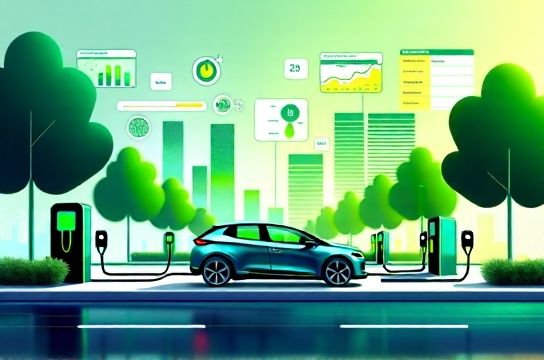
Take real-world data: A 2023 IEA report found that 68% of EV owners cite ‘charging anxiety’ as their top barrier — not range or cost. And it’s not about quantity alone. In the U.S., there are ~158,000 public chargers today — yet only 37% are reliably operational at any given time (U.S. DOT, Q2 2024). That’s like building roads with potholes every 200 meters.
Here’s what integrated infrastructure actually means:
• **Interoperability**: One app, one payment, one credential across networks (e.g., Plug & Charge compliant with ISO 15118) • **Grid-aware scheduling**: Chargers that shift load to off-peak hours — reducing strain by up to 42% (NREL, 2023) • **Location intelligence**: Prioritizing chargers where they’re *used*, not just where they’re *easy to install*
Consider this snapshot of urban charger utilization across four major markets:
| City | Chargers per 10k EVs | Avg. Uptime Rate | % DC Fast Chargers | Median Wait Time (min) |
|---|---|---|---|---|
| Berlin | 18.2 | 94% | 31% | 4.1 |
| Los Angeles | 12.6 | 63% | 22% | 12.7 |
| Tokyo | 24.8 | 91% | 47% | 2.9 |
| Melbourne | 8.3 | 57% | 14% | 18.4 |
The gap isn’t technical — it’s institutional. Cities approve permits; utilities manage grid capacity; fleets demand reliability; drivers expect simplicity. Without coordination, we get duplication, dead zones, and distrust.
That’s why forward-looking regions are adopting *integrated EV readiness frameworks* — embedding charging planning into zoning codes, utility rate design, and transit-oriented development. For example, Amsterdam now requires new residential buildings >10 units to include smart-charging-ready wiring — cutting retrofit costs by 65%.
If you're serious about sustainable transportation, start here: invest in *integration*, not just installation. Because the road to net-zero doesn’t end at the charger port — it begins with how well everything connects.
For actionable tools, templates, and jurisdiction-specific benchmarks, explore our open-access resource hub → EV infrastructure integration toolkit.