China EV Industry Drives Global Shift Toward Green Mobility Solutions
- 时间:
- 浏览:187
- 来源:OrientDeck
Let’s cut through the noise: China isn’t just *part* of the electric vehicle (EV) revolution — it’s the engine. In 2023, China produced **7.2 million EVs**, accounting for **64% of global output** (IEA, 2024). That’s more than the U.S., Germany, and South Korea combined.
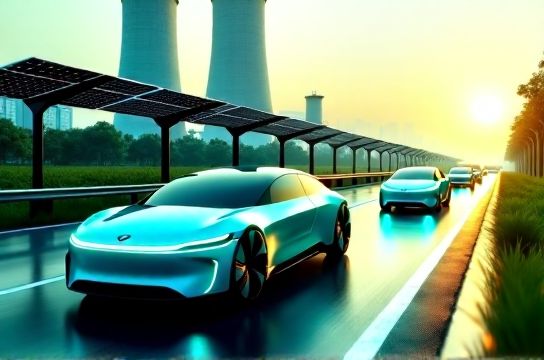
What makes this shift so consequential? It’s not just volume — it’s vertical integration, battery innovation, and aggressive cost discipline. BYD overtook Tesla in Q4 2023 for global BEV+PHEV deliveries (526,000 vs. 484,000 units), largely thanks to its in-house Blade Battery tech — which slashed pack costs by ~30% versus industry averages (BloombergNEF, 2024).
Here’s how China’s ecosystem stacks up globally:
| Indicator | China (2023) | EU (2023) | USA (2023) |
|---|---|---|---|
| EV production share | 64% | 18% | 12% |
| Lithium-ion battery capacity | 77% of global supply | 5% | 7% |
| Avg. EV battery pack cost ($/kWh) | $98 | $112 | $105 |
| Public charging points per 100km highway | 24.1 | 8.7 | 3.2 |
This infrastructure density matters — it directly cuts range anxiety. And yes, policy helped: China’s NEV credit system pushed OEMs to scale fast, while local subsidies accelerated fleet electrification in cities like Shenzhen (100% electric buses since 2017).
But here’s what most miss: China’s export surge isn’t dumping cheap cars — it’s exporting *systemic learning*. From CATL’s sodium-ion batteries (now powering 200,000+ vehicles in India and Brazil) to Huawei’s ADS 2.0 intelligent driving stack (licensed to 8+ automakers), the value chain is going global — intelligently.
For businesses evaluating green mobility solutions, ignoring China’s playbook means overlooking proven scalability, real-world battery longevity data (>1,200 cycles at 90% SOH in NIO’s 100kWh packs), and rapidly maturing software-defined vehicle platforms.
The bottom line? The future of sustainable transport isn’t being debated in Geneva or Detroit — it’s being engineered in Ningbo, Hefei, and Shenzhen. And if you’re serious about adopting next-gen mobility, start by understanding how China’s EV industry is reshaping expectations — on cost, speed, and reliability.
For deeper insights into integrated green mobility strategies, explore our full framework here.