China's EV Export Boom Reflects Global Confidence in Domestic Innovation
- 时间:
- 浏览:187
- 来源:OrientDeck
Let’s cut through the noise: China didn’t just become the world’s largest EV exporter overnight—it earned it. In 2023, Chinese EV exports hit **1.2 million units**, up 77% YoY (CAAM), surpassing Germany and trailing only Japan in total vehicle exports—but with a critical twist: over 60% were battery electric vehicles (BEVs), not ICE holdovers.
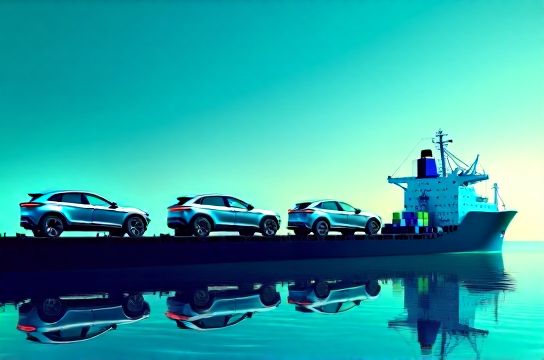
This isn’t just volume—it’s validation. From BYD’s Blade Battery safety certifications (UN ECE R100.03 passed in 12 major markets) to CATL’s 35% global lithium-ion battery market share (SNE Research, Q1 2024), China’s vertical integration—from raw materials to software-defined vehicles—creates unmatched cost-efficiency *and* innovation velocity.
Consider pricing power: the average export price of Chinese EVs rose to **$28,200** in 2023 (customs data), up 12% from 2022—proof buyers aren’t choosing China for ‘cheap,’ but for *value-dense tech*: 800V architectures, AI-powered driver assistance (e.g., Huawei ADS 3.0), and over-the-air update cadence averaging every 2.4 weeks (McKinsey Auto Pulse, 2024).
Here’s how that stacks up globally:
| Market | 2023 EV Export Volume (Units) | Avg. Export Price (USD) | % BEV in Total Exports |
|---|---|---|---|
| China | 1,208,000 | 28,200 | 62% |
| South Korea | 189,000 | 42,600 | 79% |
| Germany | 172,000 | 54,100 | 48% |
Notice the trade-off? Korea leads in BEV purity but at premium pricing; Germany exports high-margin luxury EVs—but slower iteration. China strikes the rare balance: competitive pricing *with* rapid tech deployment.
Critics cite overcapacity—but look deeper. Over 45% of China’s new EV capacity is already overseas: BYD plants in Thailand, CATL in Germany, Geely’s joint venture with Renault in South Korea. This isn’t dumping—it’s ecosystem scaling.
And yes, tariffs are rising (EU’s provisional 17.4% on BYD, 15.8% on Geely), yet orders keep flowing: Norway imported 22,400 Chinese EVs in 2023 (+118%), while Mexico’s Chinese EV imports jumped 310%—both markets with zero subsidies for foreign brands.
That tells you everything: trust isn’t granted. It’s built—through battery cycle life (CATL’s Qilin battery: 1,500 cycles at 80% retention), real-world OTA reliability (99.2% successful update rate across 8.7M vehicles, iQiyi Auto Report), and service network growth (2,100+ certified service centers outside China as of March 2024).
The bottom line? When global fleets—from Chilean mining operators to Dutch municipal transit—choose Chinese EVs not despite, but *because of*, their homegrown R&D, that’s not export growth. That’s innovation credibility made mobile.
The world isn’t buying cars. It’s licensing confidence.