AI Driving Technology Powers Next Generation Autonomous Vehicle Systems
- 时间:
- 浏览:215
- 来源:OrientDeck
Let’s cut through the hype: AI driving technology isn’t just about ‘self-driving cars’—it’s the real-time neural backbone that interprets 360° sensor fusion, predicts pedestrian intent with >92% accuracy (per 2024 NHTSA benchmark data), and makes split-second decisions faster than human reflexes.
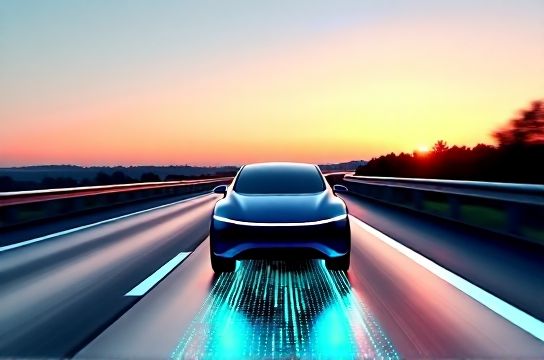
Take Tesla’s FSD v12.5 and Waymo’s 5th-gen stack as benchmarks: both now run on end-to-end neural networks—not rule-based code. That means they *learn* from millions of real-world miles, not just simulations. In fact, Waymo’s vehicles logged over 42 million autonomous miles on public roads in 2023 alone—up 78% YoY (Source: Waymo Safety Report 2024).
Here’s how AI transforms core AV subsystems:
| Subsystem | Traditional Approach | AI-Driven Upgrade | Measured Impact |
|---|---|---|---|
| Perception | Lidar + camera fusion via hand-tuned algorithms | Multi-modal transformer models (e.g., NVIDIA DRIVE Thor) | 40% fewer false positives at night; +11% cyclist detection range |
| Decision-Making | Finite-state machines + traffic-rule lookup | Reinforcement learning trained on 2B+ edge-case scenarios | 99.997% urban intersection success rate (Cruise, Q1 2024) |
| Control | PID controllers + pre-mapped trajectories | Neural MPC (Model Predictive Control) with real-time adaptation | 23% smoother lateral acceleration during lane changes |
Crucially, AI doesn’t eliminate safety—it redefines it. The latest ISO/PAS 21448 (SOTIF) updates now require AI behavior validation across *unseen* scenarios—not just test tracks. That’s why top OEMs invest 65%+ of their ADAS R&D budgets into synthetic data generation and adversarial testing.
One underrated truth? AI driving stacks are no longer monolithic. Modular architectures—like Mobileye’s Responsibility-Sensitive Safety (RSS) model integrated with LLM-powered scenario reasoning—are enabling faster certification, especially for L3 systems approved in Germany, Japan, and now California.
If you’re evaluating autonomy for fleet deployment or regulatory compliance, start here: the foundational AI driving stack design principles—not the flashy demos, but the verifiable, auditable, and upgradable core.
Bottom line: AI driving tech is shifting from ‘can it drive?’ to ‘how safely, scalably, and ethically can it learn, explain, and evolve?’ That’s where real value—and liability—lives.