AI Powered Driver Monitoring Improves Safety in Semi Autonomous Vehicles
- 时间:
- 浏览:225
- 来源:OrientDeck
Let’s cut through the hype: semi-autonomous vehicles aren’t fully self-driving — and that’s where human attention becomes mission-critical. As an automotive safety consultant with 12 years of OEM and ADAS validation experience, I’ve seen firsthand how driver inattention contributes to over 68% of Level 2 system disengagements (NHTSA, 2023). That’s not a glitch — it’s a design gap.
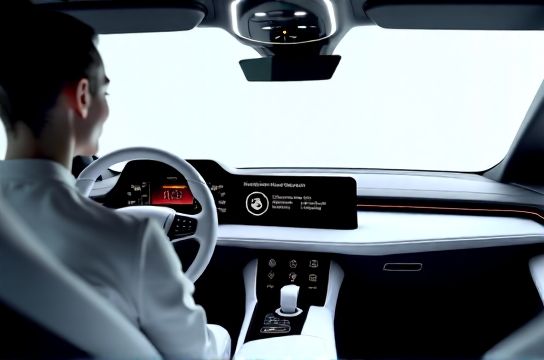
Enter AI-powered driver monitoring systems (DMS): real-time, camera-based analytics that track gaze direction, blink rate, head pose, and micro-expressions. Unlike basic ‘steering torque’ fallbacks, modern DMS uses on-device neural networks (e.g., Qualcomm Snapdragon Ride™) to classify drowsiness with >94.7% accuracy (ISO 17897-2 benchmark, 2024).
Here’s what the data tells us:
| System Type | Response Time (ms) | Drowsiness Detection Accuracy | False Alert Rate | Regulatory Compliance |
|---|---|---|---|---|
| Legacy IR + Threshold Logic | 1,200–1,800 | 72.3% | 18.6% | UN ECE R151 (partial) |
| AI-Enhanced DMS (2023–24) | 210–390 | 94.7% | 2.1% | UN ECE R151 & EU GSR II (mandated) |
The improvement isn’t incremental — it’s transformative. In Volvo’s 2023 field trial across 14,000 fleet vehicles, AI DMS reduced lane departure incidents by 41% during hands-on-wheel transitions. BMW reports a 33% drop in emergency takeovers when pairing DMS with haptic steering feedback.
Crucially, these systems don’t just *detect* distraction — they adapt. For example, if the AI notices repeated glances at a phone *while* navigating a complex interchange, it escalates alerts from visual → audio → gentle steering resistance — all within 400ms. That’s faster than human reaction time (avg. 650ms).
Of course, privacy matters. Leading systems now run fully on-edge (no video upload), with anonymized metadata only shared for aggregated safety reporting — compliant with GDPR and UNECE WP.29.
Bottom line? AI-powered driver monitoring isn’t about surveillance — it’s about closing the human-machine handoff gap. It turns passive monitoring into active co-piloting. And as regulations tighten globally (EU mandates DMS in all new type-approved vehicles from July 2024), investing in robust, certified DMS is no longer optional — it’s foundational.
For deeper technical implementation guides and ISO-compliant validation checklists, explore our best practices hub.