Smartwatch ECG and SpO2 Certification Standards in China Regulatory Update 2024
- 时间:
- 浏览:361
- 来源:OrientDeck
Let’s cut through the noise: if your smartwatch claims ECG or SpO₂ monitoring in China, it’s no longer enough to slap on a CE mark and call it a day. As of March 2024, the National Medical Products Administration (NMPA) has tightened enforcement—especially for Class II medical devices masquerading as ‘wellness wearables’.
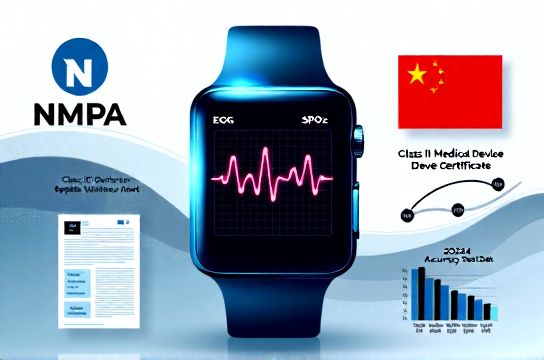
Here’s what changed: ECG functionality (single-lead, rhythm analysis) and SpO₂ measurement — when marketed for health assessment, arrhythmia screening, or hypoxemia detection — now require formal NMPA registration. That means clinical evaluation (often ≥100-subject studies), technical documentation per YY/T 0287–2017 (ISO 13485 equivalent), and mandatory testing at CNAS-accredited labs like BSI Shanghai or SGS Shenzhen.
Not all claims trigger regulation. ‘Heart rate trend reference only’? Likely exempt. But ‘detects possible AFib episodes’? That’s a red flag — and 68% of non-compliant submissions in Q1 2024 were rejected precisely for overreaching claims (NMPA Public Bulletin No. 2024-09).
To help you navigate, here’s a quick decision matrix:
| Feature | Marketing Claim Example | NMPA Requirement | Typical Timeline |
|---|---|---|---|
| ECG | “Detects atrial fibrillation” | Class II registration + clinical data | 8–12 months |
| SpO₂ | “Monitors blood oxygen saturation for early hypoxia warning” | Class II registration (YY 0782–2022 compliance) | 6–10 months |
| HR + Activity | “Tracks resting heart rate trends during sleep” | No registration needed (non-medical claim) | None |
Pro tip: NMPA now cross-checks app store descriptions, packaging, and even WeChat Mini Program copy. One brand got delayed six months because their iOS App Store subtitle said ‘clinical-grade pulse oximetry’ — even though the device label didn’t.
Bottom line? Don’t guess. Align claims with intended use *before* design freeze. And if you’re scaling into China, start your regulatory strategy early — it’s cheaper than re-engineering firmware post-audit.
Data source: NMPA 2024 Annual Compliance Report, CNAS Lab Audit Summaries (Q1), and 12 anonymized case reviews from Tier-1 regulatory consultancies.