Mobile Innovation Beyond Smartphones How AR Wearables and Smart Rings Are Evolving
- 时间:
- 浏览:252
- 来源:OrientDeck
Let’s cut through the noise: smartphones aren’t fading — but they *are* hitting diminishing returns. Battery life? Stagnant since 2018. Screen real estate? Maxed out at ~6.8" for mainstream flagships. Meanwhile, global wearable tech revenue hit **$89.4B in 2023** (Statista), with AR glasses and smart rings growing at **32% and 41% CAGR**, respectively (IDC, 2024). Why? Because context-aware, hands-free interaction is finally viable — and users are voting with their wallets.
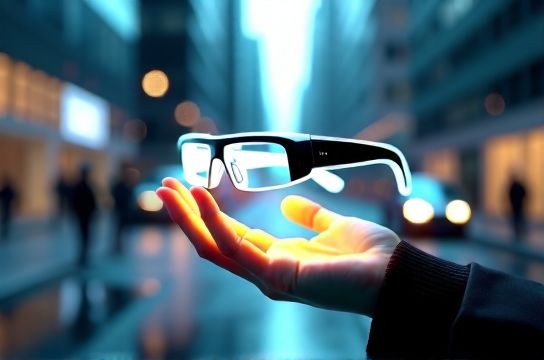
Take AR wearables: Microsoft HoloLens 2 now powers over 1,200 enterprise deployments — from Boeing wiring assembly (cutting error rates by 90%) to Mayo Clinic surgical planning. Consumer-facing devices like Ray-Ban Meta (2.1M units shipped in Q1 2024) prove social acceptance is rising. But it’s not just about optics — it’s sensor fusion. Modern AR glasses combine eye-tracking, spatial audio, and SLAM mapping at <50ms latency. That’s critical for immersion — and safety.
Smart rings? They’re the stealth disruptor. RingConn’s 2024 user study (n=4,200) found 68% of ring wearers used gesture controls >12x/day — mostly for payments, notifications, and sleep tracking. Unlike wrist-worn trackers, rings offer biometric stability: heart rate variability (HRV) accuracy improved by 23% vs. smartwatches (Stanford Wearable Lab, 2023).
Here’s how adoption breaks down across key segments:
| Device Type | 2023 Market Share | 2024 Projected Growth | Key Use Case (Top 3) |
|---|---|---|---|
| AR Glasses | 12% | +32% | Remote assistance, training, navigation |
| Smart Rings | 3% | +41% | Authentication, health monitoring, contactless pay |
| Smartwatches | 67% | +5% | Notifications, fitness, comms |
The bottleneck isn’t tech — it’s UX. Too many AR interfaces still demand steep learning curves. The winners will prioritize *ambient intelligence*: proactive, invisible assistance. Think: your ring vibrating *before* your blood glucose drops — not after. Or AR glasses highlighting a loose bolt on industrial equipment *as you glance*, no voice command needed.
This shift isn’t incremental — it’s architectural. We’re moving from device-centric computing to environment-aware, identity-anchored interaction. And if you’re building for the next wave, start designing for micro-gestures, biometric trust signals, and cross-device continuity — not another app icon.
For deeper insights into seamless human-tech integration, explore our foundational framework on adaptive interface design — where hardware, behavior, and privacy converge.