Scholar's Rocks and Their Philosophical Roots
- 时间:
- 浏览:202
- 来源:OrientDeck
If you’ve ever wandered into a traditional Chinese garden or flipped through an art book on East Asian aesthetics, you might’ve stumbled upon these eerily beautiful, weathered stones—twisted, porous, and somehow alive in their stillness. These aren’t just garden ornaments; they’re Scholar’s Rocks, or gongshi, and they’ve been whispering secrets of Daoism and Confucianism for over a thousand years.
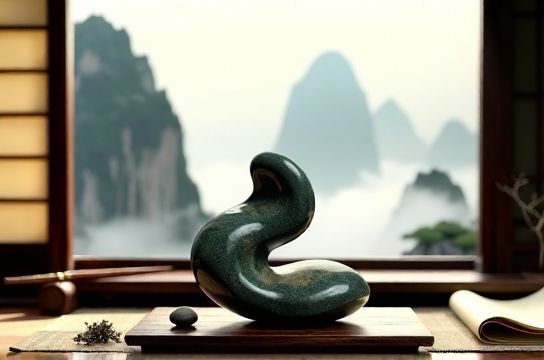
But what makes a rock worthy of a scholar’s desk? And why do collectors today pay thousands for a piece of limestone that looks like it belongs in a cave?
What Exactly Is a Scholar’s Rock?
A Scholar’s Rock is a naturally eroded stone—usually limestone from Lake Tai in China—that embodies the principles of balance, imperfection, and natural harmony. These rocks were treasured by literati during the Tang and Song dynasties not for their beauty alone, but for what they represented: a microcosm of the universe.
The ideal gongshi follows four criteria coined by the Song dynasty connoisseur Du Wan:
- Slenderness (shou) – elegant, not bulky
- Perforations (tou) – holes that allow light and air to pass
- Transparency (lou) – visual depth and layering
- Wrinkling (zhou) – textured surface suggesting age
Philosophy in Stone: Daoism and Wu Wei
At the heart of the Scholar’s Rock tradition is Daoist philosophy. These rocks are untouched by human carving—they’re shaped purely by water, wind, and time. That’s key. They embody wu wei, or “effortless action”—the idea that true wisdom comes from aligning with nature, not dominating it.
Confucian scholars also valued these stones as meditation tools. A rock on the desk served as a reminder to remain grounded, reflective, and morally upright—like a silent mentor made of stone.
Modern Appeal & Collector’s Market
Fast forward to today: gongshi have found new life in modern interiors and Zen-inspired design. High-end galleries and collectors value them not just as art, but as philosophical artifacts.
Here’s a snapshot of current market trends:
| Rock Type | Origin | Avg. Price (USD) | Historical Significance |
|---|---|---|---|
| Taihu Stone | Lake Tai, China | 3,000–15,000 | Imperial gardens, Song Dynasty |
| Lingbi Stone | Anhui Province | 2,500–10,000 | Used in Ming scholar studios |
| Yingde Stone | Guangdong | 1,200–6,000 | Popular in Southern gardens |
As you can see, provenance and philosophical resonance drive value more than size or polish.
How to Start Your Own Collection
You don’t need a palace to appreciate gongshi. Start small: look for certified authentic stones from reputable dealers. Display them on a simple wooden stand, away from clutter. Let the rock be the focal point—quiet, strong, full of unseen stories.
And remember: the best Scholar’s Rocks aren’t perfect. They’re weathered, flawed, and oddly alive—just like us.