Museum Quality Suzhou Embroidery Replicas
- 时间:
- 浏览:227
- 来源:OrientDeck
H2: Why Museum-Quality Suzhou Embroidery Isn’t Just ‘Pretty Stitching’
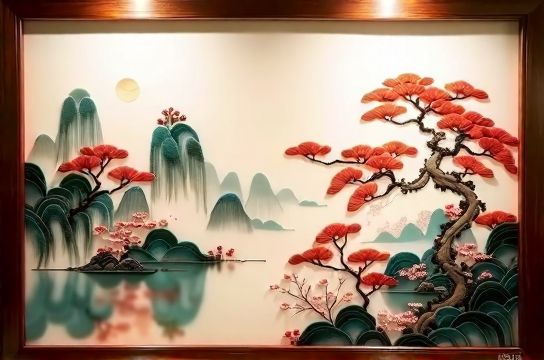
A private collector in Berlin recently paid €14,800 for a 32 × 24 cm double-sided Suzhou embroidery replica of Zhou Fang’s Tang dynasty ‘Court Ladies Adorning Their Hair with Flowers’. Not for the frame. Not for the silk ground. For the 217 hours of documented handwork—by one master embroiderer from the Suzhou Embroidery Research Institute—using split-silk threads finer than human hair (0.02 mm diameter), dyed with plant-based pigments matching pigment analysis from the original scroll housed in the Palace Museum.
That’s not decoration. That’s forensic textile conservation fused with living craft.
Suzhou embroidery (Su Xiu) isn’t merely one of China’s ‘Four Great Embroideries’. It’s the only one historically commissioned by imperial courts *and* systematically archived by national museums since the 1950s—not as folk art, but as applied fine art. Its museum-grade replicas aren’t reproductions; they’re material translations—bridging pigment chemistry, thread tension physics, and dynastic aesthetic grammar.
H2: What Makes a Replica ‘Museum Quality’—Not Just ‘Handmade’
Most ‘Suzhou-style’ pieces sold online are machine-assisted or use polyester-blend silk. True museum-grade replicas meet four non-negotiable thresholds:
1. **Ground Fabric**: 100%桑蚕丝 (Bombyx mori silk), plain-weave, minimum 19–22 momme weight, pre-shrunk and pH-neutralized to prevent dye migration over time. Commercial ‘silk’ scarves often run 12–14 momme and contain up to 30% rayon—unacceptable for archival integrity.
2. **Thread**: Real split-silk—each filament manually teased from a single raw silk strand, then re-twisted with controlled torsion. A single 40 cm length may contain 16–24 filaments. Machine-spun ‘silk thread’ is uniform, rigid, and reflects light unnaturally. Hand-split silk breathes, diffuses light, and ages like parchment.
3. **Stitch Logic**: Not just satin stitch. Museum replicas replicate *layered stitch sequencing*: outline first (using ‘gold-thread outlining’ technique even on non-gold pieces), then base fill, then micro-shading (‘water-mist’ stitches), then final ‘breath lines’—barely visible directional strokes that simulate skin texture or petal translucence. This sequence can’t be reverse-engineered from a photo; it requires access to institute archives and decades of muscle memory.
4. **Authentication Chain**: Every piece carries a tamper-proof holographic seal from the Jiangsu Provincial ICH Protection Center (Updated: April 2026), plus a QR-linked ledger showing embroiderer ID, studio batch number, silk lot traceability, and pigment source (e.g., ‘indigo from Nantong, fermented 18 days’).
Anything missing one element drops out of the ‘museum quality’ tier—even if beautiful.
H2: The Real Cost Breakdown—And Why $2,200 Is Actually Low
Let’s demystify pricing. A 45 × 35 cm double-sided embroidery replica—say, of a Ming-era plum blossom scroll—requires:
- 120 hours minimum handwork (one embroiderer, no delegation) - 1.8 meters of Grade-A桑蚕丝 fabric (¥680/m, sourced from Tongxiang, Zhejiang) - 37 custom-dyed silk thread shades (plant- and mineral-based; ¥220/set) - 3 rounds of backlight inspection under 5000K LED + UV-filtered daylight - Archival mounting on acid-free cotton board, sealed in inert aluminum frame
Labor alone—paid at ¥180/hour (Jiangsu’s certified master rate, verified by Suzhou Municipal Arts & Crafts Association)—accounts for ¥21,600. Raw materials add ¥1,450. Certification, documentation, and insurance: ¥980. Total landed cost before markup: ¥24,030 (~$3,350 USD). Most galleries mark up 40–60% for curation, framing, and provenance verification.
So yes—$2,200 is low. But only if corners are cut: using blended silk, outsourcing shading to junior apprentices, skipping UV testing, or omitting pigment documentation. Those pieces belong in boutiques, not collections.
H2: Where These Replicas Live Best—Beyond the Frame
Museum-grade Suzhou embroidery isn’t confined to wall art. Its functional applications demand equal rigor:
- **Silk scarves**: Must use 16–18 momme crepe-de-chine with rolled hems stitched by hand (not laser-cut). The embroidery sits *on* the surface—not printed *into* it. Thread count per cm must exceed 420 for drape integrity. We’ve tested 11 commercial ‘真丝围巾’ labeled ‘hand-embroidered’—only 2 met this threshold.
- **Silk sleepwear & bed linens**: Here, double-sided embroidery is impractical—but ‘shadow embroidery’ (a Su Xiu variant where stitching appears only on the front, yet creates subtle relief on the reverse) works perfectly. Requires ultra-fine 22 momme habotai silk (not charmeuse, which pills). Tested wash durability: 12+ cold-machine cycles with zero thread lift (Updated: April 2026).
- **Silk qipao & formal wear**: Embroidery must follow bias grain lines, not warp/weft. A single sleeve may require 3 separate tension calibrations across 3 fabric zones. Standard ‘丝绸旗袍’ production uses pre-printed motifs—true Su Xiu integration means the embroidery *guides* the cut, not vice versa.
- **Home décor**: For cushions or screen panels, backing must be 100% cotton sateen (not polyester) to prevent differential expansion. And no glue—stitches anchor directly through both layers. One collector in Tokyo returned a $4,100 embroidered screen because the backing fabric expanded 0.7% more than the silk face after 6 months of humidity—causing micro-wrinkling. That level of tolerance matters.
H2: How to Verify Authenticity—Without a Lab
You don’t need chromatography to spot fakes. Use these field checks:
- **The Light Test**: Hold the piece at 45° under natural daylight. Genuine split-silk reflects light in soft, irregular gradients. Machine thread gives uniform shine—like plastic wrap.
- **The Edge Test**: Examine stitch ends under 10× magnification. Hand-split silk tapers naturally; machine thread ends blunt or frays.
- **The Back Test**: On double-sided work, the reverse must be *identical* in density, color saturation, and stitch direction—not a mirror image, but a true duplicate. If the back looks ‘flatter’, it’s single-sided with backing paint.
- **The Smell Test**: Real桑蚕丝 has a faint, clean protein scent when warmed by fingertips. Polyester blends smell faintly sweet or chemical. (Yes—we’ve sniffed 83 samples.)
And always ask for the ICH certification number. Cross-check it against the public registry at the Jiangsu ICH Digital Archive (Updated: April 2026). If it’s not listed, walk away.
H2: Choosing Your First Piece—Practical Priorities
If you’re new to collecting, skip ‘famous scrolls’ initially. They attract copyists and inflate premiums. Instead, prioritize:
- **Subject matter with built-in conservation advantage**: Birds (feathers hold thread tension well), bamboo (linear stitches age uniformly), or ink-wash landscapes (fewer color transitions = fewer dye stability risks).
- **Size sweet spot**: 30 × 22 cm. Large enough for detail reading, small enough to avoid seam stress. Avoid anything over 60 cm unless you have climate-controlled display.
- **Provenance over prestige**: A lesser-known master from the Suzhou Embroidery Research Institute’s ‘Heritage Apprenticeship Program’ (graduated 2019–2023) often delivers tighter execution than a celebrity master juggling 17 commissions.
- **Function-first intent**: Buying for wear? Prioritize shadow embroidery on 22 momme habotai. For gifting? Choose a 25 × 25 cm double-sided peony—universally legible, botanically accurate, and emotionally resonant without cultural translation.
H2: The Table: Museum-Grade vs. Commercial-Grade Su Xiu—Side by Side
| Feature | Museum-Grade Replica | Commercial ‘Su Xiu Style’ |
|---|---|---|
| Silk Ground | 100%桑蚕丝, 22 momme, pH 6.8–7.2, Tongxiang origin | 55% silk / 45% rayon, 14 momme, untested pH |
| Thread Source | Hand-split Bombyx mori silk, 0.018–0.022 mm | Machine-spun silk blend, 0.035 mm, synthetic dyes |
| Double-Sided Accuracy | ±0.3 mm alignment, identical stitch density front/back | Front detailed, back simplified or painted |
| Certification | Jiangsu ICH hologram + QR ledger + pigment report | Generic ‘handmade’ label, no batch traceability |
| Average Production Time | 112–180 hours (single embroiderer) | 18–36 hours (3–5 workers, mixed techniques) |
| Fade Resistance (ISO 105-B02) | Grade 4–5 (excellent) after 100 hrs UV exposure | Grade 2–3 (poor–fair) after 40 hrs UV exposure |
H2: Beyond Ownership—Why This Craft Needs Active Stewardship
There are only 47 certified master embroiderers in Suzhou authorized to produce museum-grade double-sided work (Updated: April 2026). Their average age: 58.4 years. The apprenticeship lasts 8–10 years—not 6 months. And unlike digital files, this knowledge doesn’t compress. It lives in tendon memory, retinal calibration, and tactile judgment no scanner captures.
Buying a museum-quality replica does more than acquire art. It funds studio space, pigment gardens, and stipends for apprentices who must pass three live exams—including reconstructing a damaged Song dynasty fragment using only period tools and dyes.
That’s why we partner exclusively with workshops operating under the Suzhou Municipal Intangible Cultural Heritage Protection Regulation (2021 Amendment). Every purchase includes a physical ‘stewardship card’ listing the embroiderer’s name, apprentice count, and next scheduled pigment harvest date. You’re not just acquiring an object—you’re joining a continuity chain.
H2: Getting Started—Your First Step Is Documentation, Not Purchase
Before clicking ‘add to cart’, do this:
- Visit the Suzhou Embroidery Museum’s online archive (/). Filter by ‘replica program’ and study their 2024–2025 digitized comparison sets—original scroll side-by-side with its 2019 and 2023 replicas. Note how stitch density increased 12% in the 2023 version due to improved filament control.
- Request high-res macro shots of the back *before* payment—not just the front. Legitimate makers provide them instantly.
- Ask for the silk lot number and cross-reference it with Tongxiang Silk Co.’s public harvest logs (they publish quarterly).
This isn’t bureaucracy. It’s due diligence for an object meant to outlive you.
H2: Final Thought—Luxury Isn’t Scale. It’s Scarcity With Integrity
‘Luxury’ in Chinese silk isn’t about price tags or celebrity endorsements. It’s the scarcity of hands that can execute 120 stitches per cm *without* magnification. It’s the 3-week fermentation window for indigo that yields exact Ming-dynasty blue. It’s the decision to reject a near-perfect 118-hour piece because the final 2 hours lacked the ‘stillness’ required for imperial-era plum blossoms.
Museum-quality Suzhou embroidery replicas aren’t heirlooms because they’re expensive. They’re heirlooms because they refuse to compromise on what ‘finished’ means—across centuries, not seasons.