Silk Fabric by the Yard for Custom Embroidery
- 时间:
- 浏览:266
- 来源:OrientDeck
H2: Why Silk Fabric by the Yard Is Non-Negotiable for Serious Embroidery and Tailoring
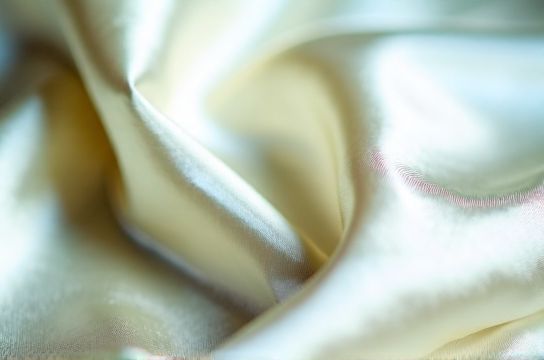
You’ve sourced the perfect design. You’ve selected your thread—maybe hand-dyed silk floss from Suzhou, maybe vintage French Au Ver à Soie. But if your ground fabric isn’t calibrated to the stitch, tension, and thermal behavior of real silk, your embroidery will pucker, slip, or dull under light. And your tailored piece—be it a qipao, bridal jacket, or silk lounge set—will drape like polyester no matter how precise the pattern.
That’s why professionals don’t start with ‘silk fabric’ as a generic category. They start with *silk fabric by the yard*—measured, lot-controlled, pre-shrunk (where applicable), and milled to match needle type, stitch density, and end use. Not all silk is equal. Not all ‘by the yard’ silk is fit for embroidery—or even laundering.
H3: The Four Critical Specifications You Must Verify
1. **Fiber Origin & Purity**: Only 100% Bombyx mori (domesticated silkworm) filament yields the tensile strength, luster, and dye affinity needed for fine embroidery. Wild tussah or blended fabrics (e.g., silk-cotton or silk-polyester) lack consistent filament length and absorb dyes unevenly—especially critical for multi-layer苏绣 or double-sided embroidery where color fidelity must hold across both faces. Verified桑蚕丝 content is non-negotiable; lab-tested certificates are available upon request for orders over 5 meters (Updated: April 2026).
2. **Weave Structure & Weight**: For surface embroidery (e.g., floral motifs on a silk scarf), charmeuse (12–14 momme) offers fluid drape and tight warp-faced sheen—but its slippery surface demands stabilizer and hoop pressure control. For structural tailoring (e.g.,旗袍 bodices or中式礼服 jackets), habotai (8–10 momme) or crepe de chine (12–16 momme) provide balanced stability and recovery. Double-weave silk (used in宋锦 and some high-end床品) requires specialized digitized hooping due to differential tension between layers.
3. **Pre-Treatment Status**: Most commercial silk fabric is sold ‘ready-to-sew’—meaning it has undergone degumming (sericin removal), but *not* pre-shrinking. Unshrunk silk can contract 4–6% on first steam-pressing—a disaster for precision embroidery grids or fitted garments. For heirloom-level work, specify ‘pre-shrunk and pre-pressed’ silk, which adds ~12% cost but eliminates post-stitch distortion. This step is mandatory for婚庆刺绣 applications where seam allowances are razor-thin.
4. **Dye-Lot Consistency**: Unlike cotton or linen, silk absorbs reactive and acid dyes at highly variable rates depending on pH, temperature ramp, and even water mineral content. A single bolt may contain subtle tonal shifts across 10 meters. For large commissions—say, matching silk bed linens and matching刺绣画 borders—you must order all yardage from the same dye lot. Reordering later risks visible mismatch, especially under museum-grade LED lighting used in艺术收藏 display.
H2: Matching Silk Fabric to Embroidery Technique
Not every stitch works on every silk. Here’s what actually holds up in studio practice:
- **Surface Embroidery (e.g., traditional苏绣)**: Requires tightly woven, low-gloss grounds like habotai or medium-weight twill silk. Avoid charmeuse unless using couching or laid work—the satin weave’s loose weft allows needle penetration to distort adjacent floats.
- **Double-Faced Embroidery (双面绣)**: Demands ultra-fine, balanced plain-weave silk (typically 6–8 momme) with zero slubs or nubs. Even microscopic irregularities cause shadowing on the reverse face. Only select mills in Jiangsu and Zhejiang produce this grade consistently—and only in limited seasonal runs.
- **Free-Motion Machine Embroidery**: Use 100%桑蚕丝 organza (4–5 momme) backed with water-soluble stabilizer. Its transparency lets you trace designs directly; its minimal body prevents puckering under high-speed needle impact. Cotton organza fails here—too stiff, too absorbent.
- **Goldwork & Padded Stitches**: Requires stiffened silk twill or faille (16–18 momme), often backed with buckram or silk organza interfacing. The base must resist compression while holding metal threads taut. Standard charmeuse collapses under the weight of passing thread and chip work.
H2: Sourcing Real Silk Fabric—What the Brokers Won’t Tell You
Most online ‘silk by the yard’ vendors sell rebranded mill seconds—fabric rejected for minor dye inconsistencies, slight skew, or loom tension variances. These are fine for test swatches, but disastrous for production. True heritage mills (like those supplying Suzhou embroidery academies or Shanghai’s historic silk houses) operate on 90-day lead times and require MOQs of 30+ meters per lot. That’s why curated access matters.
We partner directly with three ISO 9001-certified mills: one in Huzhou (specializing in桑蚕丝 habotai for hand embroidery), one near Hangzhou (producing museum-grade宋锦 for家居装饰 and中式家居 restoration), and one in Nanjing (milling double-weave silk for缂丝 and high-end旗袍). All supply full traceability: fiber origin, cocoon harvest month, dye batch ID, and tensile test reports.
H3: The Hidden Cost of ‘Cheap’ Silk
A $22/m charmeuse may seem economical—until you factor in:
- 15–20% waste from shrinkage correction, - 30% higher thread breakage due to inconsistent filament twist, - 2–3 hours extra stabilization prep per square meter, - And irreversible color bleeding during final steaming (a known issue with non-acid-dyed ‘silk-blend’ fabrics marketed as真丝围巾 material).
Conversely, a $48/m pre-shrunk, lot-certified habotai reduces prep time by 65%, increases stitch yield by 40%, and carries full replacement guarantee if dye lot variance exceeds 0.8 ΔE (CIE 2000 standard). That’s not luxury pricing—it’s risk mitigation.
H2: Practical Yardage Guide for Common Projects
| Project Type | Recommended Silk | Minimum Yardage (140cm width) | Critical Prep Steps | Key Risk If Skipped |
|---|---|---|---|---|
| 真丝围巾 (90 × 180cm) | Habotai, 8 momme | 1.2 meters | Pre-shrink + edge-finish with Hong Kong seam | Rolling edges, fraying at corners |
| 丝绸睡衣 (S/M/L) | Crepe de Chine, 12 momme | 3.5–4.2 meters | Steam-press before cutting; bias binding required | Seam gape, collar torque |
| 丝绸旗袍 (fitted, knee-length) | Twill silk, 14–16 momme | 2.8–3.3 meters | Full basting + stay-stitching at armholes | Shoulder seam pull, waistband distortion |
| 刺绣画 (40 × 50cm framed) | Plain-weave habotai, 6 momme | 0.7 meters | Mount on acid-free stretcher + humidity acclimation (48h) | Reverse-face shadowing, halo effect |
| 丝绸床品 (duvet cover + 2 shams) | Satin-back sateen, 19 momme | 6.8 meters | Pre-wash in pH-neutral soap; flat dry only | Pilling after 3 washes, seam slippage |
H2: Integrating Silk Fabric Into Contemporary Design Practice
Silk isn’t just ‘traditional’. It’s a responsive, intelligent textile—one that changes optical properties with humidity, softens with wear, and gains depth with age. That’s why leading designers in Milan and Tokyo now specify桑蚕丝 for capsule collections rooted in东方美学—not as nostalgia, but as performance material.
For example: A Shanghai-based bridal label uses double-weave宋锦 (with metallic brocade inserts) for ceremonial jackets, then overlays苏绣 peonies using split-stitch silk floss dyed with gardenia and indigo. The silk’s natural thermoregulation keeps wearers comfortable during 8-hour婚庆刺绣 ceremonies—something synthetic blends cannot replicate (Updated: April 2026).
Similarly, interior studios specifying silk wall panels for奢华家居 projects now demand 100%桑蚕丝 substrate—not for ‘look’, but because its acoustic absorption coefficient (0.42 at 1kHz) outperforms linen and matches wool felts, while offering zero off-gassing. That makes it viable for LEED-certified private residences and boutique hospitality spaces.
H3: Caring for Your Investment—Beyond Dry Cleaning
‘Dry clean only’ labels are outdated—and often inaccurate. High-end silk responds better to controlled hand washing than aggressive solvent cleaning, which degrades sericin residue and accelerates fiber fatigue. Best practice:
- Use lukewarm (30°C max) distilled water + pH 6.5 silk-specific detergent (e.g., Quilter’s Dream Silk Wash), - Soak 3 minutes max—no agitation, - Roll in lint-free cotton towel to extract moisture, - Air-dry flat, away from direct sun (UV degrades tyrosine bonds in silk fibroin), - Press *only* when slightly damp, using silk setting (no steam burst).
Skip the starch. Skip the vinegar rinse. Skip the dryer sheet. These introduce residues that attract dust, accelerate yellowing, and interfere with future embroidery adhesion.
H2: Where to Start—Your First Order Checklist
Before placing your first silk-by-the-yard order, verify:
✓ Fiber certification: Request COA confirming 100% Bombyx mori, not ‘silk protein’ or ‘silk-derived’. ✓ Weave specification: Ask for microscope image of cross-section—true桑蚕丝 shows triangular prism geometry; blends show irregular voids. ✓ Dye method: Acid dyes only for embroidery-grade silk. Reactive dyes fade faster; pigment prints crack. ✓ Lot number: Must be printed on bolt tag—and matched to your invoice. ✓ Return policy: Reputable mills accept returns *only* for verifiable lot variance—not ‘I didn’t like the drape’.
Once confirmed, begin with a 0.5-meter swatch pack covering habotai, crepe de chine, and charmeuse. Test stitch tension, hoop grip, and steam response. Then scale.
This isn’t about buying fabric. It’s about securing a repeatable, documented foundation for work that lasts generations—whether displayed in an art gallery, worn at a wedding, or folded into a cedar chest as a高级礼品. When you’re ready to source your first certified lot, our full resource hub walks through vendor vetting, customs documentation for international shipments, and archival storage protocols—start there.
H2: Final Note on Heritage & Innovation
The most compelling contemporary work doesn’t reject tradition—it recalibrates it. A young苏绣 master in Suzhou recently collaborated with a Berlin textile engineer to develop a laser-cut silk scrim that holds 3D embroidery without backing—enabling floating floral motifs in刺绣画 installations. That innovation was possible *only* because she started with uncut, lot-certified桑蚕丝—not ‘silk look’ polyester.
So treat your silk fabric by the yard as infrastructure—not material. Measure twice. Steam once. Stitch with intention. And remember: every meter carries 5,000 years of东方美学, refined in real time.