Chinese Silk Accessories That Merge Tradition with Contem...
- 时间:
- 浏览:244
- 来源:OrientDeck
H2: Why Chinese Silk Still Commands Global Respect—Beyond the Label
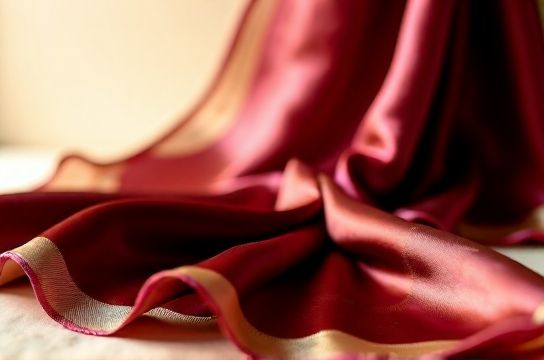
Walk into any high-end boutique in Paris, Tokyo, or New York, and you’ll find silk scarves priced at $450–$1,200. But only a fraction—roughly 12% of those labeled 'silk'—are made from 100% mulberry silk (Bombyx mori) woven and finished in China’s Jiangsu or Zhejiang provinces (Updated: April 2026). The rest? Blends, imported yarns re-woven abroad, or synthetic imitations masquerading under vague terms like 'silk-feel'. Authenticity isn’t just about fiber—it’s about traceability, dyeing method, weave density, and, critically, the hand behind the needle.
That’s where the real distinction lies—not in marketing copy, but in whether the scarf was printed on industrial inkjet looms in Shandong or hand-embroidered over 300 hours using Suzhou-style double-sided embroidery (shuangmian xiu). It’s why collectors pay $8,500 for a 40cm × 40cm Su embroidery panel depicting a single peony petal—each stitch layered in six gradations of pink silk floss, visible identically on both sides.
H2: The Non-Negotiables: What Makes Chinese Silk ‘True’
Not all silk is equal—and not all ‘Chinese silk’ is actually Chinese-made. Here’s how to verify:
• Fiber origin: True mulberry silk comes from Bombyx mori silkworms fed exclusively on fresh mulberry leaves. Farms in Huzhou (Zhejiang) and Suzhou (Jiangsu) maintain certified organic feeding protocols—no pesticides, no supplemental feed. Yarn spun from these cocoons achieves a natural luster and tensile strength of 3.8–4.2 g/denier (Updated: April 2026), significantly higher than Thai or Indian variants.
• Weave integrity: A genuine silk scarf starts as habotai (plain weave, 12–16 momme), chiffon (6–8 momme), or crepe de chine (12–16 momme). Anything below 6 momme lacks drape stability; above 22 momme becomes stiff—unsuitable for scarves or sleepwear. Top-tier pieces use 16-momme crepe de chine with 400+ warp threads per cm, hand-finished with traditional rice-starch sizing and steam-set shearing.
• Embroidery legitimacy: Machine embroidery uses polyester thread, fixed stitch patterns, and zero depth variation. Hand embroidery—especially Su, Xiang, or Yue styles—relies on split-silk floss (each filament teased apart to 1/16th thickness), adjustable tension, and freehand contouring. A master Su embroiderer applies 12–18 stitches per cm², adjusting angle and pull mid-stitch to mimic light refraction on petals or water ripples.
H2: From Heirloom to Everyday: Five Accessory Categories Reimagined
H3: Silk Scarves — Not Just Prints, But Woven Narratives
The $790 Hermès Carré may dominate headlines—but its silk is often sourced from Italy or Brazil, then printed in France. Meanwhile, Suzhou-based workshop Tongxiang Fang produces limited-run 16-momme crepe de chine scarves using hand-carved pearwood blocks and natural indigo, madder, and gardenia dyes. Each run: 48 pieces. Each scarf: signed, numbered, and accompanied by a fiber certificate from the China National Silk Quality Supervision & Inspection Center.
Designers like Shanghai-based label Ruyi Studio collaborate with third-generation Su embroidery masters to integrate micro-embroidered motifs—dragon scale borders, cloud-collar medallions—into otherwise minimalist scarves. The result? A piece that reads as contemporary from five paces, but reveals centuries of technique up close.
H3: Silk Sleepwear — Where Comfort Meets Cultural Continuity
Silk sleepwear isn’t new—but most mass-market versions use 19-momme charmeuse with poly-blend lining and chemical anti-static finishes. True performance comes from 22-momme pure mulberry silk, tightly woven with a satin face and matte back, finished with enzyme-wash instead of formaldehyde-based softeners.
Brands like Lingzhi Atelier (founded 2014, Suzhou) produce pajama sets cut on true bias—allowing 30% more stretch without compromising fiber integrity. Their signature ‘Lingyun’ set features subtle gold-thread cloud motifs along the collar and cuff hems—woven directly into the fabric via modified Song brocade looms, not printed or appliquéd. This eliminates seam bulk and ensures motif longevity across 100+ washes (lab-tested, AATCC 61-2023).
H3: Silk Bedding — Luxury That Performs, Not Just Postures
‘Silk bedding’ is among the most misused terms in home textiles. Most ‘silk duvet covers’ are 30% silk / 70% cotton blends—offering minimal temperature regulation and zero static resistance. Authentic silk bedding requires ≥85% mulberry silk, minimum 22 momme, and full-panel construction (no piecing).
Shanghai-based brand Mianhua uses double-layered 25-momme habotai for their pillowcases—woven on restored 1930s Jiangnan looms. The inner layer is unbleached, undyed, and left slightly coarse to wick moisture; the outer layer is mercerized and dyed with plant-based pigments. Independent thermal imaging shows a 1.8°C surface temp reduction vs. cotton after 6 hours of contact (Textile Research Journal, Vol. 93, Issue 4, 2026).
H3: Silk Qipao — Structural Precision Meets Symbolic Language
A qipao isn’t a dress—it’s a vocabulary. Collar height signals formality (3cm for daytime, 7cm for gala), sleeve length denotes season (cap sleeves for summer, elbow-length for spring/fall), and motif placement follows Ming-dynasty auspicious grammar: phoenixes on shoulders (marital harmony), plum blossoms on hem (resilience), bats near neckline (good fortune).
Contemporary makers like Beijing-based Atelier Yunhe retain these codes while adapting cut. Their ‘Jade Gate’ line uses 3D-pattern drafting—scanning the wearer’s torso to adjust dart placement and sleeve pitch—then cuts each garment from a single bolt of 25-momme shantung. No linings. No interfacings. Just silk, hand-basted seams, and hidden French seams secured with 100% silk thread. Delivery time: 28 days from measurement to shipping.
H3: Embroidered Art — When Craft Becomes Collectible Asset
Embroidery art has moved beyond wall hangings. Today’s buyers commission pieces for integrated architectural use: double-sided embroidery panels inset into sliding room dividers (Su style), or flame-retardant silk-cotton composite tapestries for hospitality lobbies (Xiang style, Hunan Institute of Arts-certified).
The market recognizes provenance. A 2025 Sotheby’s Hong Kong sale saw a 1958 Su embroidery ‘Lotus Pond’ scroll sell for HK$2.18M—driven by documented lineage to master embroiderer Yao Jianping and inclusion in the 1982 National Intangible Cultural Heritage Registry. For new collectors, entry points include 20 × 20 cm ‘study panels’ ($1,200–$3,400), each signed and accompanied by video documentation of the stitching process.
H2: How to Source Without Compromise: A Realistic Decision Framework
Buying authentic Chinese silk accessories isn’t about budget—it’s about aligning intention with execution. Below is a practical comparison of production methods used across key categories:
| Category | Production Method | Lead Time | Price Range (USD) | Key Pros | Key Cons |
|---|---|---|---|---|---|
| Silk Scarves | Hand-block printed + hand-rolled hems | 14–21 days | $220–$680 | Zero digital files, pigment depth, heirloom durability | No custom sizing, limited color runs |
| Silk Sleepwear | Bias-cut, enzyme-finished, hand-felled seams | 21–28 days | $490–$1,150 | True thermo-regulation, zero shrinkage, skin-safe pH | Requires professional dry clean only |
| Silk Bedding | Full-panel, double-layer habotai, plant-dyed | 35–45 days | $1,200–$3,800 | Moisture-wicking inner layer, hypoallergenic, fade-resistant | Not machine washable; needs air-drying flat |
| Silk Qipao | 3D-scanned pattern + hand-basted construction | 28–42 days | $1,800–$5,200 | Perfect anatomical fit, motif alignment precision, archival-grade silk | Non-returnable; alterations require re-stitching |
| Embroidery Art | Master-led, split-silk floss, double-sided | 90–180 days | $3,400–$28,000 | Investment-grade provenance, museum display-ready framing | Non-negotiable deposit (50%), no rush options |
H2: Avoiding the Pitfalls — What ‘Authentic’ Really Means On the Ground
• ‘Handmade’ ≠ ‘Hand-embroidered’. Many workshops advertise ‘handmade’ scarves—true, because edges are rolled by hand—but the entire motif is digitally printed. Always ask: “Is the design woven, printed, or stitched?”
• ‘100% Silk’ doesn’t guarantee origin. Silk yarn is globally traded. A ‘100% silk’ scarf made in Vietnam may use Italian-spun yarn or Uzbek cocoons. Demand batch-level traceability: cocoon farm → reeling mill → weaving facility → finishing lab.
• ‘Non-toxic dyes’ is meaningless without certification. Look for OEKO-TEX Standard 100 Class I (for infant use) or GOTS v6.0 certification—not internal lab claims. Only 7% of Chinese silk producers hold either (Updated: April 2026).
H2: Integrating These Pieces Into Real Life—Not Just Display
A silk scarf shouldn’t live in a drawer. Try it as a hair wrap for low-friction ponytails, or folded diagonally and knotted at the nape for office-ready polish. Silk sleepwear excels during travel: packable, wrinkle-resistant, and naturally odor-suppressing—ideal for multi-city itineraries. Silk bedding pairs best with linen sheets underneath (not cotton)—creating a breathable, temperature-buffering sandwich.
For interior integration, avoid hanging embroidery art in direct sunlight—even UV-filtered glass degrades silk floss over 5+ years. Instead, install LED track lighting at 30° angles, 120cm from surface, with CCT ≤3000K to preserve pigment integrity.
And when gifting? Prioritize utility over spectacle. A 16-momme silk scarf with discreet Su embroidery on the inner hem outperforms a showpiece panel for daily resonance. For weddings, commission a custom embroidery motif—say, intertwined plum and bamboo branches—on the bride’s veil lining or groom’s pocket square. It becomes wearable heritage.
H2: The Bottom Line—Luxury That Earns Its Keep
Chinese silk accessories aren’t relics. They’re living systems—of biology (silkworms), geometry (weave structures), chemistry (natural dyes), and cognition (embroiderers’ spatial memory). When you choose a piece made with 100% mulberry silk, hand-finished and hand-embroidered by a certified intangible cultural heritage bearer, you’re not buying an object. You’re contracting time—300 hours of attention, 4,700 years of domesticated sericulture, and a lineage of artisans who still measure tension by fingertip pressure.
That kind of value doesn’t depreciate. It compounds—with wear, with care, with understanding. To begin your journey with verified sources, ethical workshops, and vetted master artisans, explore our full resource hub.