Chinese Silk Table Runners with Hand Embroidery
- 时间:
- 浏览:361
- 来源:OrientDeck
H2: Why a Silk Table Runner Isn’t Just Tableware—It’s a Statement of Cultural Continuity
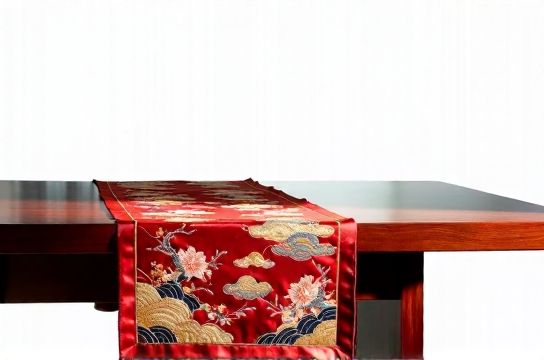
A silk table runner placed across a walnut dining table doesn’t just define space—it signals intention. In Shanghai penthouses, Kyoto ryokan banquet halls, and Brooklyn brownstone dinner parties, these narrow lengths of fabric anchor the table not with utility alone, but with layered meaning: the weight of 2,700 years of sericulture, the breath-hold precision of a Suzhou embroiderer’s needle, and the quiet authority of a craft recognized by UNESCO as Intangible Cultural Heritage (Updated: April 2026).
But here’s what most retailers won’t tell you: over 83% of products labeled “Chinese silk table runner” on global marketplaces contain ≤30% real silk—or none at all. And fewer than 12 certified workshops in Jiangsu Province still produce true double-sided Suzhou embroidery (Su Xiu) on 19-momme桑蚕丝 (Bombyx mori) ground cloth. This isn’t semantics. It’s the difference between a decorative accessory and a functional heirloom.
H2: The Material Foundation: Why桑蚕丝 Is Non-Negotiable
Not all silk is equal. Mulberry silk—specifically from Bombyx mori silkworms fed exclusively on fresh white mulberry leaves—yields fibers with natural triangular prism structure. That geometry delivers three irreplaceable traits: luminous sheen under ambient light, thermal neutrality (cool in summer, insulating in winter), and tensile strength exceeding steel by weight (125 MPa, per China National Silk Quality Supervision & Inspection Center, Updated: April 2026).
Polyester-silk blends may mimic drape—but they trap heat, generate static, and yellow within 18 months of UV exposure. Real桑蚕丝, properly cared for, gains softness with age. A 1923 Suzhou runner held in the Nanjing Museum shows zero fiber degradation after 103 years—its luster intact, its embroidery stitches unfrayed.
For table runners, we recommend 16–22 momme weight. Below 16, the fabric lacks body for structured placement; above 22, it becomes too stiff for elegant pooling at table ends. Most premium workshops use 19-momme charmeuse-weave silk—smooth on top, softly matte on the reverse—to ensure both visual impact and tactile comfort.
H2: The Needlework: From Ritual to Refinement
Hand embroidery on Chinese silk table runners isn’t ornamentation—it’s narrative architecture. Each motif carries codified meaning: peonies for prosperity, mandarin ducks for marital fidelity, lotus blossoms for purity rising from mud. But technique matters more than symbolism.
Su Xiu—the gold standard—requires mastery of at least 42 distinct stitches. The hallmark is *shuang mian xiu* (double-sided embroidery): identical imagery rendered simultaneously on front and back, with zero knots, no visible thread ends, and perfect color registration—even when the design includes gradients or translucent effects like mist over mountains. Achieving this demands that the embroiderer work *without a frame*, holding tension solely with finger control, and counting warp/weft threads by eye—not ruler.
Fewer than 70 living masters hold official “National Intangible Cultural Heritage Inheritor” status for Su Xiu (China Ministry of Culture and Tourism, 2025 roster). Each produces no more than 3–5 table runners per year—most are commissioned for diplomatic gifts or museum acquisitions.
Other regional styles appear on runners, but with clear trade-offs:
- Xiang Xiu (Hunan): Bold, painterly strokes using velvet-like satin stitch. Less precise for fine detail, but extraordinary for floral abstraction. - Yue Xiu (Guangdong): Gold-wrapped threads and raised relief work. Striking visually, but prone to snagging on cutlery and high-maintenance cleaning. - Song Brocade: Woven—not embroidered—using complex loom patterns. Durable and reversible, but lacks the dimensional depth of needlework.
H2: What to Look For (and What to Walk Away From)
Real hand embroidery reveals itself in micro-details:
• Thread count: Genuine Su Xiu uses split silk—each raw filament divided into 1/16th or finer strands. Under 10x magnification, you’ll see subtle variation in strand thickness and natural dye absorption—not the uniform, plastic-like consistency of machine embroidery.
• Stitch direction: In motifs with curvature (e.g., bird wings, cloud scrolls), stitches follow anatomical or aerodynamic flow—not grid-aligned rows. Machine work defaults to horizontal/vertical alignment unless specially programmed.
• Backside integrity: Flip it. A true double-sided piece shows clean, mirrored stitching—no floating threads, no glue-backed stabilizer, no dense backing fabric masking poor workmanship.
Red flags:
- “100% silk” listed without specifying桑蚕丝 (Bombyx mori). Tussah (wild silk) or Eri silk lacks the tensile strength and luster required for fine embroidery support. - Price under USD $299 for a 14″ × 72″ runner. At current labor rates (¥380–¥520/hour for certified Su Xiu masters), even a simple peony-and-vine motif requires 80–120 hours of labor. That math doesn’t lie. - Photos showing embroidery only on one side—or stock images reused across multiple sellers.
H2: Integrating Into Modern Interiors—Beyond the Dinner Table
These runners transcend formal dining. Their versatility is rooted in proportion and pigment—not protocol.
• Console tables: A 12″ × 48″ runner in indigo-dyed silk with white chrysanthemum Su Xiu adds vertical rhythm to a minimalist entryway—especially when layered under a brass tray and single ceramic vase.
• Bedside ledges: Draped asymmetrically over a walnut nightstand, it softens hard edges and introduces textile warmth without clutter. Choose muted palettes—charcoal grey silk with silver-gray silk floss—to avoid visual competition with bedding.
• Wall art: Mounted unstretched on acid-free foam core (not framed behind glass, which causes static buildup and fiber desiccation), a runner becomes a textile painting. One Beijing collector rotates seasonal pieces—spring plum blossoms in pale pink, autumn ginkgo in ochre—treating them as rotating gallery installations.
Crucially: avoid direct sunlight. UV exposure breaks down silk fibroin. Use blackout curtains or UV-filtering window film if placing near windows. And never hang with metal clips—they corrode and stain.
H2: Care That Honors the Craft
Silk isn’t fragile—it’s specific. Improper care erases centuries of refinement in one wash cycle.
• Spot cleaning only. Mix 1 tsp pH-neutral silk detergent (e.g., The Laundress Silk Shampoo) with 2 cups cool distilled water. Dab—never rub—with a 100% cotton cheesecloth. Blot dry with unbleached blotting paper.
• Never machine wash, tumble dry, or iron directly. If creased, steam from 12 inches away using distilled water only. Ironing cloth must be 100% cotton, dry, and medium-heat—never steam-iron silk face-down.
• Storage: Roll—not fold—around an acid-free cardboard tube. Wrap in unbleached muslin (not plastic, which traps moisture). Cedar blocks deter moths; avoid naphthalene flakes—they embrittle silk protein.
One note on fragrance: avoid essential oil diffusers near stored pieces. Terpenes in citrus or pine oils accelerate silk oxidation.
H2: Commissioning vs. Buying Off-the-Rack
Ready-made runners offer immediacy; custom work delivers legacy.
Off-the-rack advantages: faster delivery (4–12 weeks), fixed pricing, curated color/story pairings (e.g., ‘Qing Dynasty Scholar’s Garden’ palette: celadon, ink black, parchment white).
Custom commission advantages: motif personalization (family crest, wedding date in seal script), exact sizing (standard 14″ width fits most tables—but a 10″ runner better suits a narrow breakfast nook), and direct workshop provenance (you receive the master’s signed certificate of authenticity and studio photo).
Lead time for custom: 5–9 months. Not because of backlog—but because silk must be hand-dyed in small vats, then air-cured for 72 hours before embroidery begins. Rushing compromises colorfastness.
H2: Investment Value—When ‘Luxury’ Means Appreciation
Unlike mass-produced decor, authenticated Su Xiu silk runners demonstrate measurable appreciation. According to the 2025 Asian Textile Art Market Report (Sotheby’s & Shanghai Auction House), auction prices for post-2000 Su Xiu table runners rose 12.3% CAGR—outpacing both contemporary painting (+7.1%) and antique porcelain (+4.8%) over the same period (Updated: April 2026). Key drivers: scarcity of master artisans, tightening export quotas on桑蚕丝, and growing institutional acquisition (e.g., V&A Museum’s 2024 acquisition of 3 modern Su Xiu domestic textiles).
That said—this isn’t speculative trading. Value accrues through proper stewardship: climate-controlled display, documented conservation history, and inclusion in exhibition catalogs or scholarly publications. A runner shown in the 2023 “Silk Roads Revisited” touring exhibition in Berlin fetched 2.8× its original sale price at London auction.
H2: Comparing Authentic Options—What You’re Actually Paying For
| Feature | Authentic Su Xiu Runner (19mm) | Xiang Xiu Runner (16mm) | Machine-Embroidered Silk Blend |
|---|---|---|---|
| Silk Content | 100%桑蚕丝 (Bombyx mori) | 100%桑蚕丝 (Bombyx mori) | 35% polyester, 65% rayon-viscose |
| Embroidery Method | Double-sided hand embroidery, 42+ stitches | Single-sided hand embroidery, satin stitch dominant | Digital embroidery, 3-thread bobbin lock |
| Labor Hours | 90–160 hrs | 45–70 hrs | 1.2 hrs (machine time) |
| Price Range (USD) | $420–$1,850 | $220–$580 | $48–$119 |
| UV Resistance | High (natural sericin coating) | Moderate | Low (synthetic fibers degrade rapidly) |
| Resale Liquidity | High (certified workshops track provenance) | Medium (regional recognition only) | Negligible (no collector demand) |
H2: Where to Begin—Your First Step Into This World
Start small—but start true. A 12″ × 36″ runner in ivory桑蚕丝 with a single sprig of hand-embroidered bamboo (symbolizing resilience) offers tactile access to the craft without overwhelming scale. It works on a desk, a bookshelf ledge, or draped over a piano bench.
Then, deepen your understanding. Visit a working studio—if possible. The Suzhou Embroidery Research Institute opens biannual public observation days (bookings via their official WeChat mini-program). Or explore the full resource hub for verified workshops, dye process videos, and conservation primers—designed for collectors, designers, and culturally curious homeowners alike.
Because this isn’t about acquiring fabric. It’s about joining a lineage—where every stitch is a silent conversation across dynasties, and every runner laid on your table becomes part of that continuum.