How Altitude Affects Oolong Tea Aroma and Body
- 时间:
- 浏览:309
- 来源:OrientDeck
If you're into oolong tea, there's one thing seasoned sippers know: not all oolongs are created equal. And the biggest game-changer? Altitude. Yep, where your tea leaves grow—especially how high up—has a massive impact on flavor, aroma, and mouthfeel. As someone who’s tasted (and tested) hundreds of oolongs from lowland farms to misty mountain peaks, let me break down exactly how elevation shapes your cup.
Why Altitude Matters in Oolong Tea
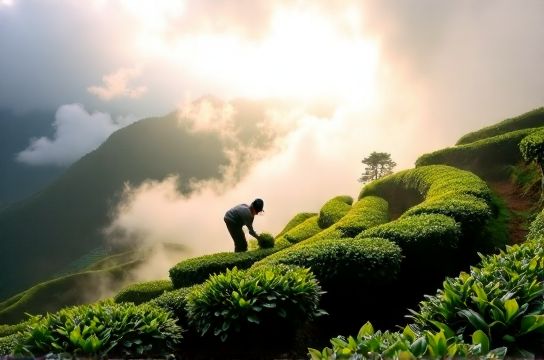
Oolong tea sits between green and black in oxidation, but its complexity comes from terroir—and altitude is a core part of that. High-altitude oolongs, like Taiwan’s famous Alishan Oolong, grow slowly under cool, foggy conditions. This stress boosts the plant’s natural defenses, increasing aromatic compounds and amino acids like theanine—your brain’s best friend for calm focus.
Meanwhile, lowland oolongs grow faster in warmer climates. They tend to be more robust, sometimes even grassy or woody, with less floral nuance. It’s not bad—just different.
The Science Behind the Sip
A 2021 study published in the Journal of Agricultural and Food Chemistry found that oolong teas grown above 1,000 meters had up to 37% higher levels of volatile aromatic compounds compared to those below 500 meters. These compounds—like linalool (floral) and geraniol (rose-like)—are what give high-mountain oolongs their signature fragrance.
Here’s a quick comparison:
| Altitude Range | Flavor Profile | Aroma Intensity | Body/Mouthfeel | Common Examples |
|---|---|---|---|---|
| Below 500m | Earthy, roasted, woody | Moderate | Full-bodied | Frozen Summit, Some Fujian oolongs |
| 500–1,000m | Balanced, slightly floral | Good | Medium-bodied | Muzha Tieguanyin |
| 1,000–2,000m | Floral, creamy, honeyed | High | Light to silky | Alishan, Lishan, Dong Ding |
Taste Test: What You’ll Notice
When you brew a high-altitude oolong, expect a luminous golden liquor. The first sip is often sweet and fragrant—think orchid, fresh cream, or ripe stone fruit. There’s a smoothness, almost a silkiness, on the palate. Low-grown oolongs? More punchy. Think roasted nuts, dark honey, or dried herbs. Great for bold mornings, but less meditative.
And here’s a pro tip: high-mountain oolongs can be steeped multiple times (8+ infusions!) without turning bitter. Their slow growth means denser leaf structure and more complex chemistry.
Is Higher Always Better?
Not necessarily. While premium oolongs like Lishan command top dollar, they’re delicate. If you love smoky or baked flavors, a lower-elevation, heavily oxidized oolong might suit you better. It’s about preference, not just prestige.
That said, if you want to experience the pinnacle of oolong elegance—the kind that unfolds over sips and steeps—start at 1,000 meters and go up.
So next time you're choosing a loose-leaf oolong, check the altitude. Your nose—and taste buds—will thank you.