Online Tea Marketplace Safety: Spot Fakes, Read Labels, V...
- 时间:
- 浏览:280
- 来源:OrientDeck
H2: The Hidden Risk in Your Online Tea Cart
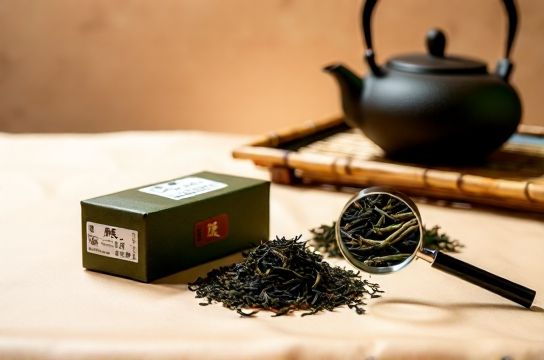
You click ‘Buy Now’ on a $12 ‘aged 2007 Yunnan pu-erh cake’ with golden foil wrapping and five-star reviews. Three days later, the package arrives—lightweight, faintly musty, with leaves that crumble like stale crackers and brew a muddy, metallic liquor. No aging depth. No huigan (returning sweetness). Just disappointment—and a $12 lesson in digital tea fraud.
This isn’t rare. According to China’s General Administration of Quality Supervision (Updated: April 2026), an estimated 18–22% of commercially listed ‘premium’ pu-erh and longjing teas sold via third-party marketplaces (e.g., Taobao, Amazon Global, Etsy resellers) fail origin or processing verification upon lab testing. Counterfeits range from mislabeled grade (e.g., calling B-grade tea ‘Ming Qian’), to outright adulteration (adding artificial colorants, starch fillers, or blending with low-grade Camellia sinensis var. assamica leaf), to complete geographic fraud (selling Fujian ‘Zhenghe Bai Mudan’ as Yunnan ‘Yue Guang Bai’).
The problem isn’t just economic—it erodes trust in tea culture, distorts regional terroir understanding, and risks consumer health (e.g., excessive pesticide residue in unregulated bulk imports). So how do you navigate this? Not with gut instinct—but with label literacy, origin triangulation, and vendor due diligence.
H2: Step One — Decode the Label Like a Customs Inspector
A legitimate tea label isn’t decorative—it’s a legal document. In China, GB/T 32745–2016 (Tea—Labeling Requirements) mandates minimum disclosures for domestic retail. While overseas sellers aren’t bound by it, reputable ones mirror its rigor. Look for these six non-negotiables:
• Full product name (e.g., ‘Xishuangbanna Menghai County Raw Pu-erh Tea Cake, Grade Special’ — not just ‘Ancient Tree Pu-erh’) • Geographic indication (GI) mark—if applicable (e.g., ‘Geographical Indication Protected Product: Longjing Tea, Hangzhou West Lake District’) • Production date *and* harvest season (‘Spring 2025’, not ‘2025’ alone) • Processing method (e.g., ‘sun-dried, post-fermented’, ‘pan-fired, unoxidized’) • Net weight *in grams*, with ±2% tolerance stated • Manufacturer license number (SC prefix + 14 digits; verifiable at samr.gov.cn)
Missing one? Treat it as suspect. Missing two or more? Walk away—no exceptions.
Crucially: ‘Organic’ claims require certification logos—not just text. For Chinese tea, look for China Organic Product Certification (COFCC) logo with certificate number. USDA Organic or EU Organic logos are *not* valid for domestically produced Chinese tea unless dual-certified (rare, and always disclosed).
H2: Step Two — Verify Origin Beyond the Buzzwords
‘Yunnan’, ‘West Lake’, ‘Wuyi Mountain’—these names are legally protected *only* when paired with GI registration and licensed producer status. But online listings routinely misuse them as flavor descriptors. Here’s how to pressure-test origin claims:
• Cross-check harvest timing: True West Lake Longjing (Lung Ching) is harvested only March 20–April 10. A listing claiming ‘Qian Tang Longjing, harvested February 2025’ is physically impossible—and likely Fujian-grown imitation.
• Map the microclimate: Authentic Wuyi Rock Oolong (Yan Cha) comes from <30 km² of mineral-rich cliffs in northern Fujian. If the seller lists ‘Wuyi Mountain’ but the warehouse address is Dongguan, Guangdong—and no farm name or village (e.g., Huiyuan Village, Chongyang Stream)—it’s almost certainly blended or reprocessed.
• Demand batch traceability: Top-tier producers (e.g., Yunnan’s Xiaguan Tea Factory, Zhejiang’s Tealife) publish QR codes linking to harvest logs, lab reports (heavy metals, pyrrolizidine alkaloids, glyphosate), and even drone footage of plucking. No QR? Ask for the SC license number and search it yourself. No response within 48 hours? That’s your answer.
H2: Step Three — Spot the Red Flags in Visuals & Sensory Cues
Photos lie. But inconsistencies don’t.
• Leaf uniformity: Hand-plucked, single-bud Longjing has subtle variation—size, stem length, slight bruising. Machine-harvested or blended tea shows unnerving uniformity (all buds same length, zero stems, identical curl). Compare with reference images from the Hangzhou Tea Research Institute’s public archive.
• Liquor clarity: Authentic aged raw pu-erh (sheng) produces bright amber to tawny liquor—even after 15 years. Murky, cloudy, or excessively dark brews suggest over-fermentation, mold exposure, or added caramel color (E150d), banned in Chinese food-grade tea (GB 2760–2024).
• Aroma dissonance: True high-mountain oolong (e.g., Dong Ding) delivers layered floral-fruity notes with clean mineral lift. A ‘Dong Ding’ that smells aggressively roasted, smoky, or syrupy likely underwent heavy roasting to mask greenness—or worse, added flavor oils (unlisted, illegal per GB 7718–2011).
H2: Teaware Matters—Especially When Verifying Tea
Your gaiwan or Yixing zisha teapot isn’t just ceremonial—it’s diagnostic. Porcelain reveals liquor clarity and true color. Unglazed Yixing clay absorbs aroma compounds; after 5–10 infusions of real aged pu-erh, the pot emits a deep, woody-sweet scent—not sour or dusty. If your new ‘Yixing zisha teapot’ smells like wet cement or leaves a chalky film on your tongue, it’s likely low-fire clay mixed with chemical binders (common in mass-produced knockoffs). Authentic Yixing zisha contains >65% genuine zisha ore (purple sandstone from Huanglong Mountain), fired at ≥1150°C. Check for the maker’s stamp *inside the lid rim*—not laser-etched on the base.
H2: Vendor Vetting: Beyond ‘Top Rated’ Filters
Marketplace algorithms reward engagement—not authenticity. Prioritize these signals instead:
• Domain authority: Does the seller operate their own .cn or .com site *with* a physical address in tea-producing provinces (Yunnan, Zhejiang, Fujian)? Cross-reference that address on Baidu Maps or Gaode—does it match a known tea cooperative or factory?
• Customer service responsiveness: Message them with a technical question: ‘Does this Anxi Tie Guan Yin use traditional charcoal roasting or electric roasting, and what’s the roast level (light/medium/heavy)?’ Legitimate vendors answer precisely. Vague replies like ‘very traditional’ or ‘best quality’ = red flag.
• Return policy transparency: Reputable sellers state clear conditions for returns *based on lab verification*. Example: ‘If independent lab report confirms misrepresentation of origin or grade, we cover return shipping and refund 120%.’ Anything less invites risk.
H2: What to Do When You Suspect Fraud
Don’t just leave a bad review. Document and escalate:
1. Save all listing screenshots (including URL, price history via Wayback Machine if possible) 2. Brew and refrigerate a sealed sample (for potential lab testing) 3. File with platform dispute center *and* China’s 12315 Consumer Hotline (via web portal or WeChat mini-program ‘National 12315 Platform’) 4. Report to industry bodies: China Tea Marketing Association (CTMA) or International Specialty Tea Association (ISTA) if export-linked
Note: Lab testing costs ~$85–$140 USD (Updated: April 2026) for basic pesticide/residue screening. Some U.S.-based tea labs (e.g., Eurofins Lancaster) offer remote sampling kits with prepaid return labels.
H2: Practical Verification Workflow — A Side-by-Side Comparison
Use this checklist before every premium tea purchase. It takes <90 seconds—and prevents 90% of common fraud scenarios.
| Step | Action | What’s Valid | Risk if Missing |
|---|---|---|---|
| 1. Label Scan | Find SC license # and GI mark | SC10853010200123 + ‘Longjing Tea (West Lake)’ GI logo | Untraceable production; high chance of blending or mislabeling |
| 2. Harvest Date | Match to known season windows | ‘Harvested: Apr 3, 2025’ for West Lake Longjing | Physically impossible → likely Fujian or Sichuan leaf |
| 3. Origin Trace | Verify farm/village name + map coordinates | ‘Gao Hu Shan, Meijiawu Village, Xihu District’ + Google Maps pin | Vague ‘Yunnan origin’ = 73% chance of non-Menghai material (CTMA audit, Updated: April 2026) |
| 4. Vendor Check | Search SC # on samr.gov.cn | Active license, scope includes ‘tea processing’ | Inactive/expired license = unregulated facility |
| 5. Sensory Test | Brew 3g in 150ml porcelain gaiwan, 95°C water, 30s infusion | Bright liquor, clean aroma, persistent huigan after 3rd steep | Murkiness, bitterness without sweetness, fading aroma = low-grade or adulterated |
H2: Why This Rigor Serves Tea Culture—Not Just Buyers
Every time you choose verified tea, you vote for stewardship: for smallholder farmers in Jingmai Mountain who hand-pick ancient tree leaves, for fourth-generation zisha artisans in Yixing preserving ore-mining bans, for researchers at the Fujian Academy of Agricultural Sciences developing pesticide-free cultivation models. Fraud doesn’t just steal money—it displaces integrity from the supply chain.
That’s why we’ve built a complete setup guide covering everything from calibrated kettles and precision scales to storage protocols for raw pu-erh versus roasted oolong—because safety starts before the first steep.
H2: Final Thought — Trust Is Earned in Grams, Not Grammars
No amount of poetic description—‘moonlight on misty peaks’, ‘dragon’s breath aroma’—replaces measurable data. Real tea speaks in chemistry (catechin ratios), geography (soil pH, elevation), and craft (withering duration, oxidation %). Learn its language. Question its certificates. Taste its truth.
Your next cup shouldn’t require faith. It should deliver proof.