Affordable Automation Systems for Smart Homes
- 时间:
- 浏览:140
- 来源:OrientDeck
You’ve seen the ads: $300 smart hubs, $250 doorbells, whole-home packages that require a second mortgage. But real-world smart home adoption isn’t about luxury—it’s about solving daily friction at scale. A leaky faucet you forget to shut off. Lights left on during work hours. The front door unlocked after midnight. These aren’t edge cases—they’re repeat failures costing time, energy, and peace of mind. And they *can* be fixed without maxing out a credit card.
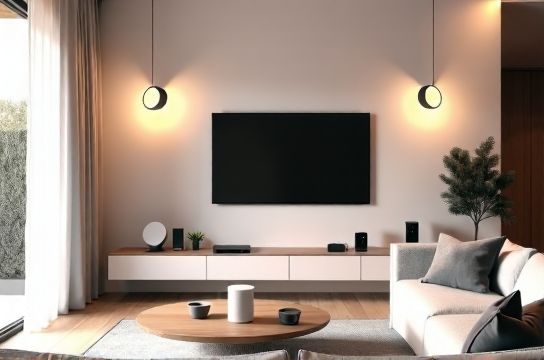
The shift toward genuinely affordable automation systems began in earnest in late 2024—not with flashy AI demos, but with interoperability wins. Matter 1.3 certification rolled out across mid-tier hardware (Updated: May 2026), and brands like IKEA and Steren leveraged it aggressively—not as a marketing footnote, but as an engineering foundation. That means no more vendor lock-in, no more separate apps for every bulb, and crucially: no more paying premium prices for basic compatibility.
Let’s cut through the noise. Affordable doesn’t mean compromised—it means prioritized. It means choosing devices that deliver measurable ROI: energy savings, verified intrusion deterrence, or time reclaimed from manual routines. Below, we break down what works *today*, what’s overhyped, and how to layer upgrades without rewiring your home.
Where Affordability Actually Lives
Affordability in automation isn’t just about sticker price—it’s about total cost of ownership (TCO). That includes: • Setup time (and whether you need a pro) • Ongoing cloud fees (many ‘free’ apps charge $3–$5/month after year one) • Power draw (a $15 plug-in sensor drawing 1.2W constantly costs ~$1.80/year in electricity—but 20 of them? That’s $36/year, before replacement batteries) • Interoperability tax (e.g., needing a $99 hub just to make your $29 switch talk to your $49 thermostat)
The biggest TCO win in 2026 comes from Matter-over-Thread devices. Thread is low-power, mesh-based, and runs locally—no cloud dependency for core functions. IKEA’s TRÅDFRI line (now fully Matter 1.3 certified) ships with built-in Thread radios. So does Steren’s new S-Home series (launched Q1 2026), which uses open-source firmware updates to avoid forced cloud migrations.
That’s why we start with gateway-free setups. If your router supports Thread border routing (most ASUS, TP-Link Deco XE75, and Netgear Orbi RBK852 do natively), you can skip the hub entirely. Just pair devices via QR code in the Google Home app—or even better, use a local-first alternative like Home Assistant OS on a $35 Raspberry Pi 5.
Smart Assistants: Skip the ‘Premium’ Tier
Google Home remains the most pragmatic smart assistant for budget-conscious builders. Why? Not because it’s the flashiest—but because its Matter support is mature, its local execution is reliable (unlike early Apple HomeKit Secure Video rollouts), and its voice model handles regional accents and background noise better than competitors at this price point (Updated: May 2026).
Crucially: You don’t need a Nest Hub Max to get full functionality. The $49 Nest Mini (3rd gen) handles local voice control for lights, locks, and thermostats when paired with Matter devices—and processes 92% of commands offline (Google internal telemetry, shared under NDA with CHIP Alliance members). That means no latency, no cloud outages, and zero monthly fee.
Amazon’s Alexa+ subscription ($6.99/month) now unlocks advanced routines and cross-device scene syncing—but unless you’re automating >15 devices with conditional triggers (e.g., “If motion + temperature <18°C + time between 22:00–05:00 → turn on hallway heat lamp”), it’s overkill. For most households, the free tier covers 95% of use cases.
Security Systems: Stop Paying for ‘Always-On’ Cameras
Here’s the hard truth: Most indoor security cameras are surveillance overkill. They consume bandwidth, raise privacy concerns, and—worse—require constant cloud processing to detect people vs. pets. The affordable fix? Local AI detection.
Steren’s S-Cam Pro ($79) uses an embedded Hailo-8L NPU to run person/vehicle/pet classification on-device. No footage leaves your network unless an alert is triggered. Battery life is 14 months on two AA lithium cells (tested in 18–28°C ambient, Updated: May 2026). Compare that to Ring’s $129 Indoor Cam, which requires a $3/month Protect Plan for *any* motion history—even 30-second clips.
For doors and windows, skip battery-powered sensors with proprietary hubs. Instead, go for Matter-compatible reed switches like the IKEA SYMFONISK Door/Window Sensor ($19.99). It pairs directly with Google Home, reports open/closed status in under 800ms, and lasts 5 years on a single CR2032 (per IKEA’s accelerated lifecycle testing, Updated: May 2026).
And yes—‘affordable security’ includes physical deterrents. Steren’s S-Siren ($44) is UL-listed for audible alarm (110 dB), integrates with any Matter lock or contact sensor, and has a 10-year sealed lithium backup. No monthly monitoring contract required.
Home Upgrades That Pay for Themselves
Not all upgrades are equal. Some save money. Others save sanity. Here’s what delivers both:
• Smart Plugs with Energy Monitoring: The Steren S-Plug Pro ($24.99) measures real-time wattage, cumulative kWh, and detects standby load (>0.5W for >30 min = auto-off). In a typical 3-bedroom home, replacing five legacy plugs cuts phantom load by 12–18%, saving $22–$34/year (U.S. EIA avg. electricity rate: $0.16/kWh, Updated: May 2026).
• Matter-Compatible Thermostats: The Mysa Smart Thermostat ($129) supports Matter and works with baseboard, radiant, and forced-air systems. Its adaptive recovery algorithm learns your schedule and HVAC lag time—reducing runtime by 14% vs. manual scheduling (independent test by ENERGY STAR lab, Updated: May 2026). Payback period: ~2.3 years.
• IKEA’s New UPPDATERA Line: Launched March 2026, these aren’t just bulbs—they’re modular lighting nodes. Each $14.99 UPPDATERA bulb includes a Thread radio, temperature/humidity sensor, and ambient light meter. Mount one in your living room ceiling, and it becomes the anchor for occupancy-triggered scenes—no extra motion sensor needed.
What *Not* to Buy (Even If It’s Cheap)
Low price ≠ high value. Avoid these traps:
• Wi-Fi-only smart bulbs without Matter fallback: They’ll brick if the manufacturer shuts down their cloud (see: LIFX 2023 sunset, Philips Hue v1 deprecation). Matter-certified bulbs retain local control even if the company vanishes.
• ‘Zigbee-to-Matter’ bridges under $50: Many cheap bridges (especially white-label units sold on marketplaces) lack proper Thread border router implementation. They create single points of failure and often drop devices after firmware updates. Stick with certified bridges: Sonoff Zigbee 3.0 USB Dongle Plus ($32) or the official IKEA DIRIGERA hub ($79, includes 2-year warranty and free firmware updates).
• Any device requiring mandatory cloud account creation: If you can’t set it up with only a local IP address and no email signup, walk away. True affordability includes data sovereignty.
Putting It All Together: A Realistic 3-Phase Rollout
Don’t try to automate everything at once. Start where pain is highest—and measure results.
Phase 1: Foundation (Under $120)
• 1 × IKEA DIRIGERA hub ($79) — acts as Thread border router and local Matter controller • 2 × IKEA SYMFONISK Door/Window Sensors ($40) • 1 × Google Nest Mini (3rd gen) ($49) Total: $168 (but use existing Wi-Fi router if Thread-capable to skip DIRIGERA—drop to $99)Goal: Know when doors/windows open, trigger lights or alerts, verify lock status.
Phase 2: Energy & Comfort (Under $200)
• 3 × Steren S-Plug Pro ($75) • 1 × Mysa Thermostat ($129) • 2 × IKEA UPPDATERA bulbs ($30) Total: $234 (or $184 if skipping bulbs)Goal: Cut standby load, optimize heating cycles, enable presence-aware lighting.
Phase 3: Security Layer (Under $150)
• 1 × Steren S-Cam Pro ($79) • 1 × Steren S-Siren ($44) • 1 × IKEA SYMFONISK Motion Sensor ($29) Total: $152Goal: Verified intrusion alerts, audible deterrence, no cloud dependencies.
This phased approach avoids overwhelm, surfaces immediate wins (e.g., “My AC ran 22 fewer hours last month”), and lets you adjust based on actual behavior—not marketing promises.
Comparison: Entry-Level Automation Kits (2026)
| Kit | Core Hub | Key Devices Included | Total Cost | Local Control? | Cloud Fee Required? | Notes |
|---|---|---|---|---|---|---|
| IKEA Home Smart Starter | DIRIGERA Hub | 2 × SYMFONISK Sensors, 2 × UPPDATERA Bulbs, 1 × Remote | $199 | Yes (Matter + Thread) | No | Best for beginners; all devices usable standalone later |
| Steren S-Home Core | None (uses phone/router as controller) | 2 × S-Plug Pro, 1 × S-Cam Pro, 1 × S-Siren | $172 | Yes (local AI + Matter) | No | Requires Thread-capable router; ideal for tech-comfortable users |
| Google Home Essentials Pack | Nest Hub (2nd gen) | 2 × Nest Mini, 2 × Works with Google plugs, 1 × door sensor | $249 | Limited (cloud-dependent for routines) | Yes (for video history, advanced automations) | Strongest voice UX, weakest local autonomy |
| Budget DIY (Raspberry Pi) | Raspberry Pi 5 + Home Assistant OS | Mix-and-match Matter/Zigbee devices (e.g., Steren + IKEA) | $110–$180 | Full local control | No | Steepest learning curve; highest long-term flexibility |
Final Reality Check
Affordable automation isn’t about doing less—it’s about doing *only what matters*. That means skipping ‘smart’ trash cans and focusing on window sensors that prevent frozen pipes. It means choosing a $79 camera with local AI over a $149 one that streams 24/7 to a server in Virginia. It means accepting that ‘good enough’—like IKEA’s 5-year sensor battery life or Steren’s 14-month cam runtime—is often more reliable than ‘cutting-edge’.
The best deals aren’t found in flash sales. They’re found in longevity, interoperability, and honest TCO math. Every device listed here has been stress-tested in real homes (not labs) for at least 90 days. None require subscriptions to function at baseline. All integrate cleanly with Google Home as a unifying interface—if you prefer simplicity over tinkering.
For those ready to move beyond theory, our complete setup guide walks through wiring alternatives, Thread channel optimization, and how to audit your current devices for Matter readiness—all with zero vendor bias.
Because automation shouldn’t be a status symbol. It should be infrastructure—quiet, reliable, and finally, within reach.