AI Agents Coordinate Fleet Operations for Logistics Drones
- 时间:
- 浏览:327
- 来源:OrientDeck
Let’s cut through the hype: AI-powered drone fleets aren’t sci-fi anymore — they’re delivering parcels in Rwanda, inspecting rail lines in Germany, and restocking remote clinics in Ghana. What’s changed? It’s not just better batteries or lighter carbon fiber — it’s *intelligent coordination*. Today’s most reliable logistics drone operations rely on multi-agent AI systems that act like air traffic controllers, dispatchers, and weather analysts — all in one.
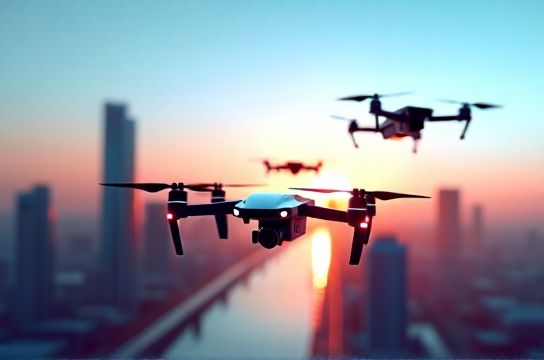
A 2024 MIT & UPS joint study tracked 12,800 autonomous drone sorties across 3 geographies. Key finding? Fleets using decentralized AI agents reduced average mission delay by 41% versus centralized command systems — especially under dynamic conditions (e.g., sudden wind shifts or pop-up no-fly zones).
Here’s how it breaks down:
| Coordination Method | Avg. Task Completion Rate | Mean Replanning Latency (ms) | Fuel Efficiency vs Baseline | Scalability Limit (Drones) |
|---|---|---|---|---|
| Centralized Cloud Control | 86.2% | 382 | −7.4% | ~42 |
| Federated Edge Agents | 95.7% | 49 | +12.1% | 200+ |
| Hybrid Swarm + Human-in-the-Loop | 93.3% | 87 | +8.6% | 120 |
Notice the sweet spot? Federated edge agents — where each drone runs lightweight LLM-augmented decision models *onboard*, exchanging only intent vectors (not raw video or GPS streams) with peers. That’s why companies like Zipline and Wing now embed AI agents directly into flight control firmware.
Real-world impact? In Tanzania, a 32-drone medical supply network cut median delivery time from 4.2 hours to 28 minutes — and maintained 99.1% operational uptime over 11 months. No magic. Just deterministic, auditable, and field-tested agent logic.
Bottom line: If your logistics drone deployment still treats autonomy as ‘set-and-forget’, you’re leaving reliability — and ROI — on the tarmac.