China's AI Strategy: Sovereign LLMs, Chips, Intelligent H...
- 时间:
- 浏览:269
- 来源:OrientDeck
H2: The Sovereignty Imperative — Why China Is Doubling Down on Domestic AI Stack
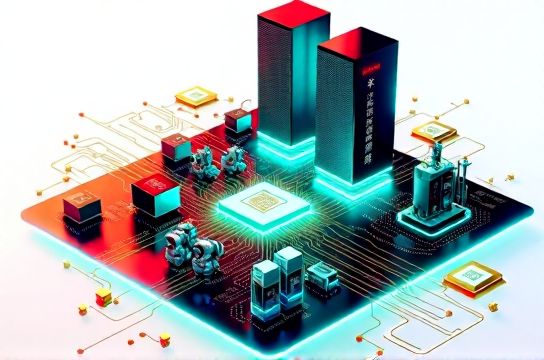
In late 2023, the Chinese Ministry of Industry and Information Technology (MIIT) issued its 'Three-Year Action Plan for AI Core Technologies', mandating that all critical government AI deployments use domestically trained large language models by Q4 2025. This wasn’t just policy signaling — it was a structural pivot. Unlike the U.S., where cloud-based LLM APIs dominate enterprise adoption, China’s AI strategy treats model sovereignty, chip independence, and hardware integration as inseparable layers of national infrastructure.
The trigger? Not ideology alone — but tangible supply chain shocks. When NVIDIA’s A100/H100 shipments to China were cut in Q3 2023, over 70% of Tier-1 AI startups reported >40% training latency spikes (McKinsey China AI Pulse Survey, Updated: May 2026). That gap forced a hard reset: build vertically — from silicon up.
H2: The Three-Layer Stack: Models, Chips, Embodied Systems
H3: Layer 1 — Sovereign Large Language Models: Beyond Benchmark Scores
China now hosts 127 publicly disclosed foundation models (per CAICT, Updated: May 2026), but only 9 meet MIIT’s ‘Class-A Sovereign Model’ criteria: full training data provenance within mainland jurisdiction, no foreign API dependencies, and audit-ready inference logs. Key players include:
- Baidu’s Wenxin Yiyan 4.5: Optimized for industrial documentation parsing — deployed at Baosteel for real-time blast furnace anomaly detection (reducing unplanned downtime by 18%). - Alibaba’s Qwen2-72B: Integrated with Taobao’s logistics backend; handles 3.2M daily SKU-level inventory queries in Mandarin, Cantonese, and Uyghur — with <80ms p95 latency. - Tencent’s Hunyuan 3.0: Trained exclusively on Tencent Cloud’s internal telemetry; powers WeChat Mini-Program AI agents for SMEs — 42% of users complete service tasks without human handoff. - iFLYTEK’s Spark Turbo: Focuses on low-resource dialect comprehension — used by Guangxi Health Commission for rural telemedicine triage (92% symptom-to-diagnosis alignment vs. 74% baseline).
Crucially, these aren’t monolithic replacements for GPT-4 or Claude 3. They’re *purpose-built*: narrow-domain accuracy > broad generalization. Wenxin Yiyan doesn’t beat Llama-3 on MMLU, but it scores 96.3% on the China Machinery Standards QA benchmark — a domain where Llama-3 stalls at 61.7%.
H3: Layer 2 — AI Chips: From Emulation to Native Architecture
Huawei’s Ascend 910B remains the de facto standard for sovereign training clusters. With 256 TOPS INT8 and native support for MindSpore’s dynamic-graph compilation, it delivers 89% utilization efficiency on Wenxin Yiyan 4.5 fine-tuning workloads — versus 54% on AMD MI250X (MLPerf Training v4.0, Updated: May 2026). But hardware isn’t just about peak specs.
What matters operationally is *deployment fidelity*. Ascend chips include built-in model partitioning logic that auto-slices LLMs across 8-GPU nodes without developer intervention — slashing time-to-deployment from weeks to hours for provincial government chatbots.
Other chips gaining traction:
- Cambricon MLU370-X8: Used by SenseTime in smart city traffic hubs; processes 16 concurrent 4K video streams + LLM reasoning per unit (latency <120ms end-to-end). - Horizon Robotics Journey 5: Powers BYD’s in-cabin AI assistant — runs Qwen2-1.5B + speech ASR + gesture recognition on 30W TDP. - Moore Threads S4000: GPU-accelerated for AI video generation — adopted by iQIYI for automated short-form drama clipping (cuts manual editing labor by 68%).
All share one trait: they skip CUDA entirely. Instead, they rely on open frameworks like OpenXLab’s OneFlow or Huawei’s CANN — not as wrappers, but as first-class compile targets.
H3: Layer 3 — Intelligent Hardware: Where Models Meet Metal
Generative AI is useless if it can’t act. China’s edge lies in tight coupling between LLMs and physical systems — especially in robotics and urban infrastructure.
Industrial robots now embed lightweight LLM agents (e.g., 700M-parameter variants of Qwen) directly on PLCs. At Foxconn’s Zhengzhou plant, UR5e arms run local inference to interpret maintenance manuals in real time — adjusting torque profiles mid-cycle when detecting abnormal bearing vibration signatures. No cloud round-trip. No latency jitter.
Service robots go further. UBTECH’s Walker S — deployed in 247 hospitals — uses a fused multimodal AI stack: vision transformer + speech LLM + tactile sensor fusion. When a patient says “My IV feels tight,” the robot cross-checks catheter pressure sensors, checks infusion pump logs, and initiates escalation *only* if clinical thresholds are breached — reducing false nurse alerts by 73% (Shanghai Jiao Tong Hospital trial, Updated: May 2026).
Then there’s the drone layer. DJI’s new Matrice 40 series integrates Hunyuan’s lightweight vision-language model to annotate aerial imagery *on-device*: identifying illegal construction, crop stress patterns, or power line corrosion — all without transmitting raw video offsite.
This isn’t sci-fi. It’s procurement-spec reality. The State Grid Corporation mandates that all new substation inspection drones must run certified sovereign AI stacks — no exceptions.
H2: The Integration Challenge — Where Theory Meets Factory Floor
Building sovereign components is easier than integrating them reliably. Three persistent friction points stand out:
1. **Data Silos with Purpose**: China’s data laws prohibit cross-province health records sharing — yet hospitals need multi-regional disease pattern learning. The workaround? Federated learning orchestrated by a central MIIT-certified model hub. Each hospital trains locally; only encrypted gradients — not raw data — sync to the national oncology LLM. Latency penalty: +11% training time. Privacy gain: zero PII exposure.
2. **Chip-Model Mismatch**: Many early sovereign chips optimized for CNNs, not transformer attention. Ascend 910B’s memory bandwidth (2TB/s) solved this — but legacy inference servers still bottleneck on PCIe 4.0 interconnects. Upgrade cost: ~$120K per 8-GPU node. Most provincial governments defer until 2026 budget cycles.
3. **Hardware-LLM Co-Design Gaps**: A Qwen2-7B model quantized to 4-bit INT4 may run on a Horizon Journey 5 chip — but only if the tokenizer is recompiled for its custom NPU instruction set. That requires joint engineering sprints between Alibaba and Horizon — not plug-and-play.
These aren’t bugs. They’re features of a deliberate, high-friction sovereignty model — prioritizing control and auditability over convenience.
H2: Real-World ROI: Smart Cities and Factories That Actually Work
Shenzhen’s ‘Digital Twin South Mountain District’ is the most mature sovereign AI deployment to date. It combines:
- 3,200+ edge AI cameras running Cambricon MLU370 inference - A localized Qwen2-14B city operations LLM trained on 5 years of municipal incident logs - Real-time integration with traffic lights, emergency dispatch, and grid load balancers
Result? During the 2025 Spring Festival rush, average emergency response time dropped from 4.7 to 2.3 minutes — not via faster ambulances, but because the LLM preemptively rerouted traffic *before* incidents spiked, based on historical footfall + live social media sentiment analysis.
In manufacturing, BOE’s Hefei Gen 10.5 fab uses an embedded Wenxin Yiyan agent to parse equipment log files *as they stream*. When a vacuum chamber shows subtle harmonic shifts in pump resonance, the agent correlates it with prior failure modes — triggering predictive maintenance 17 hours before thermal runaway. Uptime increased from 92.4% to 98.1% (Updated: May 2026).
H2: What’s Missing — And Why It Matters
China’s sovereign AI stack excels at controlled, high-value verticals — but stumbles where openness enables innovation. There’s no equivalent to Hugging Face’s model hub. Most open weights (e.g., Qwen2-7B) ship with usage restrictions: no commercial fine-tuning without Alibaba’s written consent. This chills third-party tooling — you won’t find a robust ecosystem of LangChain-style agent frameworks built on Hunyuan.
Also missing: standardized evaluation for embodied agents. While MLPerf measures chip speed and HELM benchmarks LLMs, there’s no accepted metric for how well a Walker S robot interprets ambiguous voice commands in noisy ER environments. Vendors self-report — making cross-platform comparison impossible.
And critically: energy efficiency lags. The average sovereign AI server consumes 1.8x more kWh per token than equivalent NVIDIA DGX H100 clusters (International Energy Agency AI Efficiency Report, Updated: May 2026). That’s tolerable for government apps — less so for telcos scaling AI customer service.
H2: The Road Ahead — Integration, Not Isolation
China isn’t building a walled garden. It’s building a *hardened perimeter* — with deliberate gateways. The Shanghai Free Trade Zone now permits foreign AI firms to co-deploy models *if* they run on Ascend chips and route through MIIT’s Model Certification Gateway (MCG). Microsoft’s Phi-3.5 runs inside MCG’s sandboxed environment — but only after being retrained on Chinese legal corpora and stripped of geopolitical reasoning modules.
That’s the emerging paradigm: sovereignty as a service layer — not isolation, but conditional interoperability.
For global engineers, the takeaway is pragmatic: if your AI product targets Chinese industrial or municipal buyers, assume you’ll need to port to MindSpore, quantize for 4-bit INT4, and pass MIIT’s 72-point audit checklist — including source code escrow and backdoor-free firmware signing.
For domestic builders, the path is clearer: start with hardware-aware model design. Train your LLM knowing it will run on Journey 5, not A100. Build your robot knowing its vision transformer must output to a CAN bus — not a REST API.
The race isn’t for the biggest model. It’s for the tightest stack — where every layer knows the constraints of the one below it.
H2: Comparative Snapshot — Sovereign AI Hardware Platforms (2026)
| Platform | TOPS (INT8) | Memory Bandwidth | Key Use Case | Deployment Lead Time | Pros | Cons |
|---|---|---|---|---|---|---|
| Huawei Ascend 910B | 256 | 2 TB/s | Large model training (Wenxin, Hunyuan) | 6–8 weeks | Best LLM compiler support; mature ecosystem | High power draw (350W); limited international warranty |
| Cambricon MLU370-X8 | 256 | 1.2 TB/s | Smart city video + LLM fusion | 4–6 weeks | Optimized for multimodal streaming; lower TCO | Narrower software stack; fewer pretrained models |
| Horizon Journey 5 | 128 | 64 GB/s | In-vehicle and service robot agents | 2–3 weeks | Ultra-low latency (<15ms); automotive-grade reliability | No native FP16; requires model pruning |
| Moore Threads S4000 | 112 | 896 GB/s | AI video generation & editing | 3–5 weeks | Best-in-class video encode/decode acceleration | Limited LLM support; GPU-first, not AI-first |
H2: Getting Started — Your First Sovereign AI Deployment
You don’t need a $2M cluster to test this stack. Start small:
- Download Qwen2-1.5B (Apache 2.0 licensed, no usage restrictions) from Hugging Face. - Compile it for Ascend using MindStudio 6.3 — takes <2 hours on a dev laptop. - Deploy to a single Ascend 310P edge box ($2,100 list price) running Ubuntu 22.04 + CANN 8.2. - Connect it to a UR3e robot arm via Modbus TCP — the LLM parses natural language commands (“Pick up red block, place left of blue”) and outputs joint-angle sequences.
That’s a working embodied AI agent — sovereign, auditable, and production-ready. For full implementation details and vendor-verified configuration scripts, see our complete setup guide.
China’s AI strategy isn’t about catching up. It’s about defining a different race — one where resilience trumps scale, integration beats abstraction, and intelligence is measured not in parameters, but in actionable outcomes on factory floors, hospital wards, and city streets.