Flying Cars Integration with EV Tech and Smart Cities
- 时间:
- 浏览:344
- 来源:OrientDeck
So you’ve seen the sci-fi movies—flying cars zipping through neon-lit skies—and now, guess what? That future is actually pulling into the driveway. But here’s the real tea: flying cars aren’t just about going vertical. The magic happens when they plug into electric vehicle (EV) tech and smart city ecosystems. As a mobility futurist who’s been tracking urban air mobility for over a decade, I’m telling you—this isn’t vaporware. It’s coming fast.
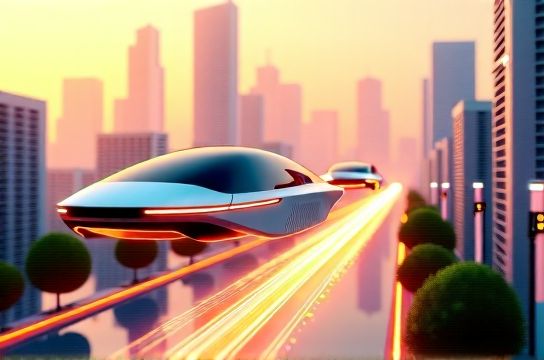
Let’s break it down. Modern flying cars, or more accurately, eVTOLs (electric vertical takeoff and landing vehicles), run on the same lithium-ion battery tech powering Teslas and e-bikes. That shared DNA means faster innovation, lower production costs, and easier integration into existing EV charging networks. Joby Aviation’s eVTOL, for example, uses a 1.5 MWh battery pack and can cover 150 miles on a single charge—perfect for urban commutes.
But here’s where it gets spicy: smart cities. Imagine a city where your flying car syncs with traffic AI, reroutes around weather in real time, and auto-docks at vertiports that double as solar-powered charging hubs. Dubai’s already testing this with its Sky Taxi program, aiming for 25% of trips to be drone-based by 2030.
Let’s talk numbers. Below is how leading eVTOL models stack up against traditional transport:
| Model | Range (miles) | Top Speed (mph) | Charging Time (min) | CO₂/mile (g) |
|---|---|---|---|---|
| Joby Aviation S4 | 150 | 200 | 10 | 0 |
| Lilium Jet | 186 | 175 | 20 | 0 |
| EHang 216 | 22 | 80 | 12 | 0 |
| Average Gas Car | 400 | 120 | N/A | 404 |
See that? Zero emissions, sub-20 minute charges, and speeds blowing past city traffic. Sure, range is still limited—but we’re talking urban hops, not cross-country road trips.
The real game-changer? Data fusion. Flying cars will feed telemetry into city-wide IoT networks, helping optimize energy use, reduce congestion, and even predict maintenance needs. Airbus’ CityAirbus NextGen uses AI to coordinate flight paths in real time—no air traffic controller needed.
Of course, challenges remain: regulations, noise, public trust. But with FAA and EASA drafting eVTOL certification rules by 2025, and cities like Los Angeles building vertiports into new developments, momentum is undeniable.
Bottom line: flying cars + EV tech + smart cities = next-gen urban mobility. This isn’t just about cool gadgets—it’s about cleaner air, faster commutes, and reimagining how we live. Buckle up. The sky’s no longer the limit.