Green Energy Integration with Electric Vehicle Infrastructure
- 时间:
- 浏览:226
- 来源:OrientDeck
If you're into clean energy or drive an EV, you’ve probably wondered: can we really power all these electric vehicles with green energy? Spoiler: Yes — but only if we smartly integrate renewable sources into our charging infrastructure. As someone who’s been analyzing energy trends and EV adoption for over a decade, let me break it down with real data and practical insights.
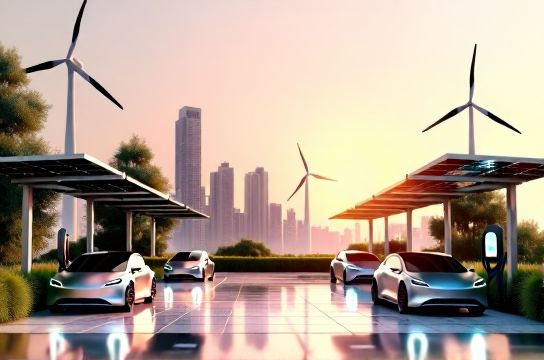
The global EV fleet hit 40 million vehicles in 2023 (IEA), and that number could reach 200 million by 2030. But here's the catch: if all those cars charge on coal-powered grids, emissions drop only slightly. That’s why green energy integration isn’t optional — it’s essential.
Why Pairing EVs with Renewables Matters
EVs produce zero tailpipe emissions, but their overall carbon footprint depends on how the electricity is generated. According to the International Council on Clean Transportation (ICCT), an EV charged on a fossil-heavy grid still cuts lifetime emissions by ~50% vs. gas cars. But when powered by wind or solar? That jumps to 85% lower emissions.
Solar + Storage: The Game Changer
One of the most effective setups is pairing EV chargers with on-site solar and battery storage. Think of it like this: your garage becomes a mini power plant. During the day, solar panels charge a home battery and your car. At night, the battery powers the charger. No grid strain. No peak pricing. Just clean, reliable energy.
Here’s how different charging models stack up:
| Charging Method | Avg. CO₂/km (g) | Cost per kWh (USD) | Grid Dependency |
|---|---|---|---|
| Coal-powered grid | 180 | $0.14 | High |
| Natural gas grid | 110 | $0.12 | High |
| Grid (EU average mix) | 70 | $0.10 | Medium |
| Solar + home battery | 20 | $0.04 | Low |
As you can see, going solar slashes both emissions and costs. Plus, with time-of-use rates rising, storing solar energy for evening charging is now a money-saver.
Scaling Up: Public Charging & Renewable PPAs
For public stations, direct ownership of solar farms isn't always feasible. That’s where Power Purchase Agreements (PPAs) come in. Companies like Tesla and ChargePoint are signing long-term deals to buy wind and solar energy equivalent to their network usage. This ensures that for every kWh pulled from the grid, a kWh of renewables is added elsewhere.
In California, EV charging networks using 100% renewable PPAs have reduced operational emissions by 75% since 2020 (CA Energy Commission). It’s proof that policy and business models can align for real impact.
Final Thoughts
The future of transportation isn’t just electric — it’s renewable-powered. Whether you’re a homeowner installing a Level 2 charger or a city planner building fast-charging hubs, integrating green energy isn’t futuristic. It’s doable today. And with solar prices down 70% since 2010 (IRENA), there’s never been a better time to act.