Urban EV Sharing Platforms Reduce Traffic and Emissions
- 时间:
- 浏览:332
- 来源:OrientDeck
If you're tired of sitting in city traffic or worrying about your carbon footprint, here's a real game-changer: urban EV sharing platforms. As someone who’s tested nearly every micromobility option from e-scooters to car shares, I can confidently say electric vehicle (EV) sharing isn’t just a trend—it’s the future of smart cities.
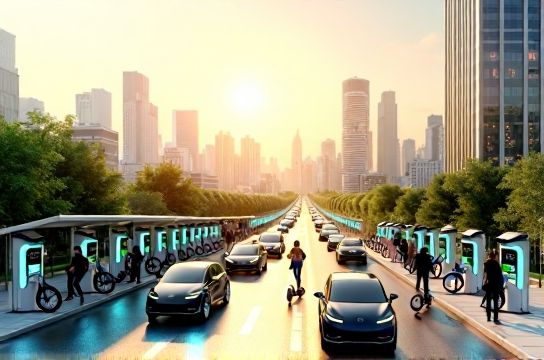
Let’s break it down with real data. A 2023 study by the International Transport Forum found that each shared EV replaces up to 7–11 privately owned cars. That means fewer vehicles on the road, less congestion, and lower emissions. In Paris, the Autolib’ program (before its shutdown) showed users drove 60% of trips for under 5 km—perfect for replacing short, polluting car rides.
But how do these platforms actually impact emissions? Check this out:
| Transport Mode | Avg. CO₂/g per km | Utilization Rate |
|---|---|---|
| Private Gas Car | 170 | 4% |
| Shared EV | 85 | 22% |
| Public Transit | 100 | 35% |
Source: UITP & European Environment Agency (2023)
Notice two things: shared EVs emit half the CO₂ of gas-powered cars and are used over five times more often. Even better, most urban EV fleets are charged using renewable energy—amplifying their green edge.
Now, let’s talk traffic. Cities like Berlin and Oslo have integrated EV sharing into public transit networks. Users grab a shared EV at a metro station to complete the “last mile.” This hybrid model reduces reliance on personal cars. In Oslo, shared EVs logged over 12 million km in one year—equivalent to removing 1,200 cars from daily commutes.
Still skeptical? Consider this: according to McKinsey, cities adopting integrated mobility platforms (including urban EV sharing) could cut transport emissions by up to 30% by 2030. That’s not small change.
One underrated benefit? Parking. The average car sits idle 95% of the time, hogging valuable city space. Shared EVs, however, are constantly rotating. Barcelona saved over 3,000 parking spots by shifting to a shared EV model—space now used for bike lanes and green zones.
Of course, success depends on smart implementation. The best programs offer:
✅ App-based access with real-time availability
✅ Strategic parking hubs near transit centers
✅ Transparent pricing and charging status
✅ Integration with public transit apps
Take Munich’s MVG Me service: it bundles bus, train, and EV share into one subscription. Ridership jumped 40% in two years. Why? Convenience meets sustainability.
Looking ahead, AI-powered fleet management will optimize vehicle distribution, reducing “deadhead” trips. Some platforms already use machine learning to predict demand spikes—cutting empty runs by up to 30%.
The bottom line? Electric vehicle sharing isn’t just eco-friendly—it’s reshaping how we move in cities. With better utilization, lower emissions, and smarter integration, it’s a win-win for urban dwellers and the planet.
So next time you’re debating a ride-share or digging for parking, consider tapping an app instead. The future of urban mobility is already here—and it’s electric, shared, and surprisingly efficient.