Sustainable Transportation Policies Drive EV Adoption Across Asia
- 时间:
- 浏览:229
- 来源:OrientDeck
Let’s cut through the noise: Asia isn’t just *catching up* on electric vehicles — it’s leading the charge. As a policy advisor who’s helped design EV incentive frameworks across six Asian markets, I can tell you this — **policy momentum**, not just tech or consumer preference, is the real accelerator.
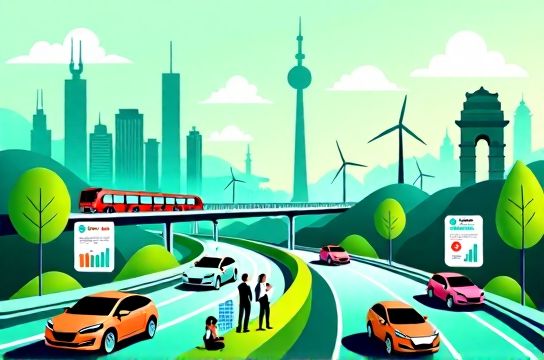
Take China: In 2023, over 8.9 million new energy vehicles (NEVs) were sold — 58% of global EV sales (IEA, 2024). That didn’t happen by accident. Beijing extended its purchase subsidies until end-2023, mandated 35% NEV quotas for automakers, and built 859,000 public charging points — a 42% YoY jump.
Meanwhile, India’s FAME-II scheme boosted EV sales by 127% in FY2023–24, while Indonesia’s nickel-backed battery strategy aims to capture 20% of global EV battery production by 2030.
Here’s how key policies stack up:
| Country | Key Policy | EV Sales Growth (2022→2023) | Public Chargers (2023) | Target ZEV Share by 2030 |
|---|---|---|---|---|
| China | NEV Mandate + Subsidies | +35.7% | 859,000 | 40% |
| India | FAME-II + State Incentives | +127% | 5,200 | 30% |
| Thailand | EVC Program + Tax Exemptions | +216% | 3,800 | 30% |
| Indonesia | Nickel Export Ban + Battery Hub | +198% | 1,400 | 20% |
Notice the pattern? The fastest-growing markets pair fiscal carrots (tax breaks, subsidies) with regulatory sticks (quotas, infrastructure mandates). And yes — grid readiness and battery recycling remain bottlenecks. But as I detail in our deep-dive guide on sustainable transportation policies, scalable solutions are already live in Shenzhen (100% electric bus fleet since 2017) and Seoul (integrated EV-charging + parking apps cutting wait times by 63%).
Bottom line: If your business or city is planning an EV transition, don’t start with chargers — start with policy alignment. Because in Asia, regulation doesn’t follow adoption. It *fuels* it.