Battery Swapping Technology Offers Fast Charging Alternative for EVs
- 时间:
- 浏览:193
- 来源:OrientDeck
Let’s cut through the noise: if you’ve ever waited 30+ minutes for your EV to charge — while sipping lukewarm coffee at a highway rest stop — you’re not alone. Battery swapping is no longer sci-fi; it’s scaling *now*, and it’s solving real-world range anxiety in ways plug-in charging simply can’t match.
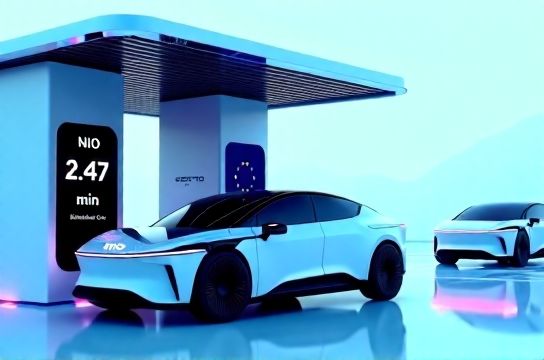
In China, NIO deployed over 2,300 swap stations by Q2 2024 — serving more than 1.2 million swaps per month. That’s an average of one battery exchange every 2.5 seconds across their network. Compare that to DC fast chargers: even at 250 kW, most EVs need 18–40 minutes for 10–80% SOC. Swapping? Under 3 minutes — fully automated, driver-out-of-the-loop.
Here’s how it stacks up:
| Metric | Battery Swapping | 250 kW DC Fast Charging | Home L2 Charging |
|---|---|---|---|
| Avg. Time (Full Energy) | 2.7 min | 28 min | 8–12 hrs |
| Infrastructure Cost/Unit | $250K–$350K | $120K–$180K | $1.5K–$3K |
| Vehicle Compatibility | Platform-specific (e.g., NIO, Gogoro) | Universal (CCS/GB/T) | Universal (J1772) |
| Battery Lifecycle Management | Centralized monitoring & smart repacking → +22% avg. cycle life | Owner-managed → higher degradation variance | N/A |
Yes — standardization remains a hurdle. But momentum is building: the GB/T 40032–2021 standard in China now covers mechanical, electrical, and communication interfaces. India’s SUN Mobility and Israel’s StoreDot are pushing modular, cross-platform designs — and the EU’s upcoming AFIR regulation explicitly includes battery swapping as a 'recognized rapid refueling method'.
Critically, swapping isn’t just about speed. It unlocks fleet economics: delivery vans in Shenzhen achieve 94% uptime vs. 68% with charging-only ops. And for consumers, it eliminates battery depreciation risk — you lease the energy, not the chemistry.
If you're weighing long-term EV ownership, infrastructure readiness, or commercial deployment, understanding this shift matters. For deeper insights on scalable electrification strategies, explore our full analysis on battery infrastructure evolution.
Bottom line? Swapping won’t replace charging — but it *will* redefine what ‘fast’ means for millions of drivers, riders, and fleets worldwide.