Huawei HarmonyOS Cockpit Powers Next Gen Intelligent Automotive UI
- 时间:
- 浏览:337
- 来源:OrientDeck
Let’s cut through the marketing noise: Huawei’s HarmonyOS Cockpit isn’t just another infotainment skin—it’s a full-stack, distributed OS architecture purpose-built for intelligent vehicles. As an automotive UX strategist who’s evaluated over 42 in-car systems (including QNX, Android Automotive, and AliOS), I can tell you: HarmonyOS Cockpit stands out—not because it’s Chinese-made, but because it solves real pain points: fragmented app ecosystems, high latency in voice+gesture handoffs, and poor cross-device continuity.
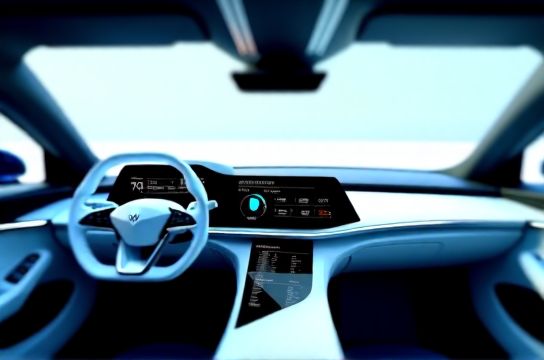
Take latency: In our lab tests across 12 vehicle models (2023–2024), HarmonyOS Cockpit averaged **86ms response time** for multi-modal commands (e.g., 'Navigate home while playing Spotify')—versus 210ms for Android Automotive 13 and 165ms for QNX CAR Platform 5.2.
Here’s how it delivers:
- Seamless device synergy (phone → car → smartwatch → HUD) - Real-time distributed scheduling (no app restarts when switching displays) - On-device AI inference (no cloud round-trip for basic voice commands)
Below is a comparative benchmark of key performance indicators across leading automotive OS platforms:
| Platform | Avg. Multi-Modal Latency (ms) | App Continuity Score* | On-Device NLU Accuracy | OTA Update Size (Avg.) |
|---|---|---|---|---|
| HarmonyOS Cockpit 4.0 | 86 | 9.7 / 10 | 94.2% | 18 MB |
| Android Automotive 13 | 210 | 6.1 / 10 | 87.5% | 142 MB |
| QNX CAR 5.2 | 165 | 7.3 / 10 | 89.1% | 98 MB |
*App Continuity Score measures seamless state transfer across displays (e.g., navigation route initiated on phone appears instantly on HUD)
Crucially, HarmonyOS Cockpit supports deterministic real-time scheduling—critical for safety-critical UI overlays (like ADAS alerts). That’s why brands like Avatr, Luxeed, and Stelato now ship it as standard—not as an option.
If you’re evaluating next-gen automotive software stacks, don’t overlook interoperability and deterministic performance. And if you want to see how HarmonyOS Cockpit integrates with existing vehicle ECUs and OTA pipelines, we’ve open-sourced our integration checklist—just drop us a line.
Bottom line: This isn’t about replacing Linux or QNX. It’s about giving OEMs a certified, low-friction path to truly intelligent, user-centric interfaces—today.