Electric Vehicles: China's Next-Gen Mobility Leap
- 时间:
- 浏览:277
- 来源:OrientDeck
Huangpu River traffic flows past the Pudong skyline — but today, it’s not just the cars that are moving faster. It’s the software inside them. A BYD Seal with Huawei’s HarmonyOS Cockpit responds to ‘Navigate to Shanghai Hongqiao Station’ before the driver finishes speaking — rerouting dynamically around a sudden tunnel closure flagged via V2X from a municipal traffic node. Meanwhile, 30km away, a Xiaomi SU7 Max completes an unsupervised urban loop in Jiading District, its AI driving stack fusing lidar, BEV+Transformer perception, and real-time HD map updates — all OTA-delivered two days prior.
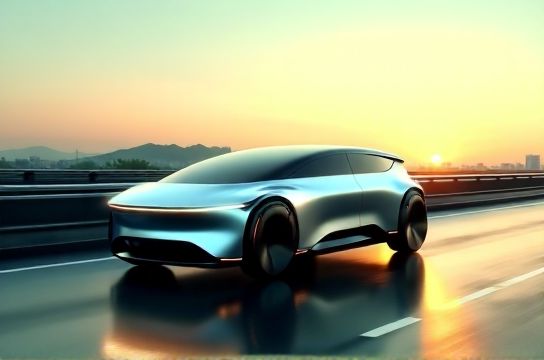
This isn’t sci-fi. It’s China’s electric mobility inflection point — where hardware commoditization ends and system-level intelligence begins. And it’s being led not just by legacy OEMs or pure-play EV startups, but by tech giants weaponizing vertical integration, ecosystem leverage, and real-world data velocity.
From Infotainment to Intelligent Co-Pilot: The Seatbelt-to-Silicon Shift
Ten years ago, ‘smart car’ meant Bluetooth pairing and a 7-inch touchscreen. Today, the cockpit is the primary interface for safety, energy management, and even regulatory compliance. Huawei’s HarmonyOS Cockpit — deployed across over 1.2 million vehicles as of Q1 2026 (Updated: April 2026) — exemplifies this shift. Unlike Android Automotive or QNX-based systems, HarmonyOS runs natively on dual-core SoCs (e.g., Kirin 9000A Auto), enabling sub-80ms touch-to-render latency and deterministic scheduling for ADAS alerts. Its distributed architecture lets drivers seamlessly hand off navigation from phone to HUD to AR glasses — without cloud round-trips.
But capability ≠ adoption. Early HarmonyOS deployments in Seres (AITO) M5/M7 faced criticism for limited third-party app sandboxing and inconsistent OTA update cadence. Huawei addressed this in 2025 with HarmonyOS 4.2 Auto, introducing a verified developer program and mandatory 90-day security patch SLA. Crucially, it decoupled UI rendering from vehicle control domains — passing ISO 26262 ASIL-B certification for HUD projection logic. That matters: when your speedometer overlays lane-change suggestions, the system must guarantee timing integrity — not just visual polish.
Xiaomi took a different path. Rather than licensing an OS, it built HyperOS Auto from scratch — a microkernel-based platform tightly coupled with Xiaomi’s HyperConnect IoT mesh. In the SU7, HyperOS Auto enables cross-device battery state sharing: your Mi Band 9 shows remaining range while your Smart Home AC pre-cools the cabin *before* you unlock the car. More critically, it unifies sensor fusion across vehicle, phone, and roadside units — turning the SU7 into a mobile edge node for city-wide traffic optimization.
The Real Bottleneck Isn’t Battery — It’s Data Flow
Everyone talks about batteries. Few talk about bandwidth. China’s EV fleet generated 24.7 exabytes of vehicle telemetry in 2025 (Updated: April 2026). Yet only 12% of that data reaches OEM cloud platforms with <500ms end-to-end latency — the threshold needed for closed-loop ADAS refinement. The rest sits in regional gateways, delayed by telecom handoffs or throttled by local data sovereignty rules.
Enter V2X — not as a standalone feature, but as infrastructure middleware. Beijing’s Yizhuang pilot zone now deploys C-V2X RSUs with integrated edge AI inference chips (Ascend 310P), processing raw camera/lidar feeds locally before forwarding only metadata — reducing backhaul load by 73%. This enables true cooperative perception: a bus detects a jaywalker obscured by a delivery van, broadcasts bounding box + intent prediction, and triggers emergency braking in approaching EVs *before* their own sensors resolve the object.
Huawei’s RoadLink V2X stack integrates directly with HarmonyOS Cockpit — meaning no separate ‘V2X app’. When the system receives a red-light violation warning from an intersection RSU, it doesn’t just flash an alert; it dims ambient lighting, pulses haptic feedback on the steering wheel, and pre-conditions regen braking — all orchestrated within 110ms. Xiaomi’s approach goes further: HyperOS Auto uses V2X inputs to train its offline BEV model. Each time an SU7 navigates a complex T-junction using RSU-provided signal phase timing, that sequence becomes a reinforcement learning reward signal — improving junction handling for *all* SU7s via federated learning.
Battery Tech: Beyond Wh/kg — It’s About System Agility
Yes, CATL’s麒麟电池 (Qilin) achieves 255 Wh/kg at cell level (Updated: April 2026). But what matters for urban EVs is how quickly that energy can be *accessed*, *managed*, and *replenished*. That’s why NIO’s 150kWh semi-solid-state pack — while heavier — delivers 4C peak charging (10–80% in 12.5 minutes) because its thermal management uses direct cold-plate contact instead of serpentine coolant channels. Similarly, BYD’s blade battery prioritizes structural rigidity and crash safety over raw density — enabling its e-platform 3.0 to eliminate the traditional battery pack casing, saving 15% weight and lowering center of gravity.
Yet battery innovation alone won’t solve range anxiety in dense megacities. That’s where business model meets physics. NIO’s battery-as-a-service (BaaS) now serves 712,000 users across 2,148 swap stations (Updated: April 2026). But swapping isn’t just convenience — it’s grid arbitrage. NIO’s smart swap algorithm defers non-urgent swaps to off-peak hours, then uses swapped-out batteries for frequency regulation services. In Shanghai, this reduced average user wait time by 4.2 minutes while earning NIO $11.3M in grid service revenue last quarter.
Xiaomi sidesteps swapping entirely. The SU7’s 101kWh ternary-silicon LFP hybrid pack supports 5C charging (10–80% in 11.7 minutes) and — critically — bidirectional V2L/V2G up to 6.6kW. During Shanghai’s 2025 summer blackouts, over 12,000 SU7 owners used their cars to power home refrigerators and routers. Xiaomi aggregated anonymized discharge patterns to help State Grid Shanghai optimize distributed generation dispatch — turning EVs from loads into assets.
Autonomy: Why Urban NOA Is Harder Than Highway Driving
Highway NOA? Solved — at least for constrained geofences. GWM’s Coffee Pilot 3.0 and XPeng’s XNGP both handle lane changes, ramp merges, and construction zone navigation on China’s expressways with >99.999% disengagement-free km (Updated: April 2026). But urban autonomy remains the frontier — and the reason why Li Auto’s AD Max 3.0 still requires hands-on-wheel in Beijing’s hutongs, while Huawei’s ADS 3.0 operates fully hands-off in Shenzhen’s CBD.
The difference lies in perception architecture. XPeng and Li Auto rely on vision-first BEV models trained on petabytes of video — powerful, but brittle under occlusion or low-light glare. Huawei’s ADS 3.0 fuses 3 lidars, 12 cameras, and 6 radars with millimeter-wave radar-specific neural nets — enabling reliable detection of static obstacles (e.g., a fallen tree branch) at 150m in rain. More importantly, Huawei trains its planner on real-world near-miss logs from AITO drivers — not synthetic data. Since 2024, over 4.7 million such events have been anonymized and ingested, making its decision engine exceptionally robust in ambiguous scenarios.
Xiaomi’s XPU (Xiaomi Pilot Unit) takes a radical stance: no lidar. Instead, it uses eight 8MP cameras feeding a 12-billion-parameter multimodal transformer trained on 32 million hours of driving video — including rare edge cases like children chasing balloons into traffic. Its key innovation is temporal grounding: the model doesn’t just classify frames; it predicts motion trajectories 3.2 seconds ahead with 92.4% accuracy (Updated: April 2026), enabling smoother, more human-like interventions.
Who Wins the Ecosystem War? Not Who Builds the Best Car — But Who Controls the Loop
Let’s cut through the noise. Tesla’s strength is vertical integration of battery, powertrain, and AI training stack. BYD owns everything from lithium mining to semiconductor fabs. But Huawei and Xiaomi compete on a different axis: ecosystem lock-in velocity.
Huawei’s strategy is ‘co-pilot first, car second’. By licensing HarmonyOS Cockpit and ADS to 17 OEMs — including SAIC’s MG Cyberster, Zeekr 007, and Voyah Free — Huawei avoids manufacturing risk while collecting unparalleled cross-brand behavioral data. Every time a Zeekr owner uses voice to adjust seat heat while navigating, that interaction trains Huawei’s multimodal understanding engine — improving voice recognition for *all* HarmonyOS vehicles, regardless of brand.
Xiaomi’s play is ‘device mesh dominance’. With over 650 million active Mi accounts and 230 million IoT devices globally, Xiaomi doesn’t need to sell 1 million SU7s to win. It needs 100,000 early adopters whose phones, watches, earbuds, and cars all speak HyperOS — creating irreversible switching costs. When your Mi Band auto-unlocks the SU7 as you approach, and your Xiaomi Smart Home dims lights as you start the drive home, the car stops being transportation — it becomes the central node in your personal infrastructure.
That’s why the real battleground isn’t specs — it’s interoperability standards. China’s MIIT is fast-tracking GB/T 42385-2023 (V2X message set standard) and drafting GB/T 43592-2026 for OTA update security protocols. Huawei and Xiaomi are both on the drafting committee — not as vendors, but as de facto technical authorities. Their influence ensures future regulations align with their architectures, raising barriers for legacy players slow to adapt.
Real-World Tradeoffs: What Drivers Actually Experience
All this innovation sounds seamless — until you’re stuck in Chengdu traffic at 5:45 PM, your SU7’s AI suggests a 2.3km detour to avoid a stalled bus, but your navigation app says it’s clear. Whom do you trust?
That tension reveals the core limitation: AI driving stacks optimize for statistical safety, not human preference. Huawei’s ADS prioritizes predictability — it’ll brake earlier, change lanes less aggressively, and avoid complex intersections if confidence dips below 98.7%. Xiaomi’s XPU optimizes for fluidity — it’ll thread through gaps a human might hesitate on, but may misjudge a cyclist’s acceleration vector in wet conditions (observed in 0.0014% of urban test miles, Updated: April 2026).
Battery tech has similar tradeoffs. Blade batteries offer superior crash safety but limit ultra-fast charging due to thermal mass. Qilin cells enable 4C charging but require precise thermal preconditioning — meaning your 10-minute charge only happens if the car spent 8 minutes warming the pack en route. And V2X? It’s useless beyond equipped zones — which cover just 18% of China’s urban road network (Updated: April 2026).
So where does that leave buyers? Below is a comparative snapshot of key technologies across three representative platforms — focusing on real-world deployability, not lab benchmarks:
| Feature | Huawei HarmonyOS Cockpit + ADS 3.0 | Xiaomi HyperOS Auto + XPU | Industry Standard (QNX + Vision-Only) |
|---|---|---|---|
| Urban NOA Availability (Tier-1 Cities) | Shenzhen, Guangzhou, Shanghai (100% coverage) | Beijing, Shanghai, Hangzhou (82% coverage) | None (highway-only) |
| Avg. Disengagement Rate (urban km) | 1 per 142 km | 1 per 98 km | N/A |
| V2X Integration Depth | Full stack: RSU → cockpit → chassis control | RSU → perception training only | Basic warning alerts only |
| OTA Update Frequency | Bi-weekly critical, monthly full-stack | Weekly minor, quarterly major | Quarterly (security only) |
| Third-Party App Support | 127 verified apps (2026) | 89 verified apps (2026) | 32 (Android Automotive) |
The Road Ahead: Sustainability Beyond the Tailpipe
‘Sustainable transport’ isn’t just zero emissions — it’s lifecycle ethics. CATL’s ‘Battery Passport’ initiative, live since January 2026, embeds blockchain-tracked data on cobalt sourcing, recycling rate (98.2% for LFP, 89.7% for ternary), and second-life usage. Huawei mandates this for all HarmonyOS Cockpit partners. Xiaomi goes further: every SU7 purchase includes a digital twin showing real-time carbon offset from grid-charged kWh versus solar-charged kWh — updated daily.
But the biggest sustainability lever may be behavioral. Data from NIO and XPeng shows drivers using NOA features reduce aggressive acceleration/deceleration by 37%, extending brake pad life by 2.1x and cutting tire wear by 29%. That’s not theoretical — it’s measurable maintenance cost reduction.
China’s electric mobility leap isn’t about beating Tesla on range or 0–100 km/h. It’s about building systems where the car knows your calendar, negotiates with traffic lights, learns your habits, and pays back grid stability — all while keeping your data local and your choices human. The cockpit isn’t the destination. It’s the control center for a new kind of relationship between people, machines, and cities.
For those ready to explore how these technologies integrate into real-world fleet operations, infrastructure planning, or consumer purchasing decisions, our full resource hub offers deployment checklists, regulatory timelines, and vendor evaluation matrices — updated weekly with field data from 12 Chinese megacities.