How to Calculate Total Cost of Buying from China
- 时间:
- 浏览:246
- 来源:OrientDeck
So you're thinking about sourcing products from China — smart move! With competitive manufacturing costs and vast supplier networks, China remains a top choice for global buyers. But here's the catch: the total cost isn't just the sticker price you see on Alibaba or made-in-china.com. Hidden fees can sneak up and eat into your profits if you're not careful.
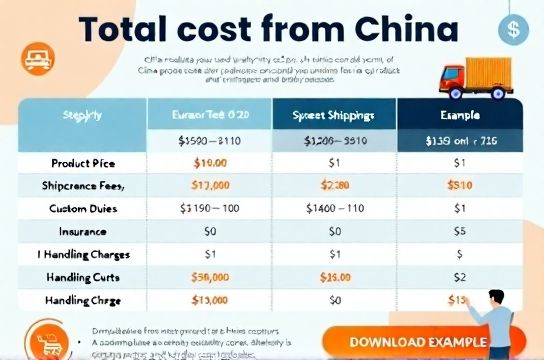
Break Down the Real Cost
Let’s talk numbers. Say you find a product priced at $5 per unit. Sounds great, right? But once you factor in shipping, taxes, tariffs, and other overheads, that $5 could easily become $8 or more. Here’s how to calculate the real deal:
- Unit Price: The base cost per item.
- Shipping & Freight: Air, sea, or express delivery — each has different rates and timelines.
- Customs Duties & Taxes: Varies by country; for example, U.S. importers face average tariffs of 3–7% on Chinese goods.
- Handling Fees: Port charges, customs brokerage, warehousing.
- MOQ (Minimum Order Quantity): Bulk orders lower per-unit costs but increase upfront investment.
Sample Cost Breakdown (1,000 Units)
| Cost Factor | Amount (USD) |
|---|---|
| Product Cost ($5 × 1,000) | $5,000 |
| Shipping (Sea Freight, FOB) | $800 |
| Customs Duty (5%) | $250 |
| Tax (e.g., VAT 10%) | $580 |
| Handling & Inspection | $150 |
| Total Cost | $6,780 |
| Cost Per Unit | $6.78 |
See that? Your $5 product now costs $6.78 landed. That’s a 35.6% increase!
Pro Tips to Save Money
- Negotiate MOQs: Ask suppliers to lower minimums or offer samples first.
- Compare Freight Options: Sea freight is cheaper for large volumes; air is faster but pricier.
- Use Incoterms Wisely: Choose FOB (Free on Board) to control shipping and reduce risks.
- Check Free Trade Agreements: Some countries have reduced tariffs with China.
- Factor in Quality Control: Budget for pre-shipment inspections to avoid costly returns.
The Bottom Line
Sourcing from China can be highly profitable — if you calculate the full picture. Don’t let hidden costs surprise you. Use this breakdown as a template, plug in your numbers, and make smarter purchasing decisions.
Now go get that deal — just make sure you’re really getting one.