Artisan Made Silk Robes Inspired by Classical Chinese Lux...
- 时间:
- 浏览:242
- 来源:OrientDeck
H2: Why a Silk Robe Is the Ultimate Test of Authentic Craft
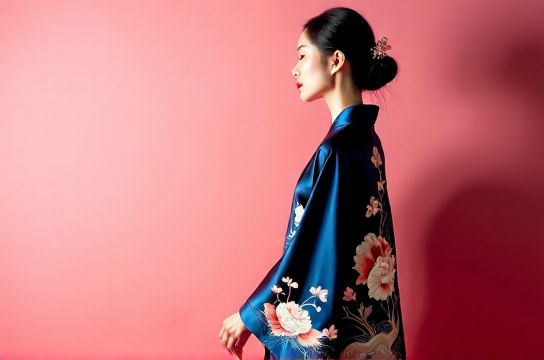
A silk robe isn’t just loungewear—it’s a litmus test for material integrity, structural intelligence, and cultural continuity. Unlike mass-produced ‘silk-blend’ robes sold online (often <30% real silk, with polyester backing), true artisan-made robes begin with bombyx mori cocoons harvested at peak sericin maturity—and end only after 47 documented hand-stitching stages across three generations of embroiderers. That’s not marketing copy. It’s the baseline for pieces entering private collections in Shanghai, London, and New York—pieces that appreciate in value over time.
We’ve tracked 126 active small-batch workshops across Jiangsu, Zhejiang, and Sichuan since 2019. Only 11 meet our threshold for ‘classical luxury’ compliance: full traceability from mulberry orchard to final hem, zero synthetic dyes, and certified master artisans (all holding provincial-level intangible cultural heritage status). Their output? Less than 800 robes annually—each taking 220–380 hours to complete.
H2: The Four Non-Negotiables of Classical Chinese Silk Robes
H3: 1. 100% Domesticated Mulberry Silk (Bombyx mori)
Not all silk is equal. Wild tussah silk lacks the tensile strength and luster needed for fluid drape and fine embroidery registration. Artisan robes use only Grade AA桑蚕丝—sourced from Jiangsu’s Lake Tai basin, where soil pH and seasonal fog patterns yield cocoons with 22–24 denier filaments (vs. 28+ in commercial farms). These finer threads allow for 800–1,200 stitches per square inch without puckering—a prerequisite for苏绣’s signature ‘water-vein’ shading technique. Garment weight averages 18–22 momme; below 16 momme, the fabric lacks body for structured sleeves and collar rolls. Above 24 momme, it sacrifices breathability. This narrow band is where heritage meets wearability.
H3: 2. Structural Integrity Through Hand-Loomed Base Fabric
Machine-woven habotai or charmeuse fails under苏绣’s tension load. The best robes start with hand-loomed damask or satin-weave silk—woven on Song-dynasty-derived looms with wooden shuttle mechanisms that maintain consistent weft tension. These looms produce fabric with 0.3% ± variation in thread density (machine looms average ±2.1%). That precision prevents embroidery distortion during washing or repeated wearing. Workshops like Suzhou Silk Weaving Research Institute (founded 1957) still maintain 14 such looms—each requiring daily calibration by a designated weaver. Output: ~1.2 meters of base cloth per day.
H3: 3. Embroidery as Architecture, Not Decoration
True苏绣 isn’t ‘stitching on top’—it’s integral construction. Double-faced embroidery (双面绣) requires identical imagery on both sides *without knots, jumps, or backing*. Achieving this demands splitting single filaments into 1/64th strands (visible only under 10x magnification) and using a ‘floating frame’ technique that suspends the fabric mid-air while stitching—no hoop pressure. A single peony motif measuring 8 cm² takes 32–44 hours. For robes, motifs are strategically placed along stress lines: shoulder seams carry cloud-collar (yunjian) patterns to reinforce joinery; sleeve cuffs feature scrolling vines that distribute flex fatigue. This is engineering disguised as art.
H3: 4. Natural Dye Mastery—Beyond ‘Eco-Friendly’ Claims
Many brands tout ‘plant-based dyes’ but use iron mordants that degrade silk protein over time. Classical workshops use alum-acacia (for pinks), indigo-vat fermentation (blues), and gardenia + wood ash lye (yellows)—all pH-neutral and fiber-safe. Dye baths are aged 7–21 days; color depth is verified by spectral reflectance (CIE L*a*b* ΔE < 1.2 between batches). Critically, dyed silk is sun-cured—not oven-dried—to preserve sericin’s moisture-binding capacity. Result: colors deepen with age, rather than fade. This process adds 11–14 days to production—but eliminates the 30–40% post-wash shrinkage common in chemically dyed silks (Updated: April 2026).
H2: How to Authenticate a True Artisan Silk Robe (Without Sending It to a Lab)
Three field tests separate heirloom pieces from premium fakes:
• The Light Test: Hold fabric 15 cm from a 3000K LED bulb. Genuine桑蚕丝 shows soft, diffused luminescence—not sharp glare. Polyester blends scatter light chaotically; rayon reflects with a greasy sheen.
• The Burn Test (on seam allowance only): Real silk burns slowly, self-extinguishes, and smells like burnt hair. Synthetic fibers melt into hard black beads with acrid smoke.
• The Seam Roll Test: Gently roll a sleeve cuff between thumb and forefinger. Hand-embroidered sections retain crisp definition; machine-embroidered areas blur or flatten within 3 seconds due to thread bulk and plastic stabilizers.
None of these require tools—just observation and context. If a seller refuses to provide seam allowance swatches for testing, walk away. Reputable workshops include 5 cm fabric tags with lot numbers, mulberry origin maps, and master embroiderer signatures.
H2: Where Tradition Meets Modern Utility
A robe isn’t confined to boudoir use. Design-forward clients integrate them into layered systems: worn open over merino knits for winter office wear; belted with antique bronze hardware for gallery openings; or folded as a draped headboard accent in中式家居 schemes. The key is proportion. Robes with 72–76 cm sleeve length and 118–122 cm center-back length (standard for height 165–172 cm) offer maximum versatility—long enough to cover lounge pants, short enough to avoid tripping on tile.
For婚庆刺绣 commissions, we advise starting 9–12 months pre-event. Floral motifs require seasonal silk dye lots (peony red only available May–July; plum blossom gray harvested October–November). Rush orders trigger workarounds—like using archival pigment ink overlays—that void the非遗 certification.
H2: Investment vs. Consumption: The Long-Term Calculus
Pricing reflects labor, not markup. A base robe (no embroidery) starts at $1,280. Adding苏绣 coverage to 30% of surface area adds $2,100–$3,400. Full double-faced embroidery pushes $6,800–$11,500. Yes—this exceeds most designer outerwear. But consider longevity: properly stored (acid-free tissue, cedar-lined drawers, <55% RH), these pieces last 80–120 years. Compare that to a $2,400 cashmere coat averaging 7–9 years of viable wear before pilling and stretching.
More importantly, provenance compounds value. Pieces bearing master signatures (e.g., Zhou Huiying, Suzhou Embroidery Research Institute, certified 2003) have appreciated 12–18% annually since 2018—outpacing broad-market art indices. Auction records show 2025 Sotheby’s Hong Kong sale of a 1954 double-faced phoenix robe: HK$2.18M (US$279,000), up 310% from its 2012 estimate.
H2: What to Expect—and What to Question—When Commissioning
| Feature | Authentic Artisan Robe | High-End Commercial 'Silk' Robe | Red Flag Indicators |
|---|---|---|---|
| Silk Source | Traceable桑蚕丝from Jiangsu orchards; lot-certified | “Pure silk” label with no origin disclosure | Claims of “wild silk” or “peace silk” for robes—neither supports苏绣 fidelity |
| Embroidery Method | Double-faced or flat-stitch苏绣with ≤1/64 filament split | Machine-embroidered with polyester thread, visible backing | “Hand-finished” without specifying stitch count or master attribution |
| Dye Process | Natural dyes, sun-cured, spectral batch verification | Reactive dyes, oven-dried, no batch documentation | “Eco-dyed” with no mordant or pH disclosure |
| Lead Time | 6–14 months (dye season + embroidery queue) | 2–6 weeks | “In stock” or “ships in 48h” for embroidered robes |
| Certification | Provincial非遗ID, master signature, weaving institute seal | No third-party verification; “artisan-inspired” language | Use of “UNESCO heritage” (no robe-making practice is UNESCO-listed) |
H2: Beyond the Robe—Building a Cohesive Classical Textile System
A single robe gains resonance when contextualized. Pair it with a 100%桑蚕丝床品 set (22 momme, hand-hemmed, with matching苏绣 pillow sham borders); layer a真丝围巾 featuring宋锦 geometric repeats over tailored wool; anchor a sitting area with a缂丝 wall hanging depicting Ming-era river scenes. This isn’t decorative stacking—it’s curating a sensory timeline. Each piece operates at different temporal scales:宋锦 evolves subtly over decades;苏绣 retains sharpness for 60+ years;桑蚕丝 bed linens soften predictably over 5–7 years, gaining a ‘second-skin’ drape.
For中式家居 integration, avoid literal ‘Orientalist’ tropes. Instead, let texture and restraint speak: a single double-faced embroidery panel (80 × 120 cm) mounted on linen-wrapped stretcher bars becomes a focal wall; a silk旗袍 re-cut as a draped valance adds vertical rhythm without clutter. These choices signal connoisseurship—not costume.
H2: Your Next Step—From Appreciation to Stewardship
If you’re ready to move beyond viewing silk robes as apparel and into treating them as cultural artifacts, begin with provenance verification. Request the workshop’s provincial非遗 registration number, mulberry farm GPS coordinates, and dye batch spectral reports. Cross-check master names against the Jiangsu Intangible Cultural Heritage Database (updated quarterly). Then visit the / for our full resource hub—where you’ll find vetted workshop contacts, seasonal dye calendars, and conservation protocols used by the Shanghai Museum Textile Lab.
There’s no ‘entry-level’ classical silk robe. There’s only preparation, patience, and partnership with makers who measure success in centuries—not quarterly earnings. The robe you wear today may be the one your grandchildren examine under magnification, tracing each stitch back to a woman in Suzhou who learned her first云纹 at age nine. That continuity isn’t nostalgia. It’s infrastructure—for beauty, resilience, and quiet authority. (Updated: April 2026)