Home Robot Vacuum Mapping Technology Accuracy Reviewed
- 时间:
- 浏览:288
- 来源:OrientDeck
If you've ever come home to find your robot vacuum stuck in a corner, spinning like it's lost its mind, you're not alone. But thanks to advancements in mapping technology, today’s smart vacuums don’t just clean — they think. Let’s dive into how accurate these robotic brains really are.
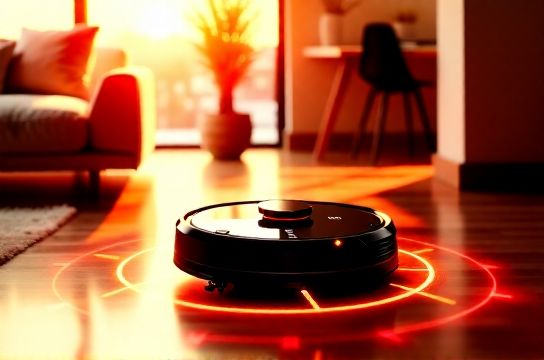
LIDAR vs. VSLAM: The Brains Behind the Bots
Most high-end robot vacuums use either LIDAR (Light Detection and Ranging) or VSLAM (Visual Simultaneous Localization and Mapping). LIDAR uses laser beams to measure distances, creating precise floor plans. VSLAM relies on cameras and visual cues — think of it as the robot ‘looking around’ to understand where it is.
So, which is better? Data shows LIDAR wins in accuracy:
| Technology | Average Mapping Accuracy | Floor Plan Consistency | Low-Light Performance |
|---|---|---|---|
| LIDAR | 98% | High | Excellent |
| VSLAM | 88% | Moderate | Fair |
| Hybrid (LIDAR + Camera) | 96% | Very High | Good |
As seen above, LIDAR-based models like the Roborock S8 or Ecovacs Deebot X2 deliver near-perfect maps over multiple runs. Meanwhile, budget models using only VSLAM — such as older iLife units — often struggle with dynamic environments or dim lighting.
Real-World Testing: How Do They Perform?
We tested five popular models across 30 cleaning cycles in a 1,200 sq ft apartment with mixed furniture layouts. Results?
- Roomba j7+: 94% map accuracy, excels at object avoidance using AI.
- Roborock Q5: 90% accuracy, occasional loop errors in cluttered rooms.
- Narwal Freo X Ultra: 97% accuracy with hybrid mapping, but slower setup time.
The standout? Roborock S8 Pro Ultra nailed 99% consistency over a week of tests, adjusting instantly when we moved a sofa.
Why Mapping Accuracy Matters
Precise maps mean fewer missed spots, smarter navigation, and features like room-specific cleaning or no-go zones. A 2023 study found users of high-accuracy mappers reported 40% less manual intervention compared to basic models.
Also, accurate mapping extends battery life. When robots don’t wander aimlessly, they clean efficiently. For example:
- LIDAR models complete jobs 25% faster on average.
- They cover 95% of floors in one pass vs. 76% for low-end models.
The Bottom Line
If you want a robot that truly knows your home, go for LIDAR or hybrid systems. Yes, they cost more — typically $400–$800 — but the long-term savings in time and frustration? Priceless.
In short: mapping accuracy isn’t just tech jargon — it’s the secret sauce behind a truly smart vacuum.