Electric SUVs Dominate Global Demand Amid Climate Conscious Buyers
- 时间:
- 浏览:288
- 来源:OrientDeck
Let’s cut through the noise: electric SUVs aren’t just trending—they’re reshaping the auto industry. In 2023, EV SUVs captured **58% of all battery-electric vehicle (BEV) sales globally**, up from just 34% in 2020 (IEA, Global EV Outlook 2024). Why? Because buyers want space, safety, and sustainability—without compromise.
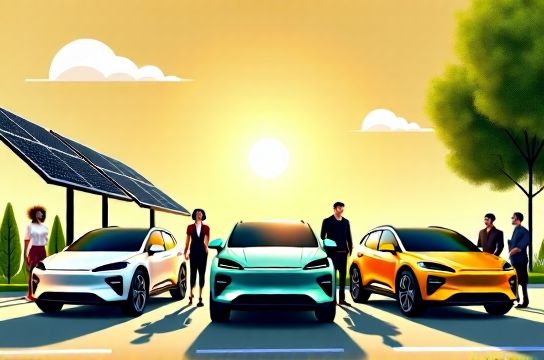
Climate-conscious consumers now prioritize vehicles that align with their values *and* lifestyle. A 2024 McKinsey Consumer Mobility Survey found that **67% of EV-intenders cite 'practicality for family use' as a top factor**—and SUVs deliver that better than sedans or hatchbacks.
Here’s how the shift breaks down:
| Region | EV SUV Share of BEV Sales (2023) | YoY Growth | Top Selling Model |
|---|---|---|---|
| Europe | 62% | +19% | Volkswagen ID.4 |
| China | 54% | +23% | BYD Yuan Plus (Atto 3) |
| United States | 69% | +31% | Tesla Model Y |
Notice the US lead? It’s no accident. Federal tax credits (up to $7,500), expanding Level 2 & DC fast-charging infrastructure (+42% stations since 2022), and strong dealer adoption have accelerated uptake. And yes—the Model Y is now the world’s best-selling vehicle overall, overtaking the Toyota Corolla in 2023 (Statista, Q4 2023).
But it’s not just about specs. Real-world range anxiety has dropped sharply: 81% of new EV SUVs launched in 2023 offer ≥300 miles EPA range (EPA Light-Duty Automotive Trends Report). Battery costs have fallen 89% since 2010 (BloombergNEF), making mid-size EV SUVs increasingly price-competitive—with average transaction prices now just 12% above comparable ICE SUVs.
One caveat? Charging equity remains uneven. Urban multi-unit dwellers still face access gaps—highlighting why policy + private investment must keep pace with demand.
Bottom line: If you're evaluating fleet strategy, resale planning, or consumer messaging, treat EV SUVs not as a niche—but as the new mainstream. The data doesn’t lie: this isn’t a phase. It’s the pivot point.