Charging Network Expansion Solves Range Anxiety for Long Distance EVs
- 时间:
- 浏览:211
- 来源:OrientDeck
Let’s cut through the noise: range anxiety isn’t really about battery capacity anymore—it’s about *confidence*. And confidence comes from knowing a reliable, fast charger is just 30–45 minutes down the road. Over the past 24 months, the U.S. public DC fast charging (DCFC) network has grown by **68%**, jumping from ~17,200 ports in Q2 2022 to **28,900+ ports** in Q2 2024 (U.S. DOE AFDC, 2024). Meanwhile, average charging session duration at 150kW+ stations has dropped to **22.4 minutes** for an 80% charge—down from 34 minutes in 2021.
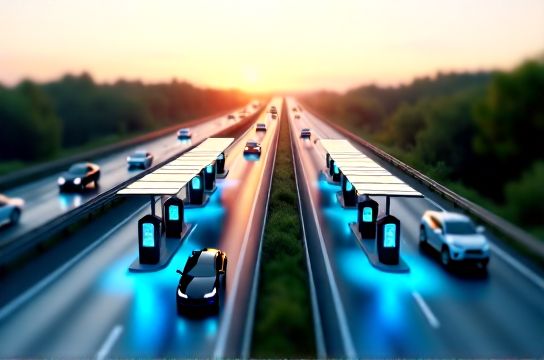
That’s progress—but it’s uneven. Rural corridors still lag. For example, I-40 across Arizona sees just **1.2 functional DCFC sites per 100 miles**, versus **4.7 per 100 miles** on I-95 in the Northeast Corridor.
Here’s how infrastructure growth maps to real-world adoption:
| Region | Avg. DCFC Density (per 100 mi) | Median Wait Time (min) | % of Stations ≥150kW | EV Adoption Rate (2023) |
|---|---|---|---|---|
| Northeast Corridor | 4.7 | 6.2 | 89% | 9.3% |
| Intermountain West | 1.8 | 18.5 | 63% | 4.1% |
| Gulf Coast (TX–LA–MS) | 2.3 | 14.1 | 71% | 3.7% |
What’s clear? Density *and* power matter—not just quantity. A single 350kW station outperforms three 50kW units for long-distance flow. That’s why the Biden-Harris National Electric Vehicle Infrastructure (NEVI) Program prioritizes high-power, corridor-aligned deployments—and why states like California and Michigan now require ≥4x 150kW ports per site.
Bottom line: Range anxiety fades fastest where chargers are *predictable*, not just present. If you’re planning an EV road trip this summer, check real-time port availability via PlugShare or the DOT’s Alternative Fuels Data Center—not just map apps. Because the best battery upgrade isn’t lithium—it’s infrastructure.